

Hear from Our Customers
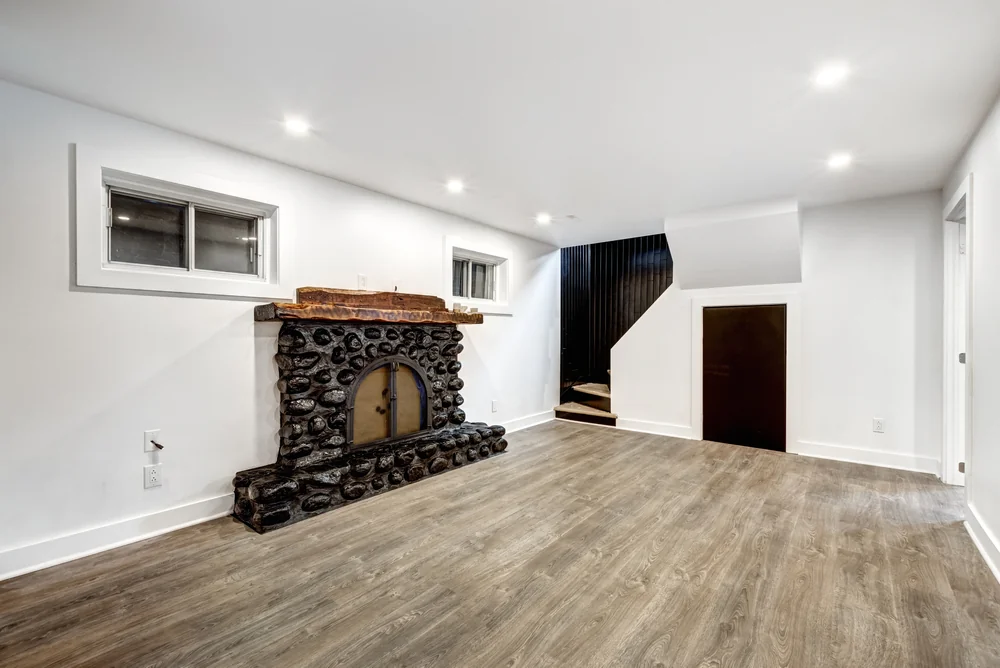
Your basement doesn’t have to stay a storage dump or a space you avoid because it smells like mildew. When it’s finished right, you get a family room where people actually want to spend time, a guest suite that doesn’t feel like an afterthought, or a home office that makes remote work bearable.
The difference comes down to how it’s built. Proper moisture barriers matter in Copiague, where ground saturation and rising water tables aren’t rare. Insulation that actually works keeps your energy bills from spiking. And code-compliant framing, electrical, and egress windows mean the space is legal, safe, and won’t cause problems when you sell.
Homeowners typically recover 70-75% of what they spend on a basement remodel. That’s around $14,000 to $15,000 in added value on a $20,000 investment. But the real return is daily—extra square footage you can use without adding onto your house or moving to get it.
We’ve been handling interior remodels across Suffolk County for nearly a decade. We’re licensed, insured, and we only use in-house crews—which means the people who show up are the people we hired, trained, and trust in your home.
Most basement projects in Copiague deal with moisture at some level. Older homes built around 1970 weren’t designed with today’s water table in mind. We plan for that from the start—waterproofing, mold-resistant materials, proper drainage—so your finished space doesn’t turn into a problem three years later.
You’ll get fixed pricing upfront. One-year warranty on workmanship. No pressure to upsell you into things you don’t need. Just straight answers and work that holds up.
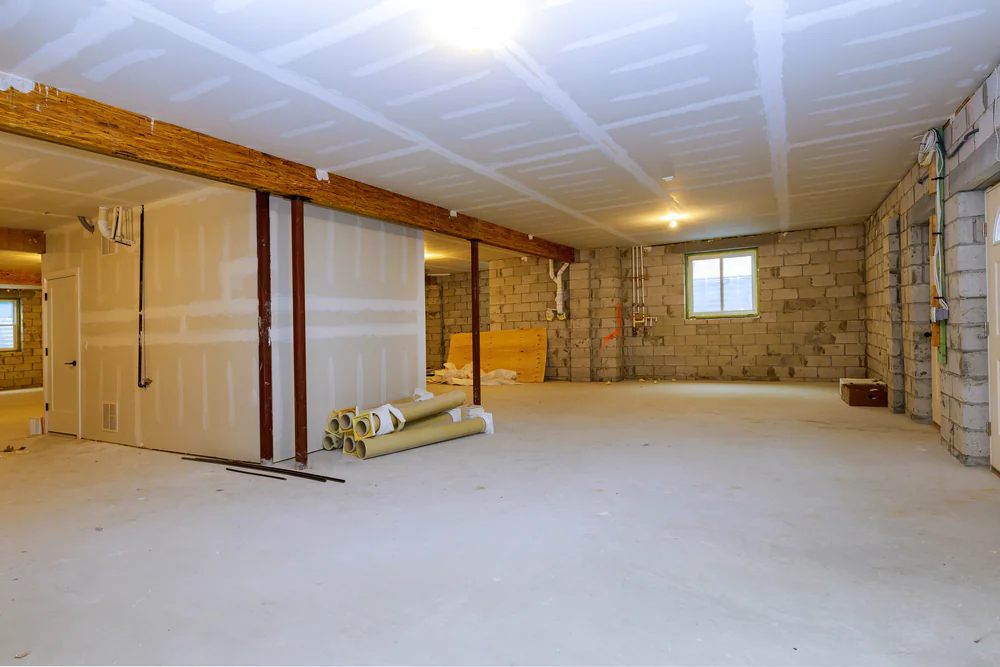
We start with a walkthrough of your basement to assess moisture issues, structural concerns, ceiling height, and what you’re trying to accomplish with the space. That’s where we talk about egress windows, electrical needs, HVAC considerations, and whether your current layout works or needs adjusting.
Once we agree on scope and pricing, we handle the permit paperwork with Suffolk County. That’s not optional—it protects you when you sell and ensures the work meets code for safety and resale value.
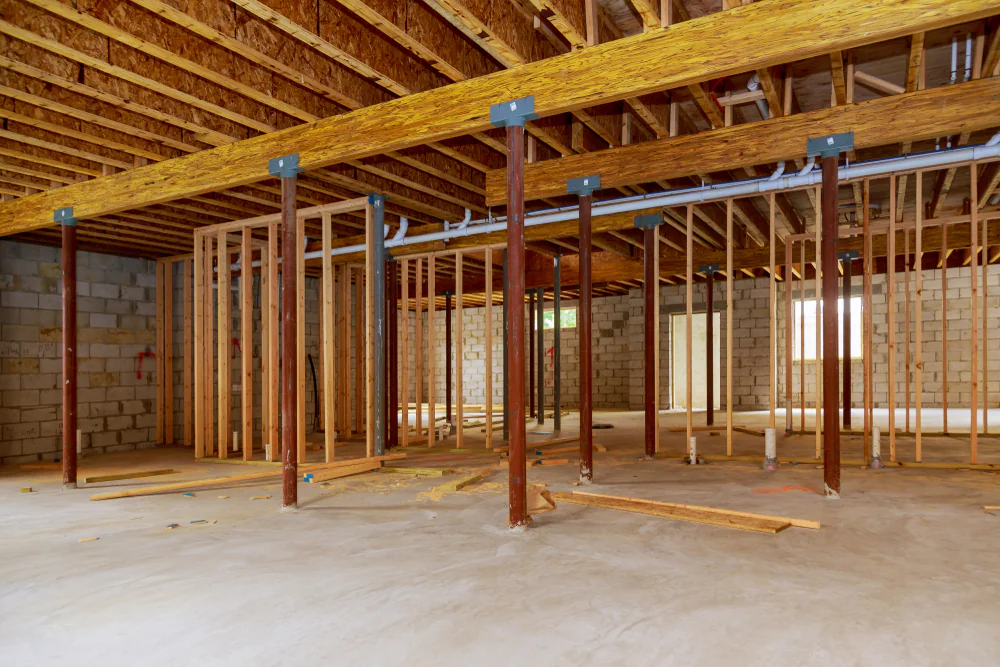
The build typically takes two weeks or more depending on size and complexity. We frame walls, run electrical and HVAC, insulate, hang drywall, install flooring, and finish trim work. Our crews show up on time, clean up daily, and keep you updated without you having to chase us down.
After final inspection and walkthrough, the space is yours. If anything comes up within the first year related to our work, we come back and make it right. That’s the warranty, and we stand behind it.
Ready to get started?
A finished basement isn’t just drywall and paint. It’s a system that has to work together—especially in Copiague, where moisture management can make or break the project.
You’re looking at moisture barriers and waterproofing to address the wet basement issues common in this area. Proper insulation to keep the space comfortable and energy-efficient year-round. Framing and drywall with mold-resistant materials that won’t grow problems behind the walls. Electrical work that’s code-compliant, with enough outlets and lighting to make the space functional. Flooring that can handle below-grade conditions without warping or trapping moisture.
If you’re adding a bedroom, Suffolk County requires egress windows for safety—we handle that. If you’re creating a bathroom, we run plumbing and ventilation correctly. And if your HVAC system needs extending to heat and cool the new space, that gets factored in from the start.
The goal is a basement that feels like part of your home, not a separate, unfinished area you’re making do with. That means attention to details like trim work, door casings, and transitions that match the rest of your house.

Most full basement finishing projects in Suffolk County run between $20,000 and $50,000, depending on square footage, what you’re building, and how much moisture remediation is needed. A basic open-concept family room with flooring, drywall, lighting, and trim will land on the lower end. Add a full bathroom, wet bar, or multiple bedrooms with egress windows, and costs go up.
Waterproofing alone can add $3,000 to $10,000 if your basement has active moisture issues or needs exterior drainage work. That’s not optional in Copiague—it’s the foundation of a successful remodel. Skipping it to save money upfront usually means paying more later to fix mold, warped floors, or failed drywall.
We give you fixed pricing after the walkthrough so there’s no guessing. What we quote is what you pay, unless you change the scope mid-project. No hidden fees, no surprise charges at the end.
Yes. Any structural work, electrical, plumbing, or space conversion in Suffolk County requires a permit. That includes framing new walls, adding outlets, installing egress windows, or creating a bedroom or bathroom in your basement.
Permits aren’t just red tape—they ensure the work meets safety codes and won’t cause issues when you sell your home. Buyers’ inspectors look for unpermitted work, and it can kill a sale or force you to rip things out and redo them properly. It also affects your homeowner’s insurance if something goes wrong and the work wasn’t permitted.
We handle the permit process as part of the project. We know what Suffolk County requires, we submit the paperwork, and we schedule inspections. You don’t have to figure it out or stand in line at the building department.
Plan on two weeks minimum for a straightforward basement finishing project. That’s for an open layout without major plumbing or complex electrical. If you’re adding a bathroom, multiple rooms, or dealing with significant moisture remediation, it can stretch to four weeks or more.
Permitting adds time on the front end—usually one to three weeks depending on Suffolk County’s workload. Inspections happen at specific stages (framing, electrical, final), and those need to be scheduled and passed before we move forward.
Weather can slow things down if we’re doing exterior waterproofing or egress window installation. Material delays happen occasionally, though we plan ahead to avoid them. The timeline we give you during the estimate accounts for realistic schedules, not best-case scenarios. We’d rather underpromise and finish early than leave you hanging.
You have to address moisture before you finish anything, or you’re building a problem that’ll cost more to fix later. Start by identifying where water is coming from—foundation cracks, poor grading, failed gutters, high water table, or condensation issues.
Most Copiague basements need some level of waterproofing. That might mean sealing foundation walls, installing interior drainage systems, adding sump pumps, or regrading soil away from the foundation. If you’ve got active water intrusion during heavy rain, that has to be solved first. Finishing over a wet basement just traps moisture behind walls where it grows mold and rots framing.
We assess moisture during the initial walkthrough and recommend solutions based on what we find. Sometimes it’s straightforward—seal and insulate. Other times it requires more extensive drainage work. Either way, we won’t finish a basement that’s going to fail because the moisture wasn’t handled correctly. It’s not worth it for you or us.
Yes, but there are code requirements you have to meet. Bedrooms in Suffolk County need egress windows—large enough for emergency exit and rescue access. That usually means cutting into the foundation, installing a window well, and bringing everything up to code. It’s not cheap, but it’s required and it makes the space legal and safe.
Bathrooms need proper plumbing and ventilation. If your basement doesn’t have existing rough-ins, we’re running new drain lines, water supply, and potentially a sewage ejector pump if the bathroom is below the main sewer line. Ventilation has to exhaust outside, not just recirculate air, to prevent moisture buildup.
Both bedrooms and bathrooms add significant value and functionality, especially if you’re dealing with a growing family or aging parents who need main-level living. But they also add complexity and cost to the project. We walk through what’s involved during the estimate so you can decide if it makes sense for your situation and budget.
Cheap usually means unlicensed, uninsured, or cutting corners you won’t see until later. That might look like skipping permits, using substandard materials, ignoring moisture issues, or doing electrical work that’s not up to code. It saves money now, but it costs more when you have to rip it out and redo it—or when it causes a safety issue or kills a home sale.
Licensed contractors carry insurance that protects you if someone gets hurt or something gets damaged. Unlicensed crews don’t, which means you’re liable. Permits and inspections ensure the work is safe and legal. Skipping them might save a few hundred dollars, but it puts you at risk.
We’re not the cheapest option in Suffolk County, and that’s intentional. You’re paying for in-house crews who show up when they’re supposed to, work that passes inspection the first time, and a one-year warranty that actually means something. You’re also paying for honest communication, fixed pricing, and a finished basement that doesn’t turn into a regret two years later. That’s worth more than saving a few bucks upfront with someone who disappears when problems show up.