
Hear from Our Customers
Your floors shouldn’t be a source of constant stress. When you’re dealing with kids, pets, and the reality of coastal humidity, traditional hardwood becomes a liability. It swells in summer, gaps in winter, and every water spill feels like a potential disaster.
Waterproof vinyl flooring changes that equation completely. Spills sit on the surface until you wipe them up. Pet accidents don’t seep into seams. Sand tracked in from outside? It sweeps right off without scratching through a finish.
The flooring in your Gordon Heights home should make daily life easier, not harder. When you replace flooring that wasn’t designed for Long Island’s climate with materials that actually handle moisture, temperature swings, and real family use, you stop protecting your floors and start enjoying your home. That’s the difference between constantly managing damage and having floors that just work.
We’ve spent years installing flooring in homes throughout Gordon Heights and the surrounding Suffolk County area. We’ve seen what works in these homes and what fails within a few years.
Most Gordon Heights properties were built between 1970-1999, which means they weren’t designed with today’s waterproof flooring technology in mind. Basements get damp. Kitchens see heavy use. Entryways deal with constant foot traffic and whatever weather Long Island throws at them.
We handle everything in-house. No subcontractors creating scheduling conflicts or finger-pointing when questions come up. You get transparent pricing, clear communication about what’s happening and when, and flooring installation that’s done right the first time. That’s how we’ve built our reputation here, and it’s how we plan to keep it.

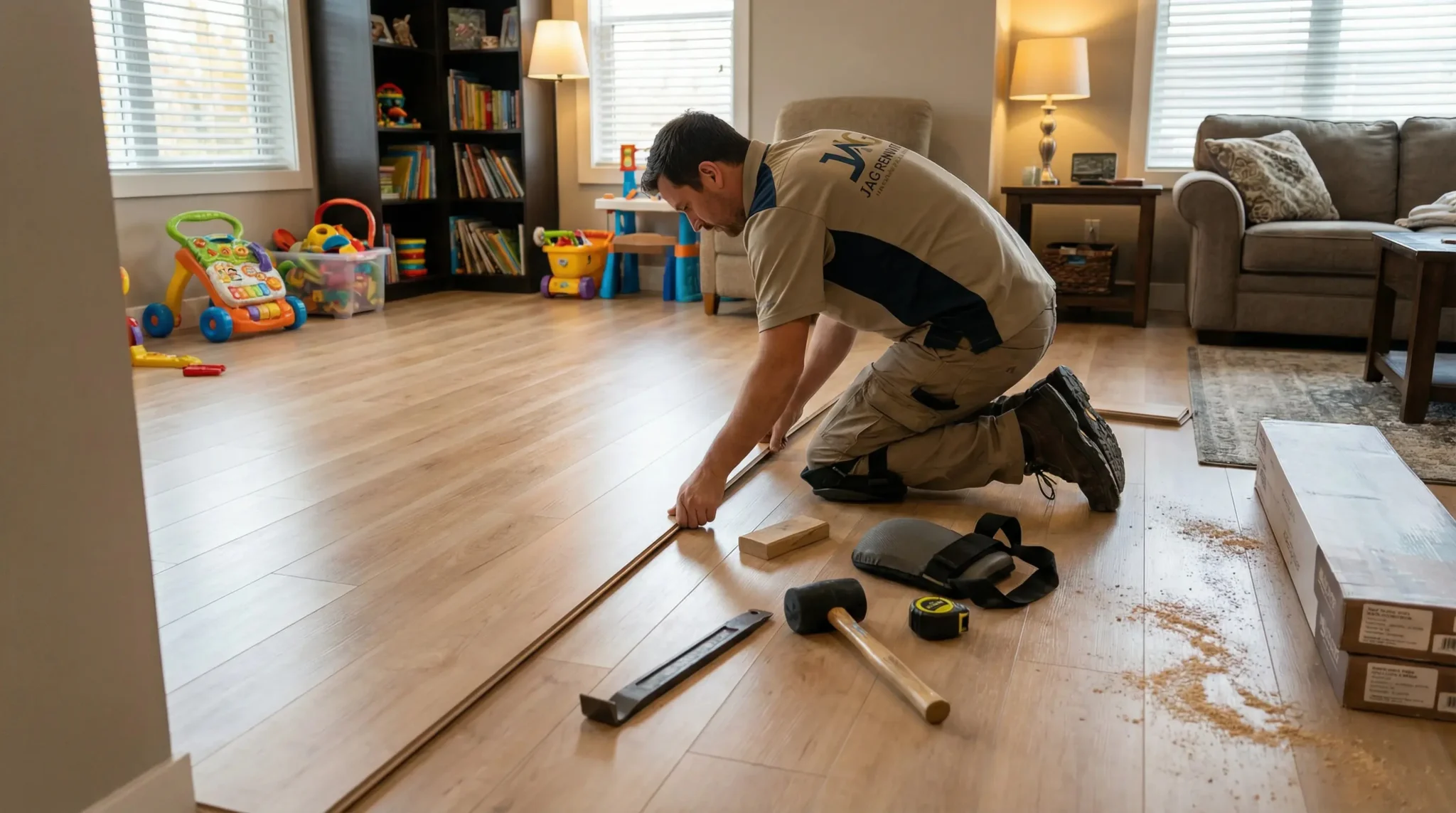
First, we come to your Gordon Heights home and assess what you’re working with. We look at your subfloor condition, measure moisture levels if needed, and talk through how you actually use the space. A kitchen floor gets different treatment than a bedroom. A basement in Suffolk County needs waterproof options, period.
Then we walk you through material choices that make sense for your specific situation. Luxury vinyl plank for the main living areas. Ceramic tile for bathrooms. Waterproof laminate for basements. We explain what each option costs, how it performs, and how long it lasts. No pressure, just information.
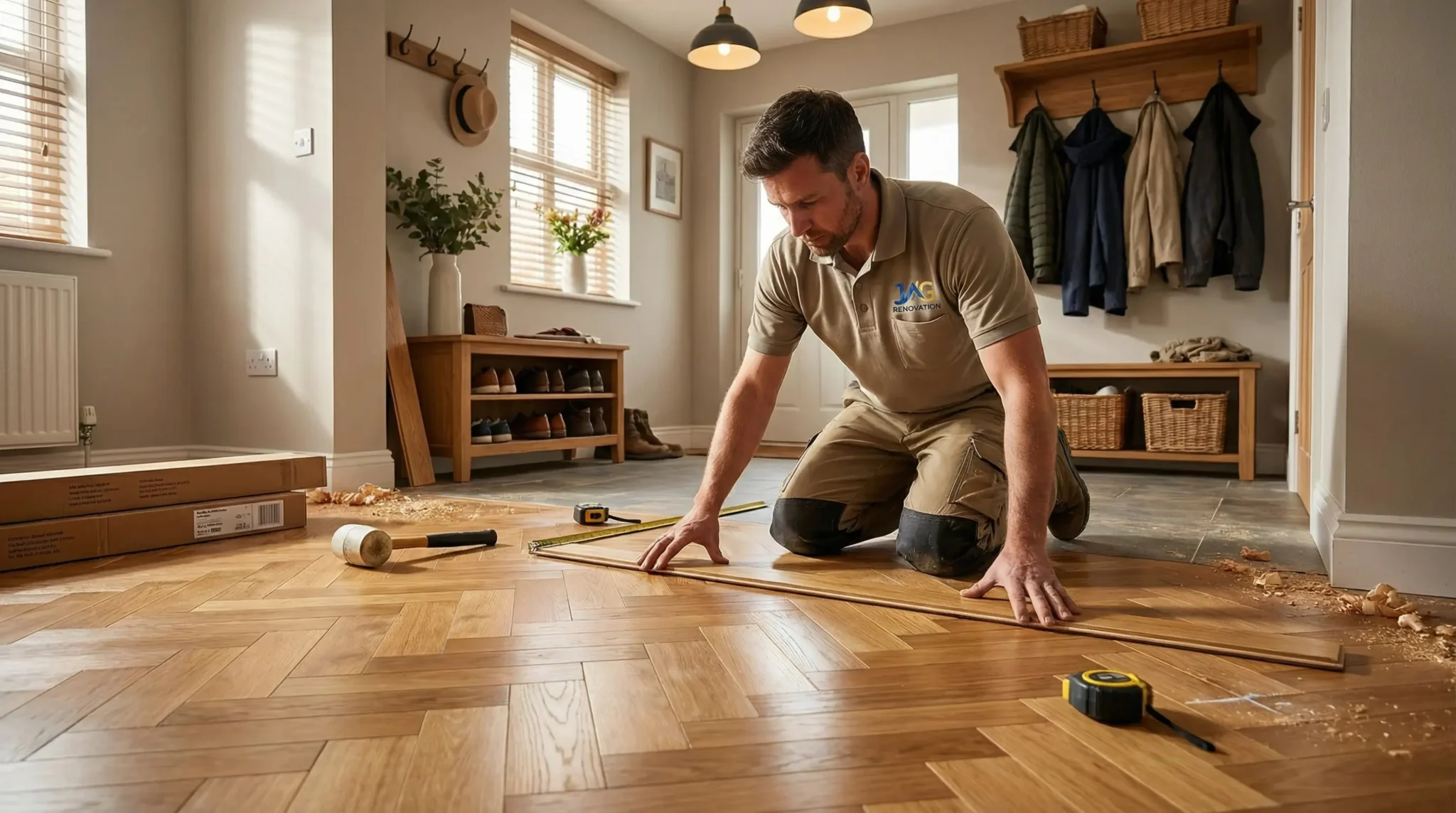
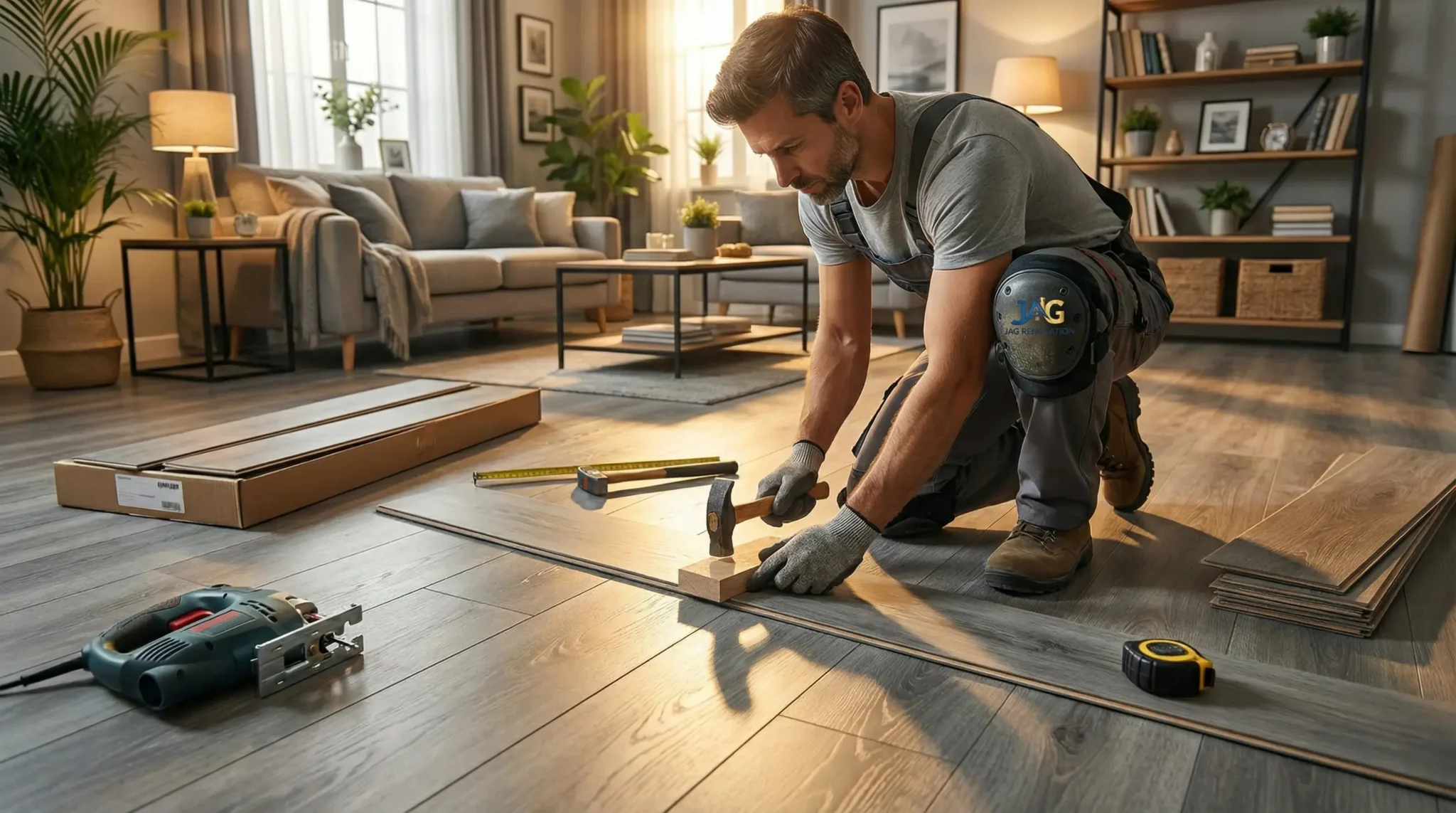
Installation day, we show up when we say we will. We prep the subfloor properly, because shortcuts here cause problems later. We install your new flooring with attention to expansion gaps, moisture barriers, and all the details that separate a five-year floor from a twenty-year floor. We clean up completely when we’re done.
You get a clear timeline before we start, updates if anything changes, and floors you can walk on according to the manufacturer’s specifications. Most residential flooring projects in Gordon Heights wrap up in a few days, depending on square footage and material choice.
Ready to get started?
Vinyl flooring installation covers luxury vinyl plank, luxury vinyl tile, and sheet vinyl options. These materials cost between $2-8 per square foot installed, compared to $12-20 for hardwood. They’re 100% waterproof, not just water-resistant. That matters in Gordon Heights basements, kitchens, and bathrooms where moisture is a constant factor.
Tile flooring contractor services include ceramic tile floor installation and porcelain options for areas that need serious durability. Tile costs more upfront but lasts decades when installed correctly. It’s ideal for entryways that see heavy traffic and bathrooms that need truly waterproof surfaces.
Laminate flooring installation gives you the wood look at a lower price point. Modern laminate has come a long way. It’s more scratch-resistant than it used to be, and waterproof versions now exist for areas with moderate moisture exposure.
Every flooring project includes subfloor assessment and prep, proper moisture barriers where needed, manufacturer-spec installation, and complete cleanup. We don’t cut corners on the prep work because that’s where most flooring failures start. Gordon Heights homes with crawl spaces or basement moisture need extra attention to underlayment and vapor barriers. We handle that as part of the job, not an upcharge you discover later.

Waterproof luxury vinyl plank or tile. Not water-resistant, waterproof. There’s a difference, and it matters in Suffolk County basements.
Gordon Heights sits in an area with relatively high water tables and coastal humidity. Basements get damp, even with proper drainage. Traditional laminate will swell and buckle. Hardwood is a complete non-starter. Even engineered hardwood struggles in below-grade installations here.
Luxury vinyl plank with a rigid core gives you the wood look without the moisture problems. It’s 100% waterproof, installs over concrete with proper underlayment, and handles temperature fluctuations without expanding or contracting like wood. Porcelain tile works too, but it’s cold underfoot unless you add radiant heating. Most homeowners doing basement remodels in Gordon Heights go with waterproof LVP because it’s warmer, quieter, and costs less to install than tile.
Depends on square footage and material, but most single-room projects take 1-2 days. Whole-house flooring runs 3-7 days for an average Gordon Heights home.
Luxury vinyl plank installs faster than tile because it’s a click-lock system. No mortar, no grout, no 24-hour cure times. A 200 square foot kitchen might be done in a day including subfloor prep. Tile takes longer because you’re setting it in thinset, letting it cure, then coming back to grout.
The prep work is what really determines timeline. If your subfloor needs leveling compound or moisture barrier installation, add time. If we’re pulling up old flooring, disposing of it, and dealing with layers of ancient adhesive, that adds time too. We give you a realistic timeline upfront based on what we find during the initial assessment. Most Gordon Heights homeowners are back to normal use within a week, even for larger projects.
Yes, if you choose the right wear layer thickness. Look for 12-mil or 20-mil wear layers for high-traffic family homes.
The wear layer is the protective coating on top of the vinyl. Thicker wear layers resist scratches from dog nails, dropped toys, and dragged furniture. Budget vinyl with 6-mil wear layers shows damage within a year or two in active households. Commercial-grade residential vinyl with 20-mil wear layers can handle decades of abuse.
Waterproof vinyl also solves the pet accident problem that ruins hardwood. Urine doesn’t seep into seams or soak into wood grain. It sits on the surface until you clean it up. No staining, no lingering odors, no permanent damage. For families in Gordon Heights with multiple pets or young kids, that’s the difference between constantly stressing about floor damage and actually relaxing in your own home. We typically recommend mid-to-high grade LVP for families, not the cheapest option at the big box store.
Waterproof means water can’t penetrate it, period. Water-resistant means it can handle some moisture but will eventually fail if exposed to standing water.
Traditional laminate is water-resistant. Light spills are fine if you clean them quickly. But leave water sitting for a few hours and the fiberboard core swells. Once laminate swells, it doesn’t go back. You’re replacing boards.
Waterproof vinyl has a solid plastic core. Water literally cannot penetrate it. You could leave a puddle on it overnight and it’s fine. That’s critical in Suffolk County homes where humidity is constant and basements get damp. It’s also why waterproof flooring costs more than water-resistant options.
For Gordon Heights kitchens, bathrooms, laundry rooms, and basements, waterproof is worth the extra dollar per square foot. For bedrooms and living rooms on upper floors, you can get away with water-resistant if budget is tight. But most homeowners doing a floor remodeling project now just go waterproof throughout. It eliminates the worry and lasts longer in Long Island’s climate.
Vinyl flooring runs $2-8 per square foot installed. Tile costs $8-15 per square foot. Laminate sits around $3-7 per square foot. Hardwood starts at $12 and goes up from there.
For a typical 1,200 square foot Gordon Heights home, you’re looking at $2,400-$9,600 for vinyl throughout, depending on quality level. A single kitchen at 150 square feet might run $1,200-$2,250 for ceramic tile installation including labor.
The wide price range comes down to material quality and prep work needed. If your subfloor is level and dry, installation is straightforward. If we need to pour leveling compound, install moisture barriers, or repair damaged subflooring, costs increase. Old flooring removal and disposal adds to the bill too.
We give you transparent pricing after assessing your specific situation. No hidden fees, no surprise charges when the job’s half done. You know what it costs before we start, and that number doesn’t change unless you change the scope. That’s how we’ve operated for nearly a decade in Suffolk County, and it’s why customers call us back for their next project.
Sometimes, but it depends on what’s there and what condition it’s in. Vinyl can go over existing flooring if it’s level and stable. Tile usually can’t.
If your existing tile is flat, well-adhered, and level, we can install luxury vinyl plank right over it with appropriate underlayment. That saves demo costs and speeds up the project. But if tiles are loose, cracked, or the floor has lippage between tiles, we need to remove it. Installing over an uneven surface just telegraphs those imperfections through the new floor.
Hardwood is trickier. If it’s solid and level, vinyl can go over it. But if the hardwood is cupping, crowning, or has moisture damage, we’re pulling it up. You can’t install new flooring over a moisture problem and expect good results.
Ceramic tile installation always requires removal of old flooring. You can’t tile over vinyl or laminate. The substrate needs to be solid. For most Gordon Heights flooring projects, we recommend removing old flooring anyway. It lets us inspect the subfloor, address any moisture issues, and ensure the new floor has a solid foundation. Cutting corners on prep work is how you end up replacing floors twice.