
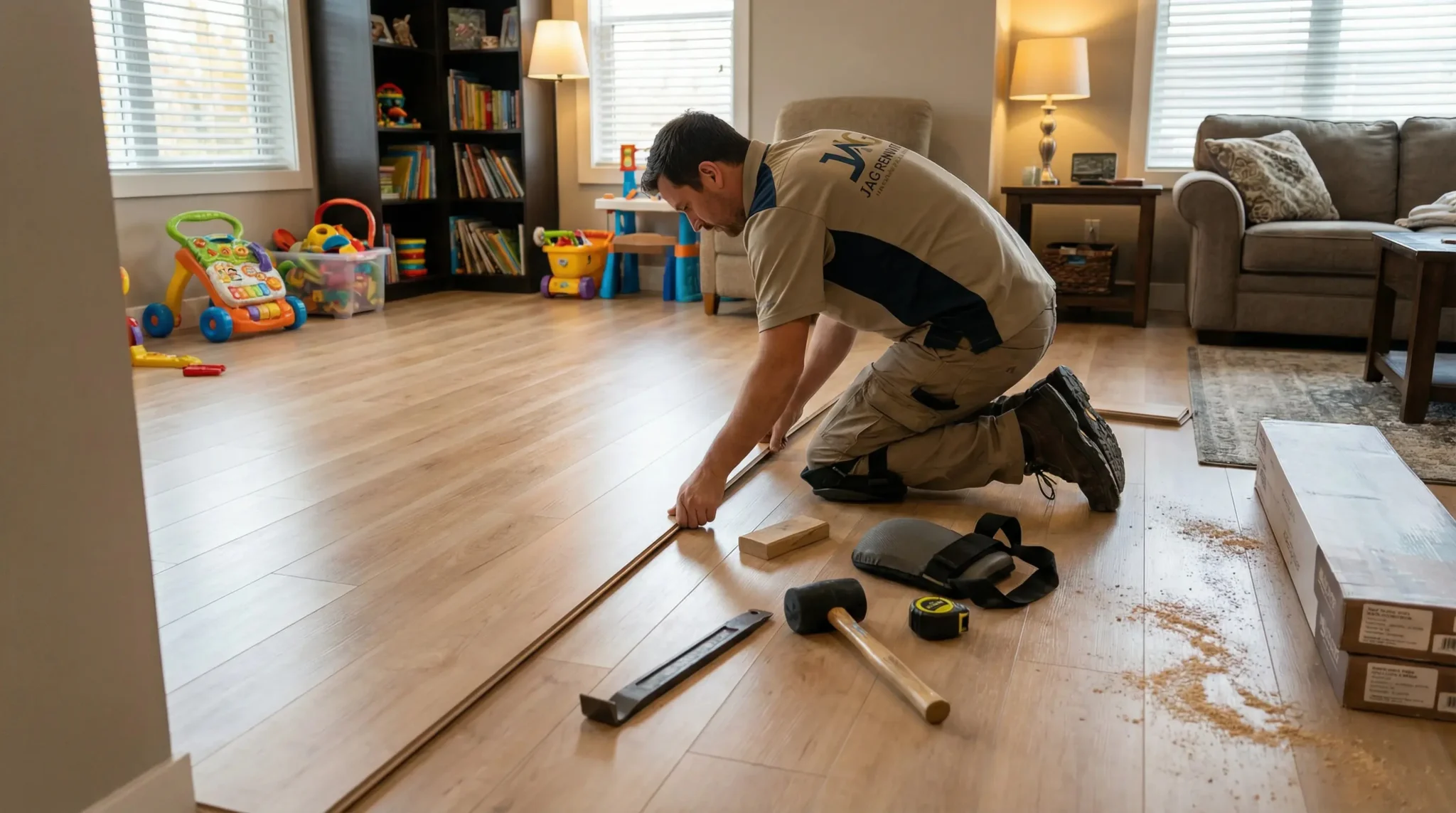
Hear from Our Customers
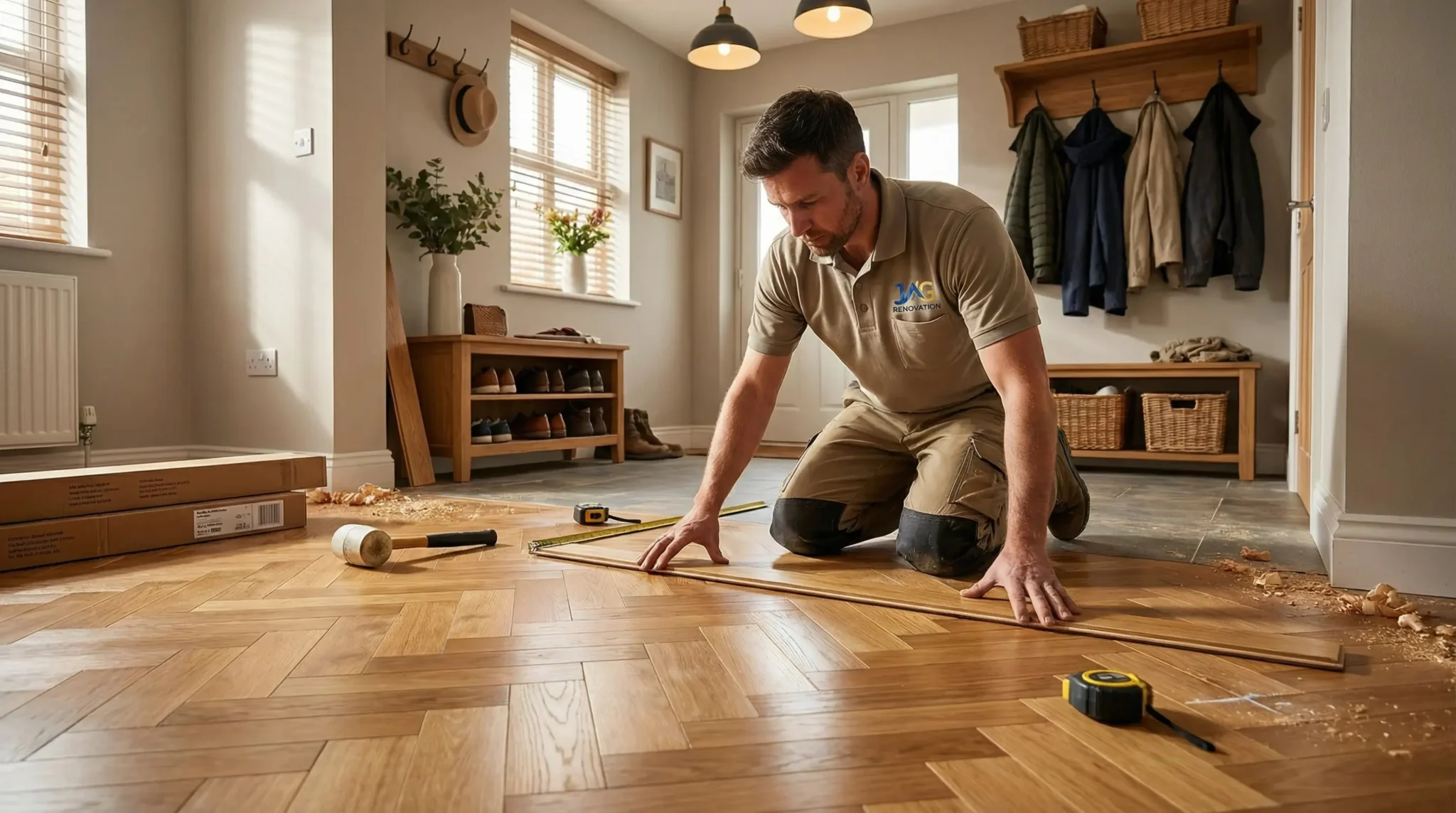
You get floors that hold up to real life. Not just for the first year, but for the long haul—through kids, pets, furniture moves, and daily wear.
That means fewer callbacks, no premature replacements, and no regret six months in when the seams start lifting or the finish starts peeling. It means walking into your kitchen or living room and feeling good about what’s under your feet.
Good flooring installation also means you’re not dealing with surprise charges halfway through the job. You know what you’re paying before we start. You know what materials we’re using and why. And you know the timeline—because we don’t disappear for days without explanation.
In Hampton Bays, where homeowners expect quality that matches the local standard, that kind of clarity matters. You’re not just getting new floors. You’re getting a straightforward process with a contractor who shows up, does the work, and leaves your home better than we found it.
We’ve been handling flooring projects across Suffolk County for close to ten years. We’re not the oldest name in the Hamptons, but we’ve built our reputation on doing what we say we’ll do—on time, on budget, and without the sales pitch.
We work in Hampton Bays homes regularly. We know what holds up in coastal humidity. We know which vinyl planks actually resist moisture and which laminates buckle after a season. We know how to prep subfloors so tile doesn’t crack and hardwood doesn’t creak.
You’re hiring a team that’s done this enough times to spot problems before they become expensive fixes. And you’re working with people who won’t upsell you on upgrades you don’t need just to pad the invoice.

First, we come out to look at your space. We measure, check the subfloor condition, talk about what you’re hoping to get, and answer your questions. No pressure, no same-day close tactics—just a clear conversation about what’s realistic for your home and budget.
Once you’re ready to move forward, we walk you through material options. Hardwood versus engineered. Vinyl versus laminate. Ceramic versus porcelain tile. We explain the differences in durability, maintenance, and cost so you can make an informed call.
Then we schedule the work. We remove old flooring if needed, prep the subfloor properly, and install your new floors using the right methods for the material. That means acclimating wood, using the correct adhesive for vinyl, spacing tile correctly, and making sure transitions between rooms look clean.
After installation, we walk the job with you. You see the finished result, we address any concerns, and we make sure you know how to care for your new floors. Then we clean up and get out of your way.
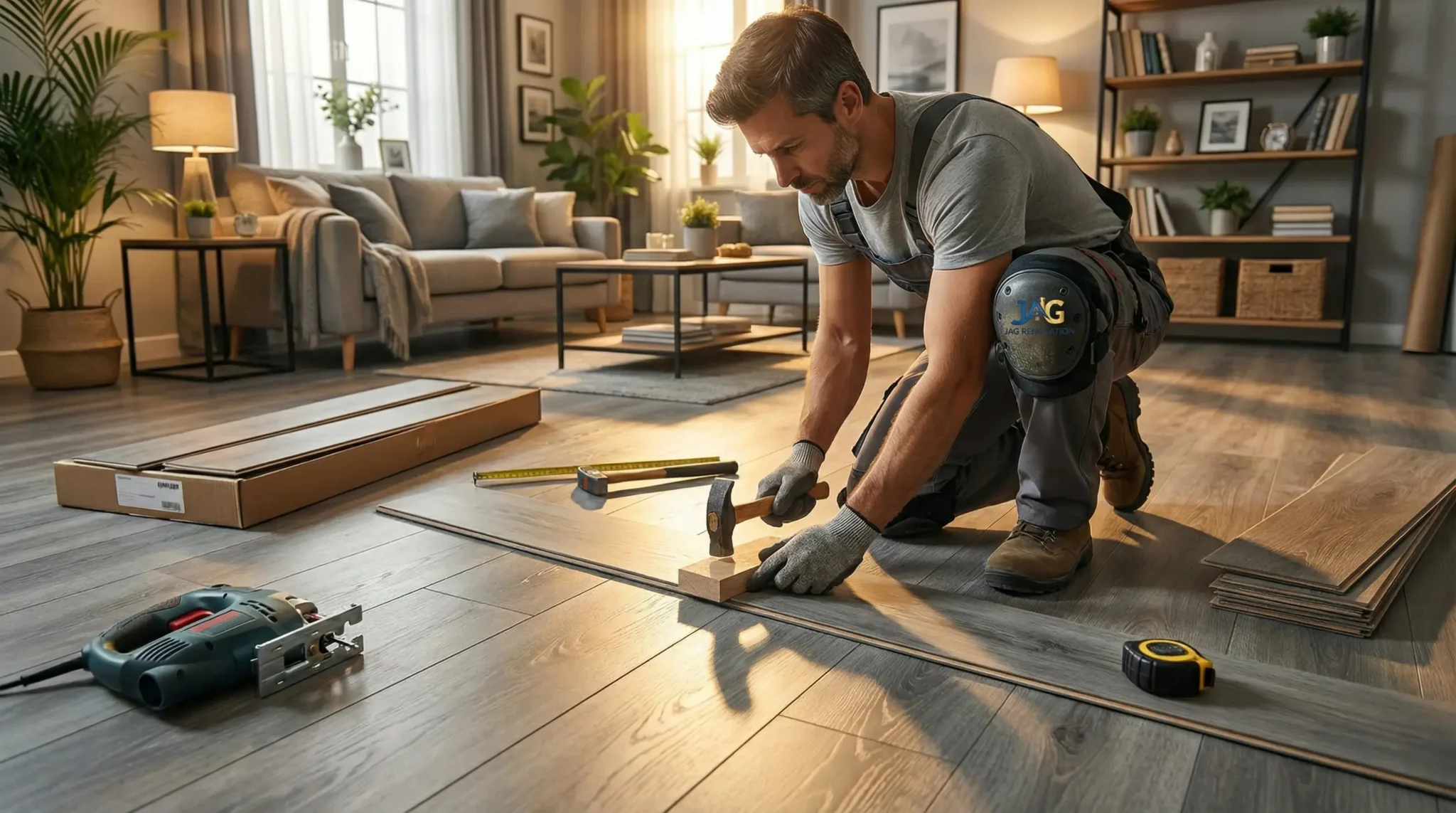
Ready to get started?
We handle the full scope: removal of old flooring, subfloor inspection and repair, material installation, and cleanup. That covers hardwood floor installation, vinyl flooring, laminate flooring installation, tile floor installation including ceramic tile, and carpet installation for both residential and commercial projects.
In Hampton Bays, that often means working with homes built decades ago—older subfloors that need leveling, moisture issues near the water, or layout quirks that require custom cuts and careful planning. We adjust to what your home needs, not what’s easiest for us.
For commercial flooring projects, we work around your business hours when possible and move quickly to minimize downtime. Retail spaces, offices, and rental properties all have different durability requirements, and we match the material and installation method accordingly.
You also get transparent pricing from the start. We break down material costs, labor, prep work, and any additional charges so there’s no confusion when the final invoice arrives. If something unexpected comes up during the job—like subfloor damage we couldn’t see until the old floor was up—we talk to you before moving forward, not after.

For a typical Hampton Bays home, plan on one to two weeks depending on square footage and the type of flooring. Hardwood takes longer because it needs time to acclimate to your home’s humidity before installation—usually three to five days just sitting in the space.
Vinyl and laminate move faster since they don’t require acclimation. A 1,000-square-foot main floor can often be done in three to four days, including removal of the old floor and subfloor prep. Tile takes longer because of mortar and grout curing times—you’re looking at a week minimum for a kitchen or bathroom.
If we’re doing multiple rooms with different materials, or if there’s significant subfloor repair needed, add time accordingly. We’ll give you a realistic timeline during the estimate so you can plan around it.
Vinyl is your best bet for moisture resistance, especially luxury vinyl plank. It holds up to humidity better than hardwood and won’t warp if water sits on it briefly. Engineered hardwood is a close second—it’s more stable than solid hardwood in fluctuating humidity, which matters in Hampton Bays.
Tile works well in bathrooms, kitchens, and entryways where water exposure is frequent. Porcelain is denser and less porous than ceramic, so it’s the better choice if you want maximum water resistance. Just make sure the grout is sealed properly, or moisture will still get through.
Laminate is less forgiving with water. A spill that sits too long will cause swelling, and once that happens, the planks need to be replaced. If you’re set on the look of wood but want better moisture performance, go with vinyl or engineered hardwood instead.
Vinyl and laminate typically run $5 to $10 per square foot installed, depending on the quality of the product. Hardwood ranges from $10 to $18 per square foot for installation, with material costs varying based on species and finish. Tile installation usually falls between $8 and $15 per square foot, including materials and labor.
Those are ballpark numbers. Your actual cost depends on the size of the space, the condition of your subfloor, and whether we’re removing old flooring first. A straightforward install in a square room costs less than a space with lots of angles, transitions, or custom cuts.
We give you a detailed estimate upfront so you know exactly what you’re paying for. No line items that mysteriously appear later. If your subfloor needs work, we’ll flag it during the initial visit and include that cost in the quote.
Sometimes, but not always. Vinyl and laminate can often go over existing flooring if the surface is smooth, level, and in good condition. If the old floor is uneven, damaged, or has moisture issues underneath, we need to remove it first or you’ll end up with problems down the line.
Tile and hardwood almost always require removal of the old flooring. Tile needs a solid, level substrate to prevent cracking, and hardwood needs to be nailed or glued directly to the subfloor for stability. Installing over an existing floor in those cases creates more issues than it solves.
We’ll assess your current flooring during the estimate and let you know whether we can leave it or if removal is necessary. If removal adds cost you weren’t expecting, we’ll explain why it’s needed so you can make an informed decision.
Vinyl is waterproof. Laminate is not. That’s the biggest functional difference and the main reason we recommend vinyl for kitchens, bathrooms, basements, and entryways in Hampton Bays homes.
Laminate has a wood fiberboard core, so if water gets into the seams and sits, it swells and warps. Vinyl is made from PVC, which doesn’t absorb moisture. Both can look nearly identical to hardwood, but vinyl performs better in real-world conditions where spills and humidity are factors.
Laminate does have a slight edge in scratch resistance because of its hard wear layer, but quality vinyl plank has gotten close enough that the difference isn’t significant for most households. If you have kids, pets, or high traffic, vinyl gives you more durability where it counts.
Yes. We’ve done flooring for retail spaces, offices, and rental properties throughout Suffolk County. Commercial projects have different requirements than residential—higher foot traffic, stricter timelines, and durability standards that need to hold up under constant use.
We work with commercial-grade materials rated for heavy traffic and match the flooring type to how the space is used. High-traffic retail areas get luxury vinyl or commercial tile. Office spaces might use carpet tile for sound absorption or luxury vinyl plank for a polished look that’s easy to maintain.
We also coordinate around your business hours when possible. If you need the work done overnight or on weekends to avoid disrupting operations, we’ll make it happen. The goal is to get you back up and running quickly with flooring that lasts.
Other Services we provide in Hampton Bays