
Hear from Our Customers
Long Island homes deal with conditions most flooring wasn’t designed for. Summer humidity that makes hardwood swell. Winter dryness that creates gaps. Coastal moisture that sneaks into basements and entryways. You need flooring that accounts for all of it.
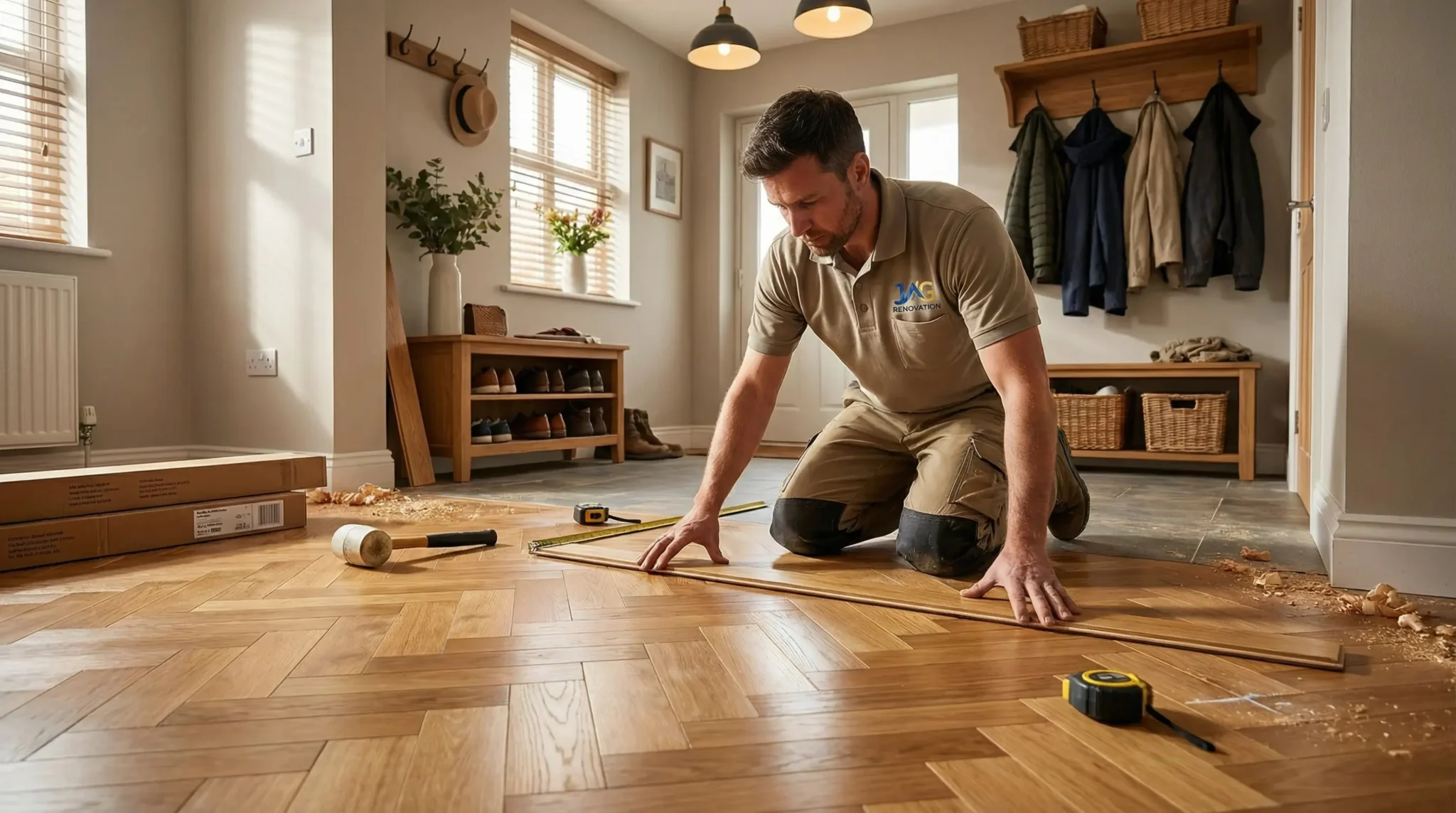
That’s where material selection matters. Luxury vinyl plank holds up in kitchens and bathrooms where water exposure is constant. Engineered hardwood works beautifully in living spaces when it’s installed correctly—with expansion gaps sized for our climate, not some generic install guide. Laminate flooring installation done right means understanding subfloor prep and moisture barriers, especially in below-grade spaces.
The difference between flooring that lasts fifteen years and flooring that needs replacement in five often comes down to whether your contractor knows what they’re doing in this specific environment. We’ve spent nearly a decade working in Suffolk County homes. We know which products hold up and which ones don’t. More importantly, we know how to install them so they perform the way they’re supposed to.
We’ve been handling interior renovations across Suffolk County for nearly a decade. We’re not the company that shows up with a sales pitch and a financing gimmick. We show up, assess what you actually need, and give you a straight answer.
Lake Ronkonkoma homeowners deal with the same challenges as the rest of Long Island—older homes with settling foundations, moisture issues from being this close to the water, and contractors who either don’t show up or don’t communicate. We built our reputation by doing the opposite. Clear timelines. Transparent pricing. Work that holds up.
When you’re looking to replace flooring in your house, you want someone who’s done it hundreds of times in homes just like yours. Someone who knows that your 1960s ranch has different subfloor concerns than a newer build. That’s what nearly ten years in this market gets you—experience that actually applies to your situation.

First, we come out and look at what you’re working with. Not a sales call—an actual assessment. We check your subfloor condition, measure moisture levels if needed, and talk through what you’re trying to accomplish. If your existing floor has issues that need addressing before new material goes down, we tell you. If it doesn’t, we tell you that too.
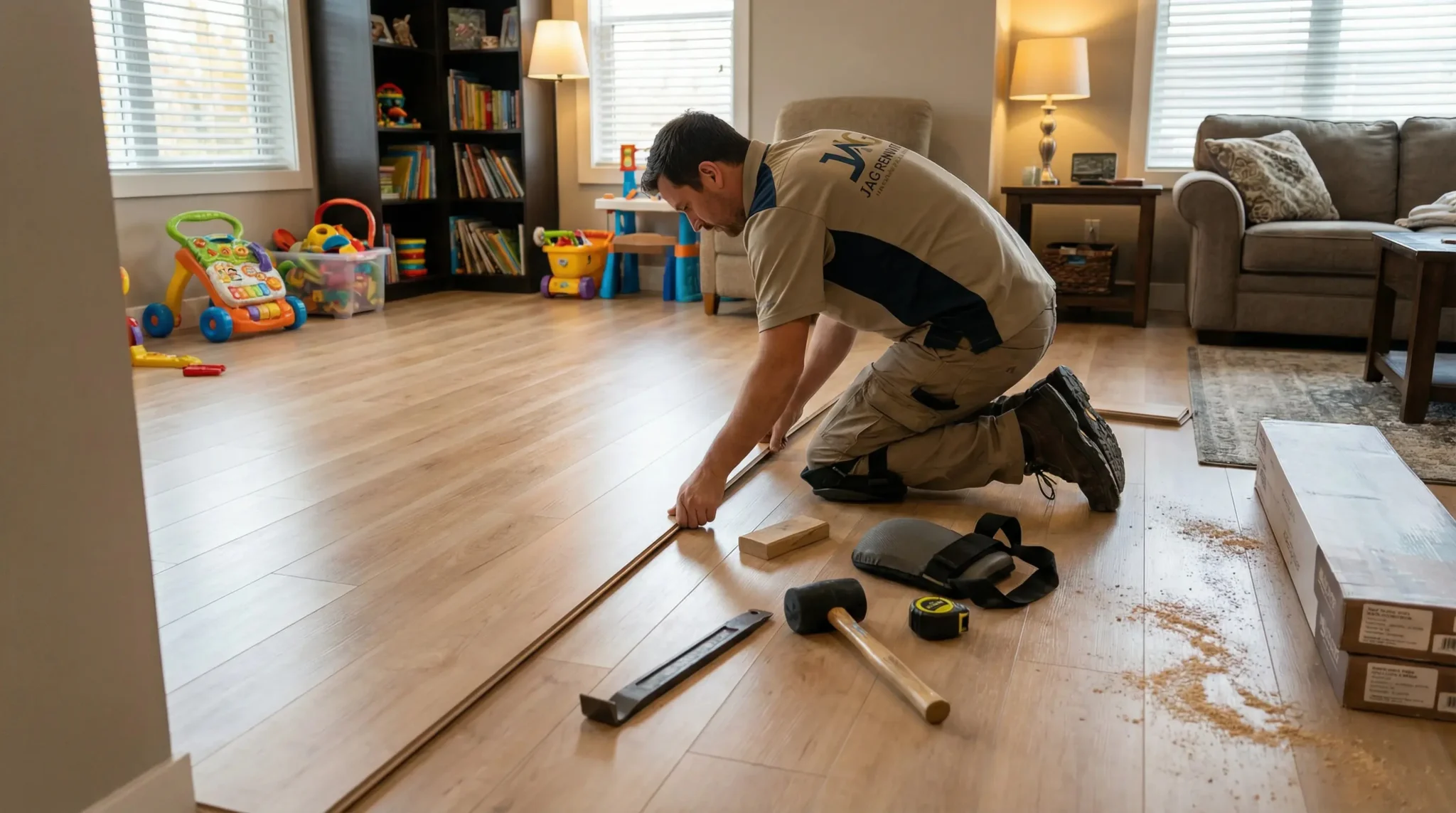
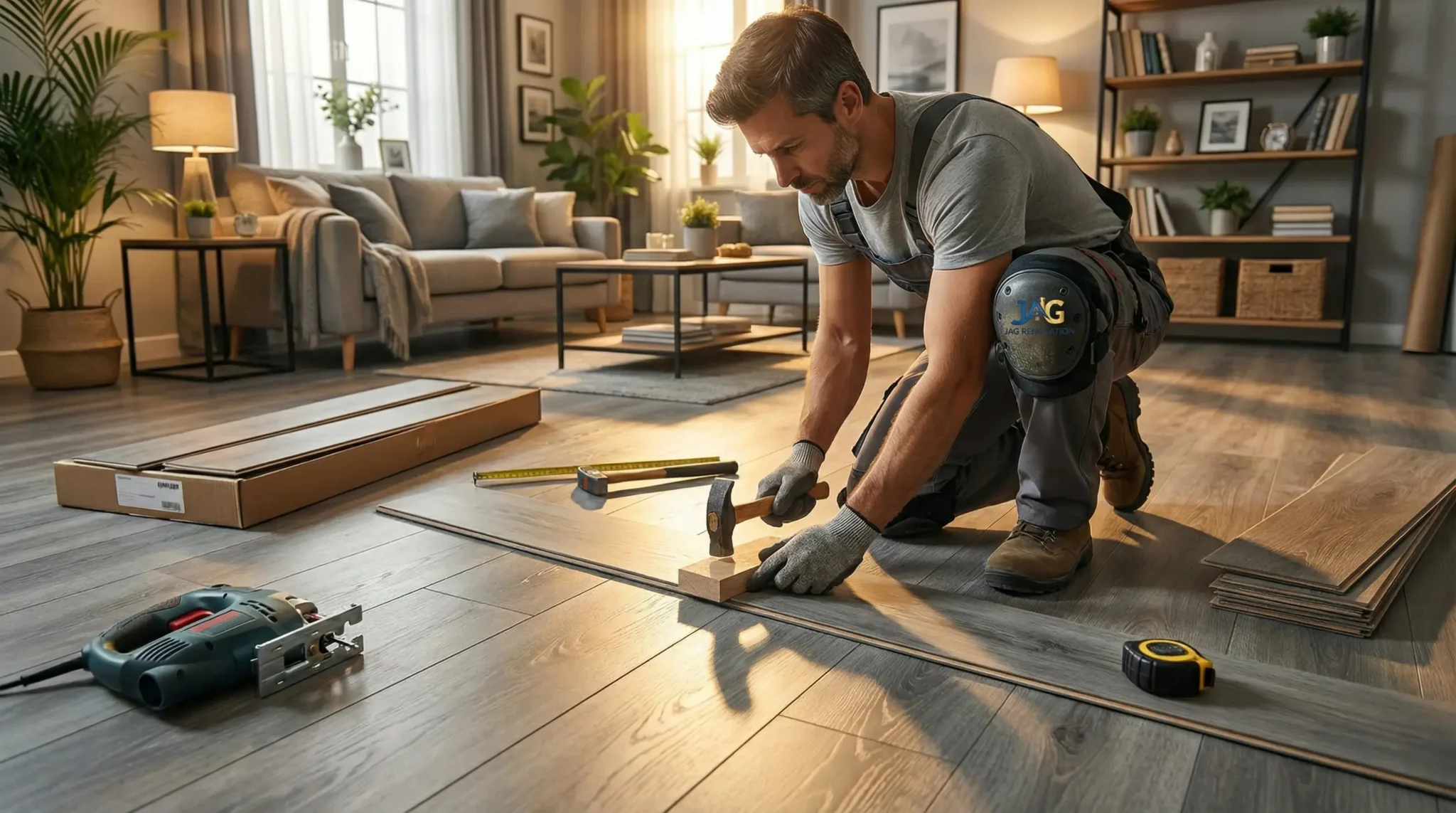
Once we agree on materials and scope, we give you a timeline and a price. Then we order materials and schedule the work. Most residential flooring projects take two to five days depending on square footage and complexity. We move furniture if needed, pull up old flooring, prep the subfloor, and install your new floor with the right underlayment and expansion gaps for Long Island’s climate.
After installation, we walk you through care and maintenance specific to what you just had installed. Vinyl flooring needs different care than hardwood. Tile floor installation requires grout sealing. Laminate has its own rules. You get the information you need to keep your investment in good shape, and we make sure you’re completely satisfied before we consider the job done.
Ready to get started?
We handle the full range of residential flooring options—hardwood, engineered wood, luxury vinyl plank, laminate, and ceramic tile floor installation. Each material has specific applications where it makes sense and situations where it doesn’t.
In Lake Ronkonkoma, where property values average around $312 per square foot and homes represent significant investments, choosing the right flooring means thinking long-term. Waterproof vinyl makes sense in basements, mudrooms, and bathrooms. Engineered hardwood works well in main living areas when you want the look of real wood with better dimensional stability. Ceramic tile holds up in high-traffic entryways and kitchens where durability matters most.
We’re not pushing premium materials where they’re not needed, and we’re not recommending cheap solutions that’ll cost you more in five years. Suffolk County’s coastal humidity is real. Your floors will expand and contract. If your flooring contractor doesn’t account for that during installation, you’ll see buckling, gaps, or worse. We size expansion gaps correctly, use appropriate moisture barriers, and select adhesives and fasteners rated for the conditions your floors will actually face.
The goal is flooring that looks good now and still performs fifteen years from now. That requires knowing what you’re doing during installation, not just following a manufacturer’s generic guide.

If you’re seeing widespread damage—cupping, warping, deep scratches across multiple boards, or water stains that won’t sand out—replacement usually makes more sense than repair. Localized damage to a few boards can often be fixed, especially with hardwood where you can sand and refinish or replace individual planks.
The bigger question is whether the damage indicates an underlying issue. If your hardwood is cupping near exterior walls, you might have a moisture intrusion problem that needs addressing before any new flooring goes down. If your laminate is bubbling in the bathroom, that’s a water exposure issue that’ll destroy whatever you install next unless you switch to waterproof material.
We assess the cause, not just the symptom. Sometimes repair works. Sometimes you’re throwing money at a problem that’s going to come back. We’ll tell you which situation you’re in and why, so you can make an informed decision about whether to repair or replace flooring in your house.
Vinyl flooring—especially luxury vinyl plank—is waterproof. Laminate is water-resistant at best, and regular laminate will swell and delaminate if it gets soaked. That’s the main difference that matters for most homeowners.
In kitchens, bathrooms, basements, laundry rooms, or anywhere water exposure is likely, vinyl wins. It’s also softer underfoot and quieter than laminate. Laminate tends to be slightly harder and can feel more like real wood, but it doesn’t handle moisture the way vinyl does. If you’re in a Lake Ronkonkoma home with basement moisture concerns or a kitchen that sees a lot of cooking and spills, vinyl is the smarter choice.
Cost-wise, they’re comparable. Installation is similar. The decision usually comes down to where it’s going and what kind of abuse it’ll take. We help you think through actual use cases in your home, not just what looks good in a showroom.
Most residential flooring projects take two to five days depending on square footage and how many rooms we’re doing. You don’t need to move out, but you do need to plan around not having access to those rooms while we’re working.
We’ll move furniture if you need us to, but it speeds things up if larger pieces are already out of the way. We pull old flooring, prep the subfloor, let any adhesives or leveling compound cure if needed, then install new material. Some products—like glue-down vinyl or tile—need cure time before you can walk on them. Others, like floating laminate or click-lock vinyl, are ready to use as soon as we’re done.
If we’re doing your whole main floor, you’ll want to plan meals and daily routines around the work. If it’s just a bathroom or bedroom, it’s less disruptive. We give you a realistic timeline upfront and keep you updated if anything changes. No surprises, no dragging jobs out longer than necessary.
It depends on what you have now and what you’re installing. You can sometimes install laminate or vinyl over existing vinyl or tile if the surface is smooth, level, and in good condition. You cannot install over carpet, and you generally shouldn’t install over multiple layers of old flooring.
The bigger issue is floor height. Every layer you add raises your floor level, which affects door clearances, transitions to other rooms, and appliances like dishwashers or refrigerators. If you’re already tight on clearance, adding another layer creates problems.
We also need to know what’s under your existing floor. If there’s old adhesive, moisture damage, or an uneven subfloor, that needs addressing before new material goes down. Skipping subfloor prep to save a day of labor is how you end up with flooring that looks terrible in six months. We’d rather pull the old floor, confirm the subfloor is solid, and install new material correctly than take shortcuts that’ll cost you more later.
Luxury vinyl plank is the most practical choice for homes with pets and kids. It’s waterproof, scratch-resistant, and easy to clean. Accidents don’t ruin it. Claws don’t destroy it. Spills wipe up without staining or warping the material.
If you want the look of hardwood, engineered wood with a hard finish can work, but you’ll see scratches over time. That’s the trade-off for real wood. Tile is extremely durable but cold and hard—great for mudrooms or entryways, less ideal for spaces where kids play on the floor.
Laminate sits in the middle. It handles scratches better than hardwood but doesn’t tolerate water like vinyl does. If your dog tracks in water from outside or your kids spill drinks regularly, laminate will eventually show damage. For Lake Ronkonkoma homes where humidity and moisture are constant factors, vinyl gives you the best combination of durability and low maintenance. It’s not the cheapest option, but it’s the one that actually holds up to daily life without constant worry.
We handle both residential and commercial flooring projects, though most of our work is residential. Commercial projects—retail spaces, offices, small commercial buildings—have different requirements around durability, traffic ratings, and sometimes ADA compliance.
The materials differ too. Commercial vinyl is thicker and rated for higher traffic than residential products. Tile installations might need different setting materials or expansion joints. Timelines are often tighter because businesses can’t afford extended closures.
If you’re a business owner in Lake Ronkonkoma looking to update your floors, we can absolutely help. We’ll assess your space, recommend materials rated for commercial use, and work around your operating hours when possible. The same principles apply—honest pricing, quality installation, no runaround. We just scale the approach to fit commercial demands instead of residential timelines.
Other Services we provide in Lake Ronkonkoma