
Hear from Our Customers
You’re not looking for floors that need babying. You need something that stands up to wet boots in winter, humidity in summer, pets year-round, and the occasional spill without turning into a disaster.
That’s what proper flooring installation gets you. The right material for your space. The right subfloor prep for Suffolk County’s soil conditions. The right finish that won’t peel or yellow after six months.
When your floors are done right, you stop worrying about every drop of water. You stop scheduling your life around protecting your investment. You get a home that works the way you need it to—without the constant maintenance, the refinishing bills, or the regret of choosing the wrong contractor.
We’ve been installing floors across Suffolk County since 2016. That means we’ve seen what happens when contractors skip moisture barriers in St. James basements. We know which hardwoods swell in coastal humidity and which ones don’t.
You’re not getting a crew that learned flooring from YouTube last month. You’re working with people who’ve handled everything from historic home restorations to modern kitchen remodels—and who understand that Long Island homes need different solutions than homes in Arizona.
We don’t do high-pressure sales. We don’t inflate quotes and then “discount” them to make you feel special. We show up, assess your space honestly, and tell you what will actually work for your home and your budget.

First, we come to your home and look at what you’re dealing with. We check subfloors, measure moisture levels, and talk through what you actually need—not what we want to sell you.
Then we walk you through material options that make sense for your space. If you’ve got a basement that floods every spring, we’re not recommending hardwood. If you’ve got three dogs and two kids, we’re steering you toward something that can take a beating.
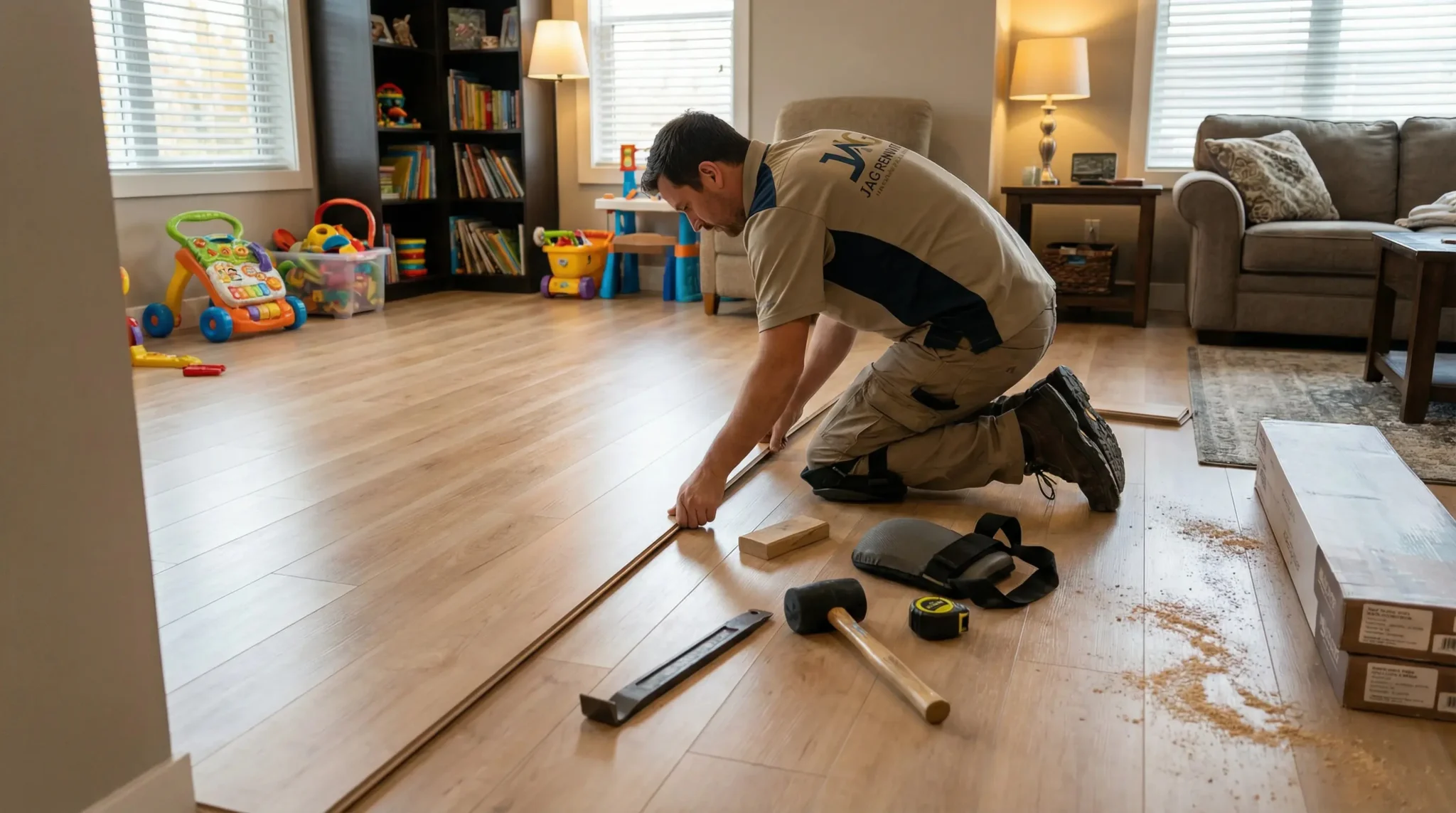
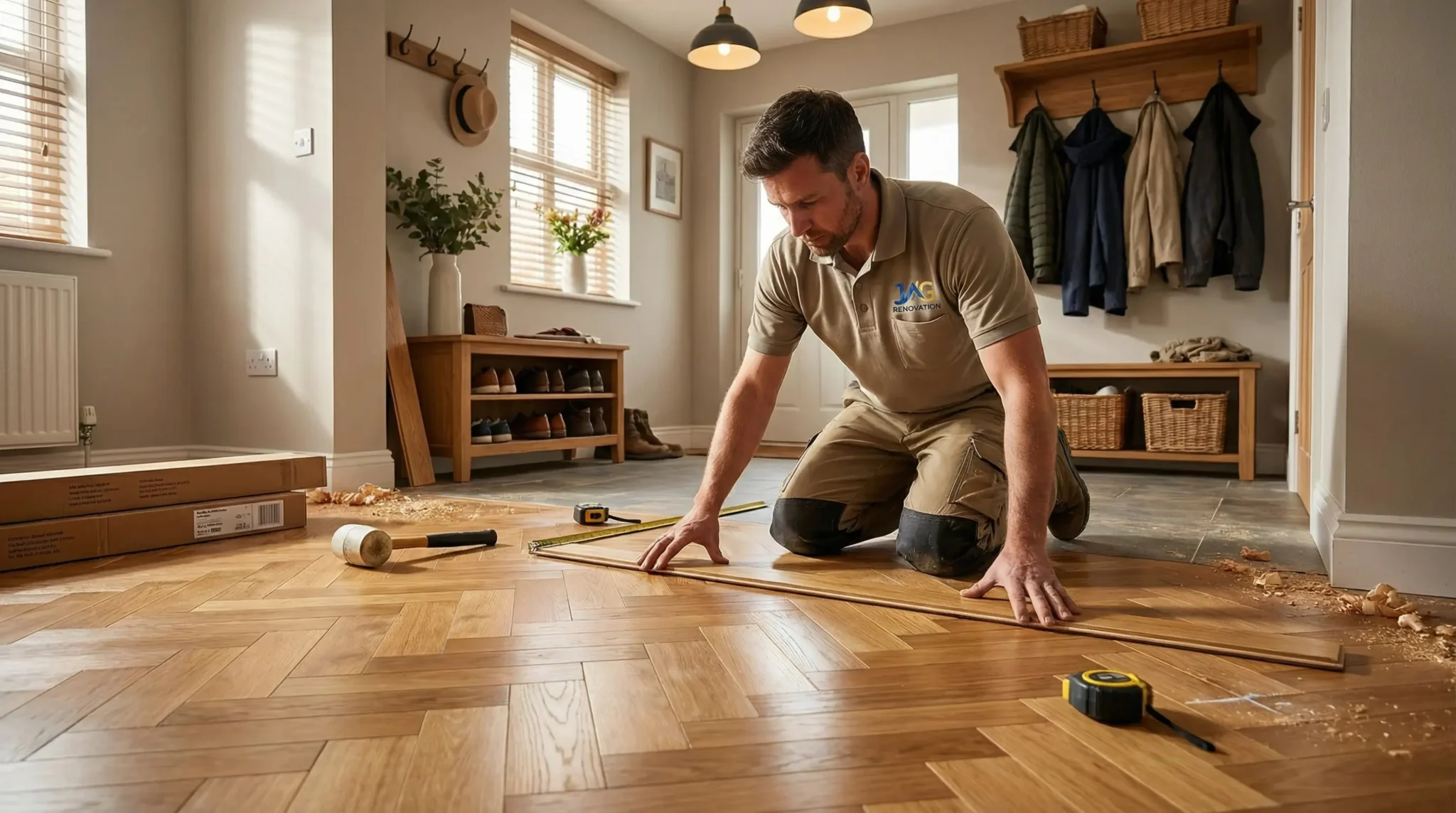
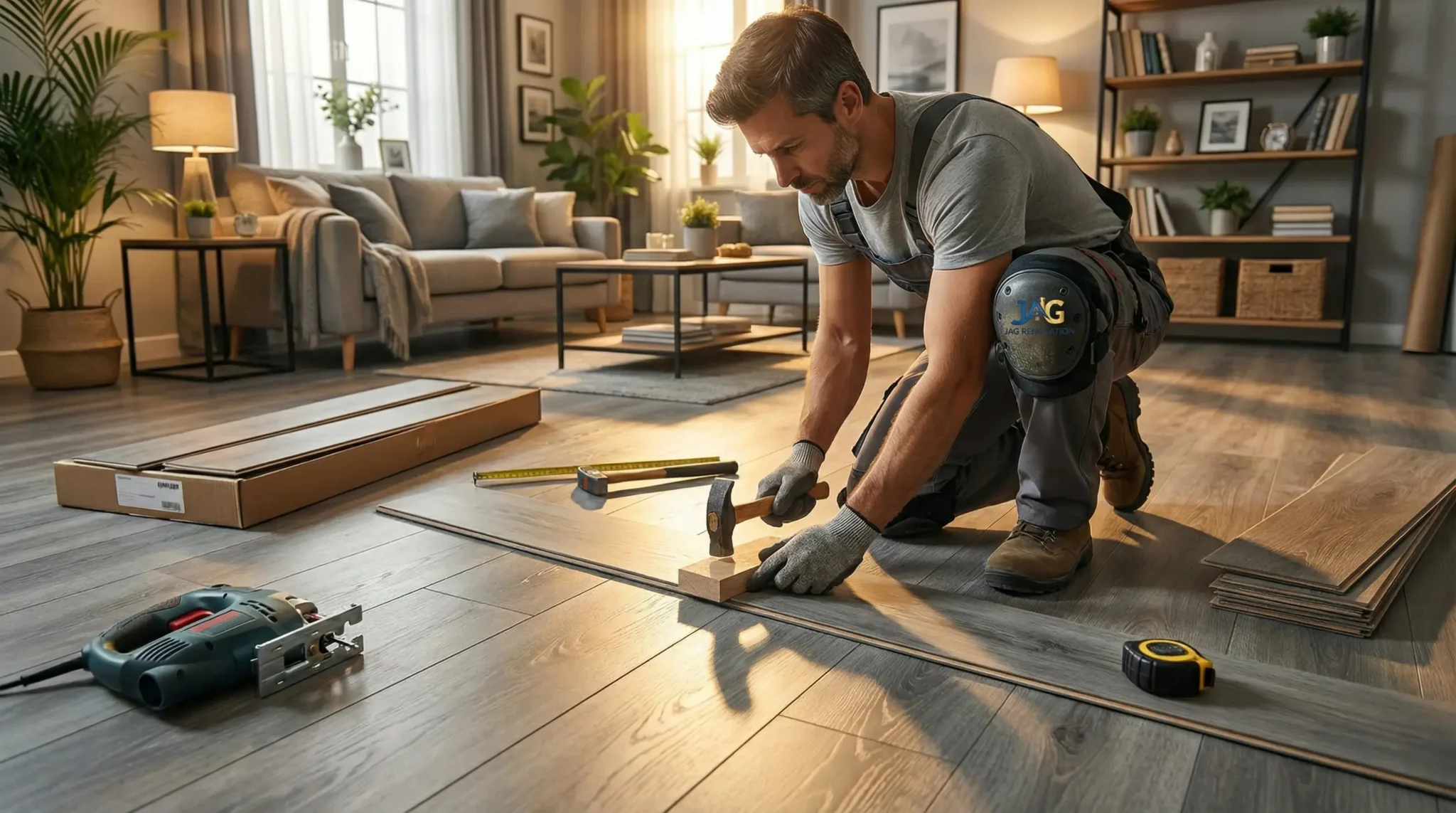
Once you approve the plan and pricing, we schedule the work around your life. We protect your furniture, pull up old flooring if needed, prep the subfloor properly, and install everything according to manufacturer specs—not shortcuts. We clean up daily, not just at the end.
After installation, we walk you through care instructions and make sure you’re happy with every detail. No rushing out the door. No ignoring your questions. You get our number, and if something comes up, you can actually reach us.
Ready to get started?
You’re getting full-service flooring work. That means removing old flooring, hauling it away, and prepping your subfloor correctly—not just slapping new material over problems.
We install hardwood, engineered wood, luxury vinyl plank, vinyl sheet flooring, ceramic tile, porcelain tile, and laminate. We handle whole-house projects and single-room updates. Kitchens, bathrooms, basements, living areas—anywhere you need new floors.
St. James homes built before 1980 often have subfloor issues that need addressing before new flooring goes down. We check for that. We fix it if needed. Because a beautiful floor installed over a bad subfloor is just an expensive problem waiting to happen.
If you’re replacing flooring in your house as part of a bigger renovation, we coordinate with other trades. We’ve done enough kitchen and bathroom remodels to know how to sequence the work so your tile gets installed after plumbing but before cabinets—the details that keep projects on schedule.

Luxury vinyl plank and porcelain tile handle humidity better than anything else. They don’t swell, warp, or develop mold when moisture levels spike in summer.
Engineered hardwood can work if it’s installed with the right moisture barrier and acclimated properly before installation. Solid hardwood is riskier in basements or homes without consistent climate control. It expands and contracts too much in coastal environments.
If you’re set on the look of hardwood but worried about humidity, engineered wood or wood-look luxury vinyl gives you the aesthetic without the maintenance headaches. We’ve installed both in hundreds of St. James homes, and the vinyl consistently outperforms in high-moisture areas like basements, mudrooms, and bathrooms.
For a typical St. James home, you’re looking at $8 to $18 per square foot installed, depending on material and prep work. That includes removing old flooring, subfloor repairs if needed, new material, and installation.
Vinyl plank sits on the lower end. Hardwood and high-end tile push toward the higher end. If your subfloor needs significant work—common in older homes—that adds to the cost, but it’s not optional if you want floors that last.
We don’t give ballpark estimates over the phone because every house is different. Subfloor condition, room layout, material choice, and whether you need transitions between rooms all affect final pricing. We come to your home, measure everything, check what’s underneath your current floors, and give you an actual number you can budget around.
Most single-room projects take one to three days. Whole-house flooring jobs typically run one to two weeks, depending on square footage and material.
Tile takes longer than vinyl or laminate because of mortar drying time and grouting. Hardwood installation moves faster but requires acclimation time before we start—usually a week of the material sitting in your home adjusting to humidity levels.
We don’t rush installations to move on to the next job. Subfloor prep, proper spacing for expansion, and letting adhesives cure correctly all take time. Cutting corners on timeline creates problems six months later when your floors start buckling or separating. We’d rather schedule realistic timelines upfront than deal with callbacks because we rushed.
Sometimes, but not always. It depends on what’s underneath and what’s going on top.
You can install luxury vinyl or laminate over existing tile if the tile is level, well-adhered, and not cracked. We check for hollow spots and lippage first. If the existing tile is a mess, it comes up—otherwise your new floor telegraphs every imperfection.
Installing new hardwood over old hardwood rarely makes sense. The height change creates tripping hazards at doorways, and you’re adding weight to a subfloor that might not handle it. We usually recommend removing old flooring so we can inspect and prep the subfloor properly.
Carpet always comes up. There’s no scenario where installing over carpet ends well. We pull it, remove the tack strips, check the subfloor for damage, and start fresh.
Luxury vinyl plank is the most pet-friendly flooring you can install. It’s waterproof, scratch-resistant, and doesn’t absorb odors. Dog nails won’t destroy it the way they destroy hardwood.
Porcelain tile is a close second. It’s completely waterproof and nearly impossible to scratch, but it’s cold and hard—not great if your dog has joint issues. Some people do tile in mudrooms and entries, then vinyl in living areas.
If you want hardwood and have pets, go with engineered wood in a matte finish with a strong urethane coating. Skip oil-finished floors—they show every scratch. And avoid soft woods like pine or fir. You want oak, maple, or hickory if you’re going the hardwood route with animals in the house.
No, but your routine gets disrupted. We work room by room when possible so you’re not displaced from your entire house.
You’ll need to clear furniture from the rooms we’re working in. We can help move large pieces, but clearing personal items, decor, and anything breakable is on you. Dust happens even with good containment, so if you have severe allergies or respiratory issues, staying elsewhere during demo might make sense.
Tile and hardwood installations create more noise and dust than vinyl or laminate. If you work from home or have young kids who nap, plan around that. We start early, work efficiently, and clean up at the end of each day so you’re not living in a construction zone overnight.