
Hear from Our Customers
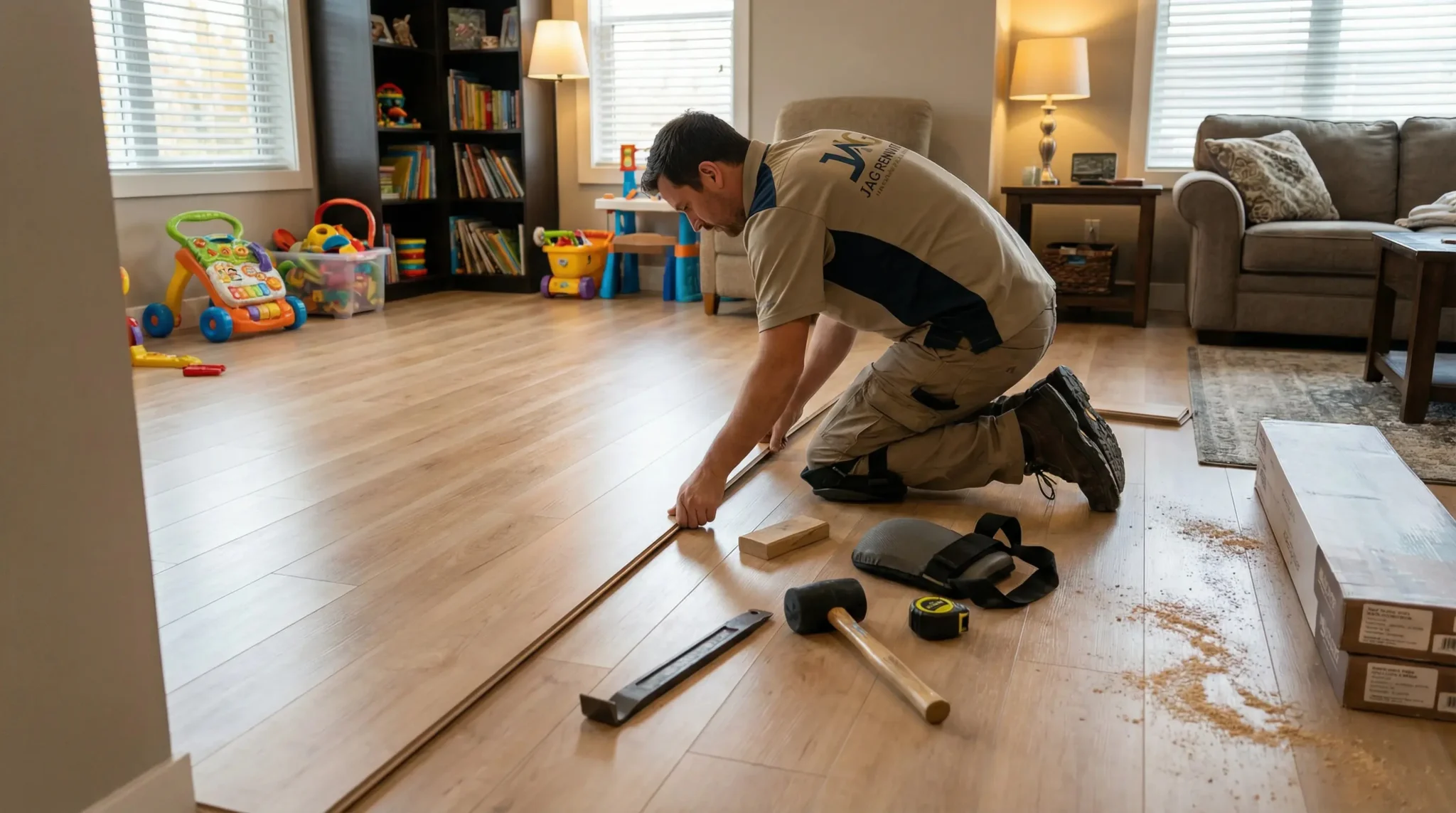
New flooring changes how your home feels the moment you walk in. It’s cleaner, quieter, and easier to maintain than what you’re dealing with now.
You stop worrying about water damage in the kitchen. You stop apologizing for worn carpet when guests come over. You get a floor that handles daily life without showing every scuff and spill.
Hardwood adds resale value—up to 70% ROI if you’re planning to sell. Vinyl and laminate give you the look without the maintenance headaches. Tile stands up to moisture in bathrooms and entryways where other materials fail. The right floor does more than look good—it makes your day easier and your investment smarter.
We’ve been handling interior renovations across Suffolk County for nearly ten years. We’re local, licensed, and we’ve installed floors in homes throughout Stony Brook, Selden, Smithtown, and Bay Shore.
We don’t work on commission. We don’t upsell materials you don’t need. You get a clear estimate, a realistic timeline, and flooring installed the way it’s supposed to be—level, sealed, and built to last.
Stony Brook homeowners deal with older housing stock, moisture from Long Island humidity, and the wear that comes with active households. We’ve seen it all, and we know how to install floors that hold up under real conditions.

You call or message us with what you’re thinking. We schedule a time to come see the space—measure the rooms, check the subfloor, and talk through your options based on how you use the space.
We send you a written estimate that breaks down materials, labor, and timeline. No surprises, no pressure. If it makes sense, we schedule the install around your life—not the other way around.
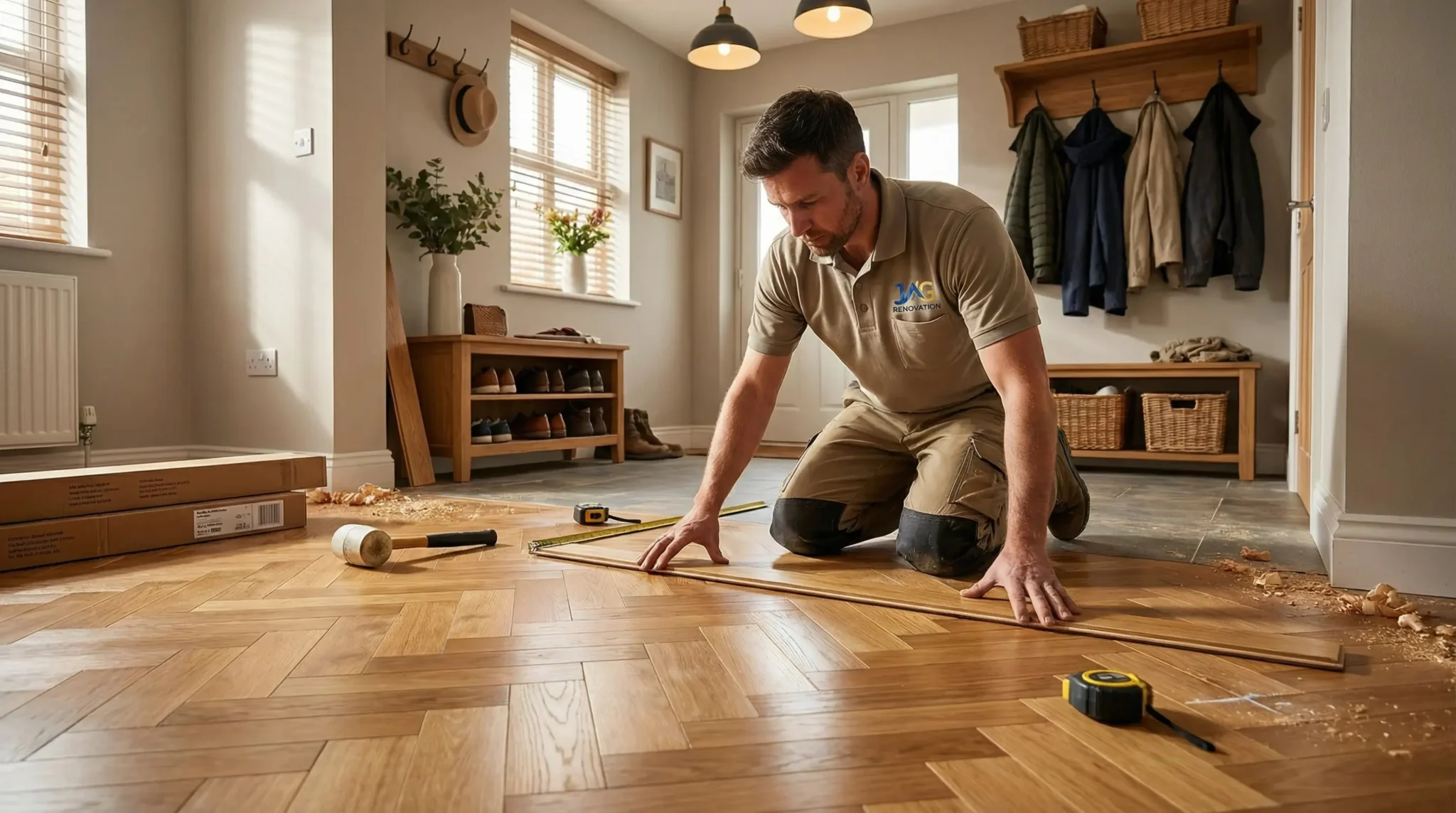
On install day, we prep the subfloor, handle any moisture barriers or underlayment, and lay your new flooring with the attention it takes to get expansion gaps, transitions, and seams right. We clean up daily and walk you through care instructions when we’re done. If something needs adjusting after install, we come back. That’s part of the job.

Ready to get started?
We handle hardwood, engineered wood, luxury vinyl plank, laminate, ceramic tile, and porcelain tile. If your subfloor needs leveling or repair, we take care of that first—it’s the difference between a floor that lasts and one that buckles in two years.
In Stony Brook, moisture management matters. Older homes near the harbor or university area can have humidity issues that warp wood floors if they’re not installed with proper underlayment and acclimation. We account for that. Basements get vapor barriers. Bathrooms get waterproof materials. Kitchens get tile or vinyl that won’t swell when the dishwasher leaks.
You’re also getting removal and disposal of old flooring, furniture moving if needed, and transition strips that actually match. We don’t leave you with a beautiful floor and a half-inch gap at the doorway. The details matter, and that’s where most contractors cut corners. We don’t.

Most residential flooring projects in Stony Brook take between two and five days, depending on square footage and material. A single room with vinyl plank or laminate can be done in a day or two. Whole-home hardwood or tile jobs take longer because of prep work, drying time for adhesives, and the precision required for layout.
If we’re removing old flooring, that adds time. Carpet pulls up fast, but tile or glued-down hardwood takes longer and sometimes reveals subfloor damage that needs fixing before new flooring goes down. We’ll tell you upfront if we find something during demo that changes the timeline.
We don’t rush installs to move on to the next job. Flooring needs time to acclimate to your home’s humidity before install, and grout or adhesive needs time to cure. Cutting those corners leads to gaps, cracks, and callbacks. We’d rather give you a realistic schedule and deliver a floor that stays put.
Tile and luxury vinyl are your best options for moisture-prone areas. Porcelain tile is completely waterproof and handles standing water without damage—it’s why you see it in every bathroom and most Long Island kitchens. Ceramic tile works too, but porcelain is denser and more durable for high-traffic spots.
Luxury vinyl plank and luxury vinyl tile have come a long way. They’re waterproof, not just water-resistant, and they look like real wood or stone without the maintenance. If you have kids or pets and you’re tired of worrying about spills, vinyl is hard to beat. It’s also warmer underfoot than tile, which matters in winter.
Laminate looks similar to vinyl but it’s not waterproof—it’s water-resistant at best. A slow leak or persistent moisture will make it swell and buckle. Hardwood in a kitchen can work if it’s engineered and properly sealed, but it’s not our first recommendation if you’re dealing with a busy household or older plumbing. We’ll walk you through what makes sense for your specific space and how you live in it.
Vinyl and laminate typically run between $3 and $8 per square foot installed, depending on the product quality and any subfloor prep needed. Tile ranges from $5 to $15 per square foot, with porcelain and larger format tiles on the higher end. Hardwood and engineered wood start around $8 and can go up to $15 or more for premium species and custom finishes.
Those numbers include labor, materials, and basic prep. If your subfloor needs leveling, moisture barriers, or structural repair, that’s extra—but we’ll catch that during the estimate so there’s no sticker shock later. Removal of old flooring usually adds $1 to $3 per square foot depending on what’s coming up.
In Stony Brook, older homes sometimes need more prep than newer construction. Floors aren’t always level, and subfloors can have water damage or weak spots that need addressing. We price everything upfront in writing. You’ll know what you’re paying and why before we start, and that number doesn’t change unless you change the scope.
Sometimes, but not always. Vinyl plank and laminate can often go over existing vinyl, tile, or hardwood if the surface is smooth, level, and structurally sound. It saves time and money on demo, and it’s a good option if the subfloor underneath is in good shape.
You can’t install over carpet—it has to come up. You also can’t install over floors that are damaged, uneven, or soft in spots. Laying new flooring over a bad subfloor just transfers the problem to your new floor. You’ll end up with squeaks, gaps, or buckling within a year.
We assess the existing floor during the estimate and let you know if it’s a candidate for overlay or if it needs to come up. If removal is necessary, we handle it and dispose of the old material. The goal is a stable, long-lasting install—not a quick fix that fails early.
Solid hardwood is a single piece of wood from top to bottom, usually three-quarters of an inch thick. It can be sanded and refinished multiple times over its life, which makes it a long-term investment. It’s also more sensitive to moisture and temperature changes, so it’s not ideal for basements or areas with high humidity swings.
Engineered hardwood has a real wood veneer on top with layers of plywood or composite underneath. It’s more stable in humid or below-grade environments because the layered construction resists expansion and contraction. You can refinish it once or twice depending on the thickness of the veneer, but not as many times as solid wood.
For most Stony Brook homes, engineered hardwood makes more sense. Long Island humidity fluctuates, and engineered wood handles that better without cupping or gapping. It also costs less to install and gives you the same look as solid hardwood. If you’re set on solid wood and your home has stable humidity and good climate control, it’s still a great option—we just want you to know what you’re getting into.
We can move most furniture as part of the job, but it helps if you clear out smaller items, breakables, and anything valuable or personal before we start. Dressers, nightstands, and decor should be moved out of the rooms we’re working in. We’ll handle beds, couches, tables, and larger pieces.
If you have extremely heavy furniture like a piano, a gun safe, or a full china cabinet, let us know ahead of time. We may need extra hands or equipment, or we’ll work around it if moving it isn’t realistic. We’ll also need clear access to the rooms—hallways, doorways, and staircases should be open so we can bring materials and equipment in without damaging walls.
We protect your home during the job. Floors in other rooms get covered, and we contain dust as much as possible. At the end of each day, we clean up debris and make sure the space is walkable. You shouldn’t have to live in a construction zone longer than necessary.
Other Services we provide in Stony Brook University