
Hear from Our Customers
Your floors take a beating. Kids, pets, furniture, spills, foot traffic—it all adds up. When you’re ready to replace what’s worn down or outdated, you want someone who shows up on time, does clean work, and doesn’t surprise you with costs you never agreed to.
That’s what professional flooring installation should look like. You get floors that look sharp, hold up under real life, and don’t require a callback three months later because something wasn’t done right the first time.
Whether you’re installing hardwood in your living room, tile in the kitchen, or vinyl plank throughout the main floor, the outcome matters more than the material. You want it level, sealed properly, and finished without damaging your baseboards or leaving dust in every corner of the house. That’s the standard, not the exception.
We’ve been installing floors across West Hills and Suffolk County for nearly ten years. We’re not a national chain with rotating crews. We’re a family-owned business that handles your project from start to finish—no subcontractors, no bait-and-switch pricing, no pushy sales calls after the estimate.
West Hills homeowners deal with the same challenges most Long Island residents face: older homes with uneven subfloors, moisture issues in basements, and tight timelines when you’re trying to get work done between family schedules. We’ve seen it all, and we plan for it.
You’ll work with licensed, insured professionals who’ve installed thousands of square feet of flooring in homes just like yours. We bring samples to you, walk through your options without the pressure, and give you a clear price before any work starts.

It starts with a consultation at your home. We measure the space, check the subfloor, talk through your options—hardwood, tile, laminate, vinyl, carpet—and answer your questions. You’ll see samples, get a breakdown of costs, and know exactly what’s included before you commit to anything.
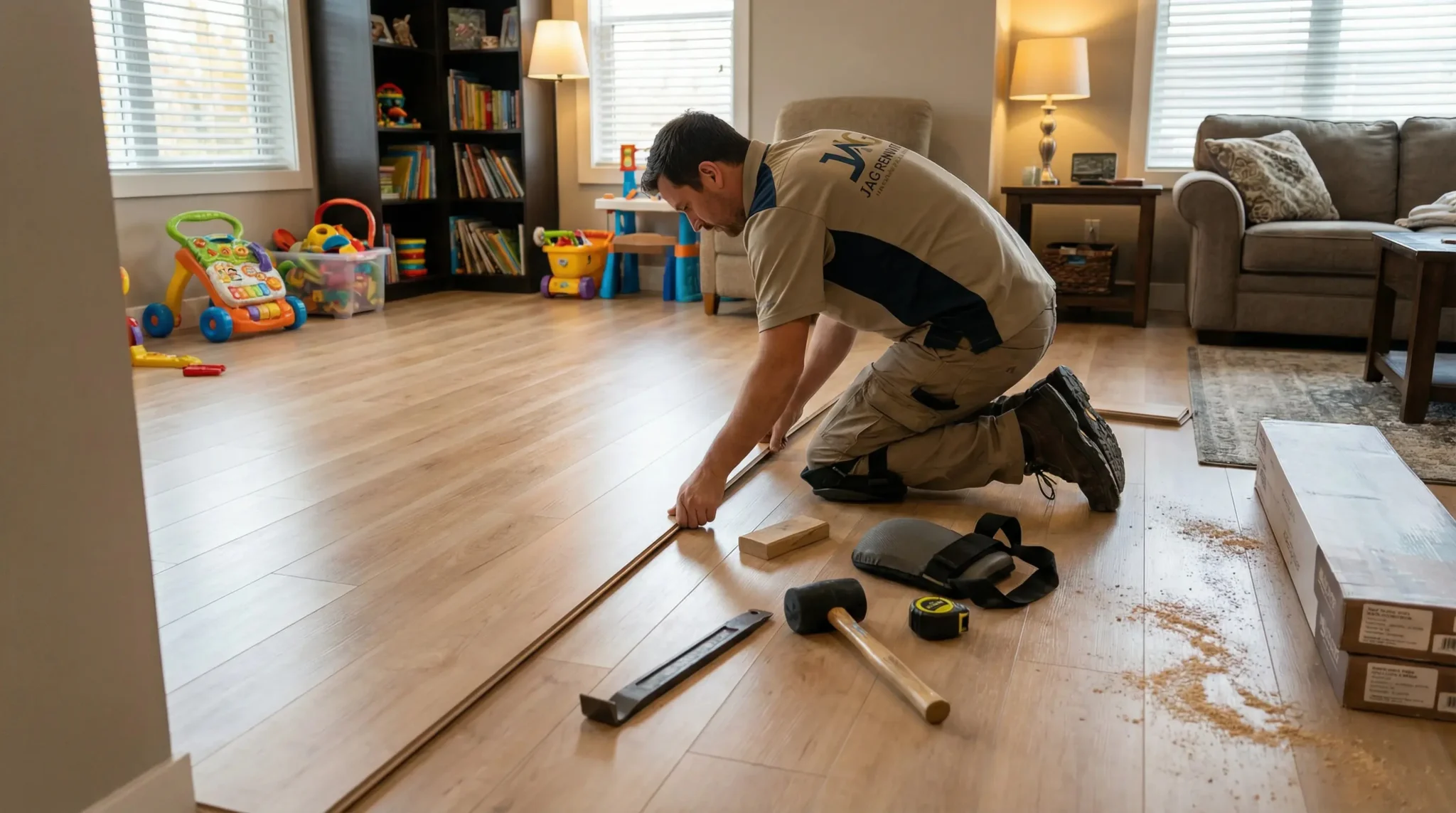
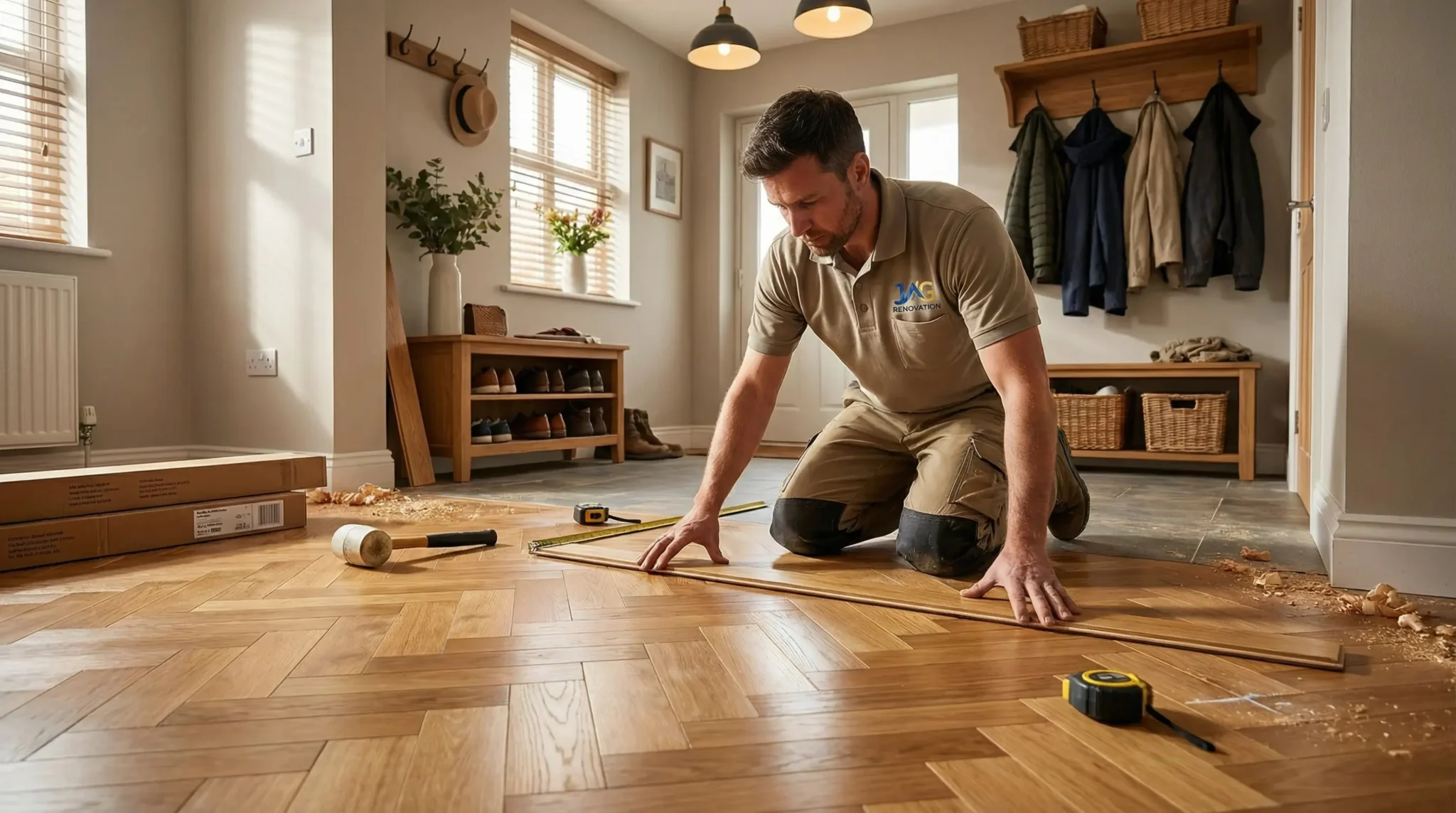
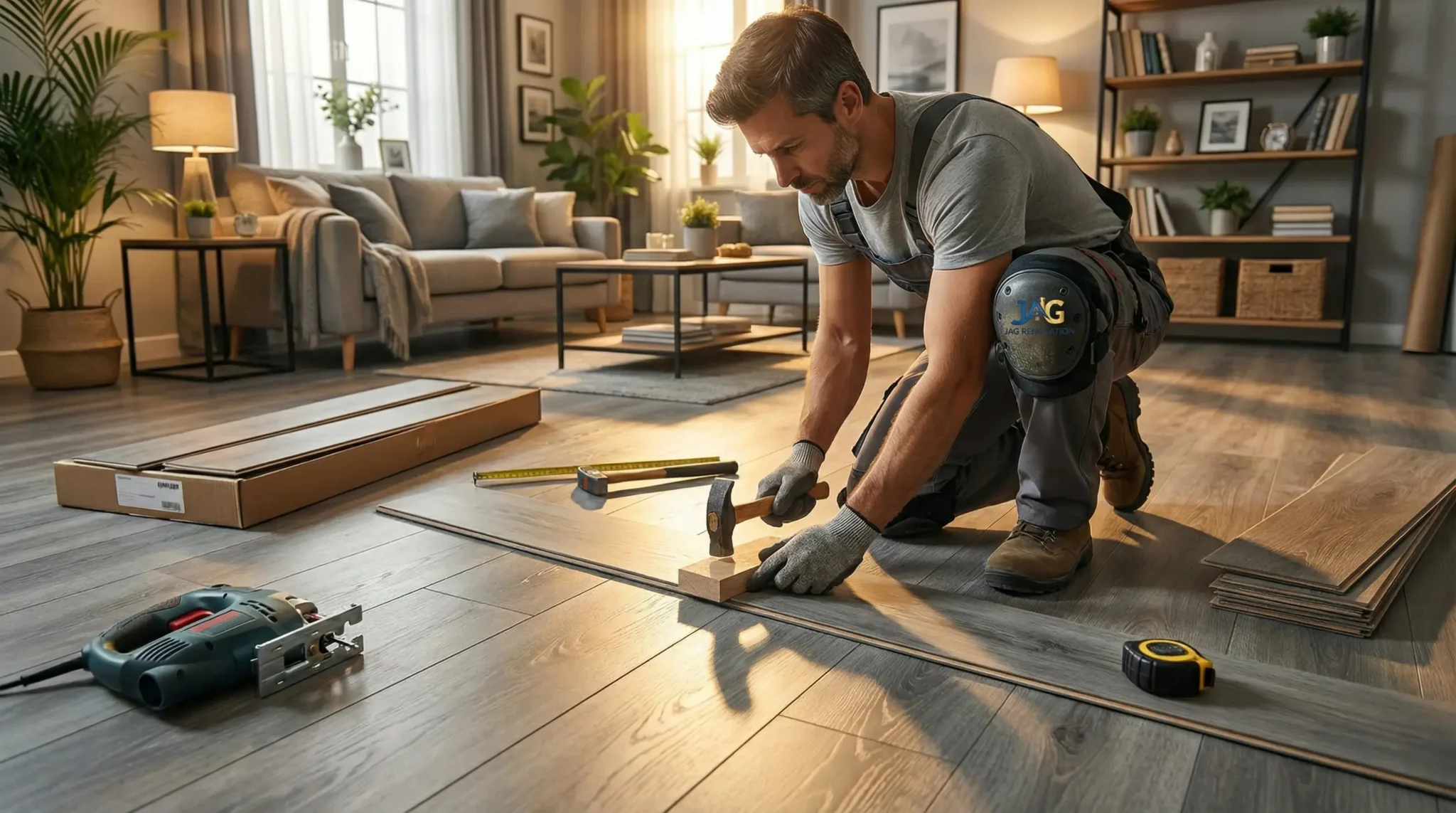
Once you’re ready to move forward, we schedule the work around your life, not ours. We remove old flooring, prep the subfloor if needed, and install the new material with the right underlayment, adhesive, or fasteners depending on what you’ve chosen. If there are transitions between rooms or tricky cuts around doorways and cabinets, we handle it.
Cleanup happens daily. We’re not leaving sawdust on your counters or nails in your driveway. When the job’s done, we walk the space with you to make sure everything meets your expectations. If something’s off, we fix it before we pack up.
That’s the process. No shortcuts, no surprises, no lingering mess after we leave.
Ready to get started?
Every flooring project includes removal of your old material, subfloor inspection and prep, professional installation, and full cleanup. We install hardwood, engineered wood, luxury vinyl plank, ceramic and porcelain tile, laminate, and carpet depending on what fits your space and budget.
In West Hills, we see a lot of requests for waterproof vinyl in basements and mudrooms, tile in kitchens and bathrooms, and hardwood or laminate in living areas and bedrooms. Homes built in the ’60s and ’70s often need subfloor leveling before new flooring goes down, and we factor that into the estimate upfront so there’s no sticker shock later.
For commercial projects—offices, retail spaces, rental properties—we work around your business hours and move fast without sacrificing quality. You’ll get durable materials that handle high traffic and a timeline that doesn’t drag out for weeks.
We’re licensed and insured, and our crews are OSHA-certified. That’s not just a box we check—it means safer job sites and fewer liability headaches for you.

For most residential projects in West Hills, flooring installation takes anywhere from two to five days depending on the size of the space, the material you’re installing, and the condition of your subfloor. A single room with vinyl plank or laminate might be done in a day or two. A whole-house job with hardwood or tile will take longer.
The timeline also depends on whether we’re removing old flooring, leveling the subfloor, or working around furniture that needs to be moved. We give you a realistic schedule during the estimate so you can plan accordingly.
If you’re living in the home during the work, we do our best to keep disruptions minimal. We’ll finish one area before moving to the next so you’re not walking on plywood for a week straight.
Luxury vinyl plank and tile are the most forgiving options if you’ve got kids and pets. Vinyl is waterproof, scratch-resistant, and easy to clean. Spills don’t soak in, claws don’t leave marks, and if a plank gets damaged, you can replace just that section without redoing the whole floor.
Laminate is another solid choice if you want the look of hardwood without the maintenance. It’s durable and budget-friendly, though it’s not fully waterproof like vinyl. If water sits too long, it can seep into the seams.
Hardwood is beautiful, but it requires more care. You’ll see scratches over time, and water damage is a real risk in kitchens or entryways. If you love the look of wood and want something more resilient, engineered hardwood is a middle ground—it’s real wood on top with a more stable core underneath, so it handles moisture better than solid hardwood.
Yes. We remove old flooring as part of the job, whether it’s carpet, tile, hardwood, or vinyl. That includes pulling up tack strips, scraping adhesive, and hauling everything off-site. You won’t have a pile of debris sitting in your driveway when we’re done.
Furniture moving depends on the scope of the project. For smaller jobs, we can work around furniture or shift it room by room. For larger projects, we’ll ask you to clear out what you can ahead of time, and we’ll handle the rest. Heavy items like dressers, beds, and couches—we move those.
If you’ve got a piano, a gun safe, or something that requires special equipment, we’ll talk through the plan during the estimate. The goal is to make this as easy on you as possible without creating extra costs or complications.
Cost depends on the material, square footage, and the condition of your subfloor. Vinyl and laminate are typically the most affordable options, ranging from $3 to $7 per square foot installed. Tile runs $5 to $12 per square foot depending on the type and pattern. Hardwood is usually $8 to $15 per square foot or more for premium species and finishes.
Those are ballpark numbers. If your subfloor needs leveling, if there’s old adhesive that requires extra prep, or if you’re installing in a space with a lot of cuts and transitions, that affects the final price. We give you a detailed estimate after seeing the space so there’s no guessing.
We don’t play games with pricing. What we quote is what you pay unless you change the scope of the project. No hidden fees, no surprise charges when the job’s halfway done. That’s part of doing business the right way.
Absolutely. Basements and high-moisture areas require the right materials and installation methods, but it’s something we handle regularly in Suffolk County. Luxury vinyl plank and tile are the best choices for basements because they’re fully waterproof and won’t warp or buckle if moisture comes through the slab.
We inspect the subfloor for any signs of water damage or uneven settling before installation. If there’s a moisture issue, we’ll recommend a vapor barrier or other prep work to protect your investment. Skipping that step leads to problems down the road, and we’d rather address it upfront.
Carpet can work in finished basements if the space is climate-controlled and dry, but we typically steer people toward vinyl or tile for durability and peace of mind. If flooding ever happens, vinyl dries out. Carpet doesn’t.
Solid hardwood is exactly what it sounds like—planks milled from a single piece of wood, usually three-quarters of an inch thick. It’s durable, it can be sanded and refinished multiple times, and it adds real value to your home. The downside is that it expands and contracts with humidity, so it’s not ideal for basements or areas with moisture exposure.
Engineered hardwood has a real wood veneer on top with a plywood or composite core underneath. It’s more stable than solid hardwood, which means it handles temperature and moisture changes better. You can install it in basements and over radiant heat, and it still looks like real wood because the top layer is real wood.
The tradeoff is that you can only refinish engineered hardwood once or twice depending on the thickness of the veneer. Solid hardwood can be refinished five or six times over its lifespan. Both are good options—it just depends on where you’re installing and how long you plan to stay in the home.