
Hear from Our Customers
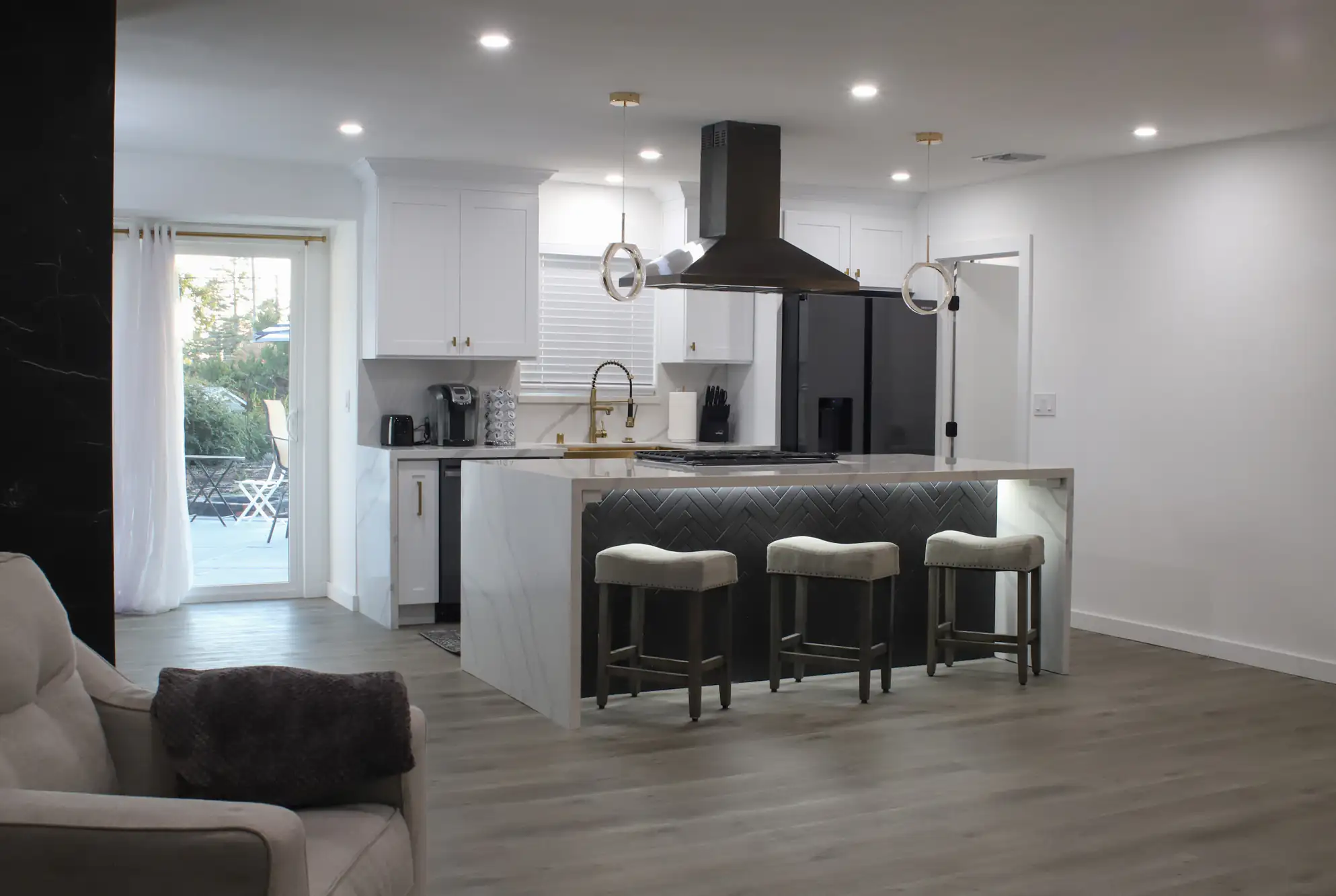
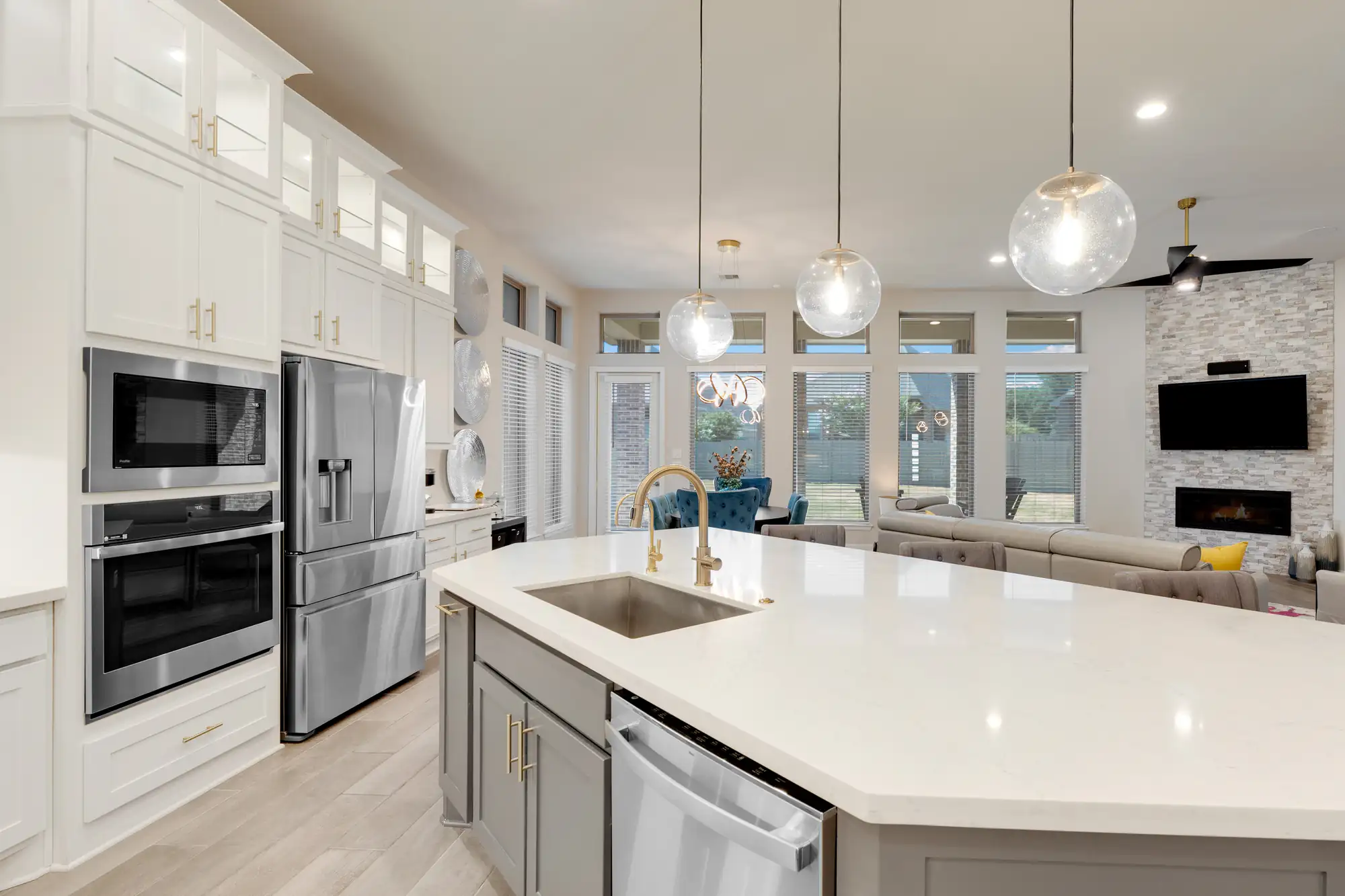
You’re not just updating cabinets. You’re reclaiming counter space that’s been cramped for years, adding storage that actually makes sense for how you cook, and creating a layout that doesn’t force three people into a bottleneck every morning.
A minor kitchen remodel with midrange finishes adds an average of $32,141 to your home’s sale price in this market. That’s a 113% return on investment, the highest of any interior project. But the real value shows up daily—in the drawer that finally closes, the lighting that doesn’t cast shadows on your cutting board, and the island that gives your family a place to gather without tripping over each other.
Homes in Smithtown sell in under 30 days right now. The difference between sitting on the market and getting multiple offers often comes down to kitchens. Buyers walk in, open a few cabinets, check the countertops, and decide. You either have their attention or you don’t.
We’ve been doing kitchen renovations in Smithtown and across Suffolk County since 2016. That means we know the permit process, the building codes, and the quirks of older Long Island homes—the ones built in the 60s and 70s with layouts that don’t make sense anymore.
We’re licensed, insured, and we handle everything from design to permits to the final installation. No subcontracting out the hard parts. No disappearing between phases. You work with the same people from start to finish, and we’re reachable when you have questions.
Most of our work comes from referrals. We have over 500 references available if you want to talk to people who’ve actually hired us. That’s not something you can fake.
It starts with a walkthrough at your home. We measure, take notes, and talk through what’s not working. You tell us what you need—more storage, better lighting, an island, new appliances—and we talk through what’s realistic for your space and budget.
From there, we put together a detailed estimate. No vague line items or allowances that balloon later. You’ll know what you’re paying for custom kitchen cabinets, countertops, labor, permits, and everything else before we start. If something changes during the job, we talk about it before moving forward.
Once you approve the plan, we handle the permits with the town. Suffolk County permit fees typically run $300 to $1,000 depending on scope. We pull those, schedule inspections, and keep the project moving while you go about your life. Most families stay in their homes during the renovation—it takes some planning, but it’s manageable.
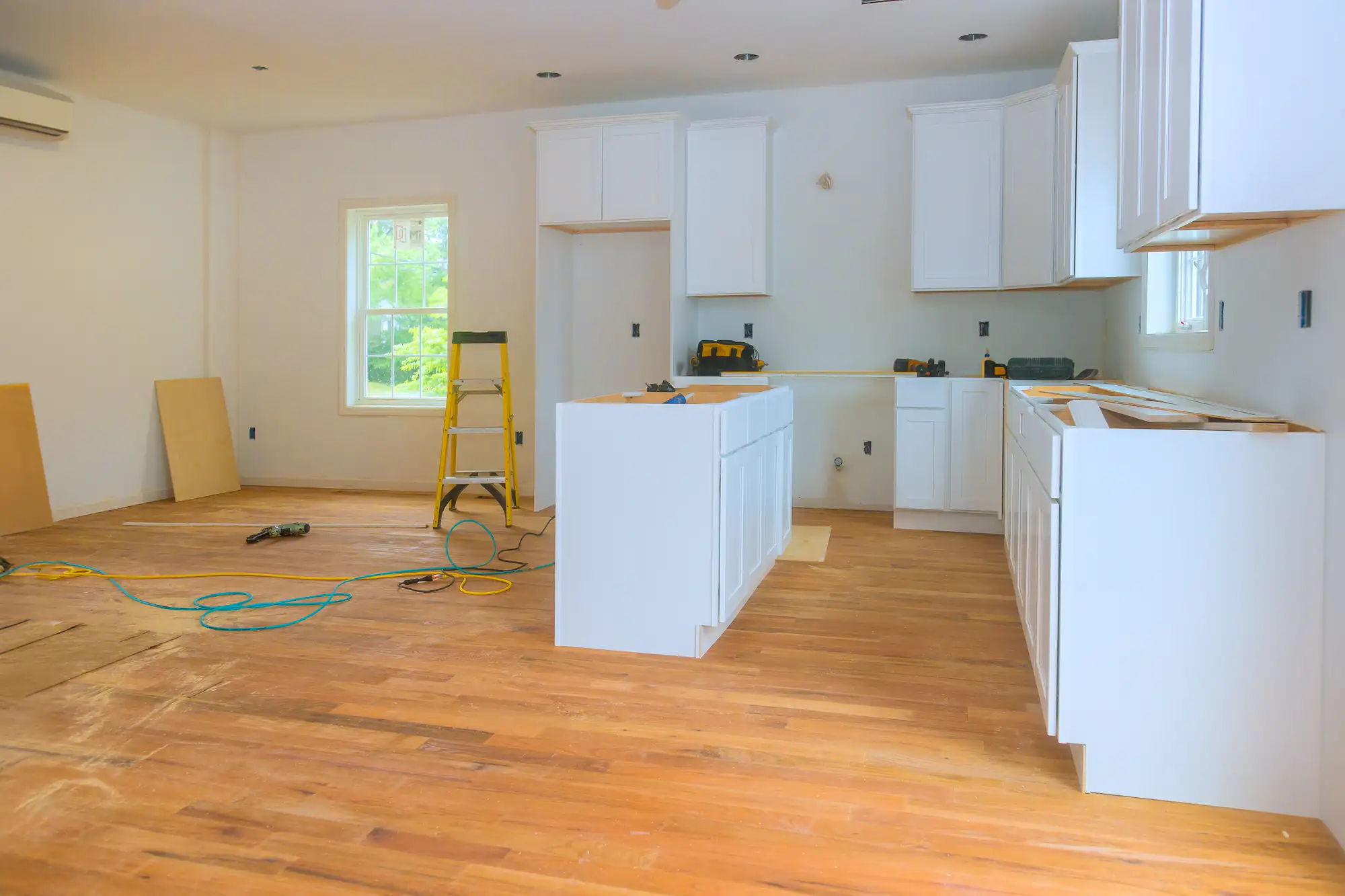
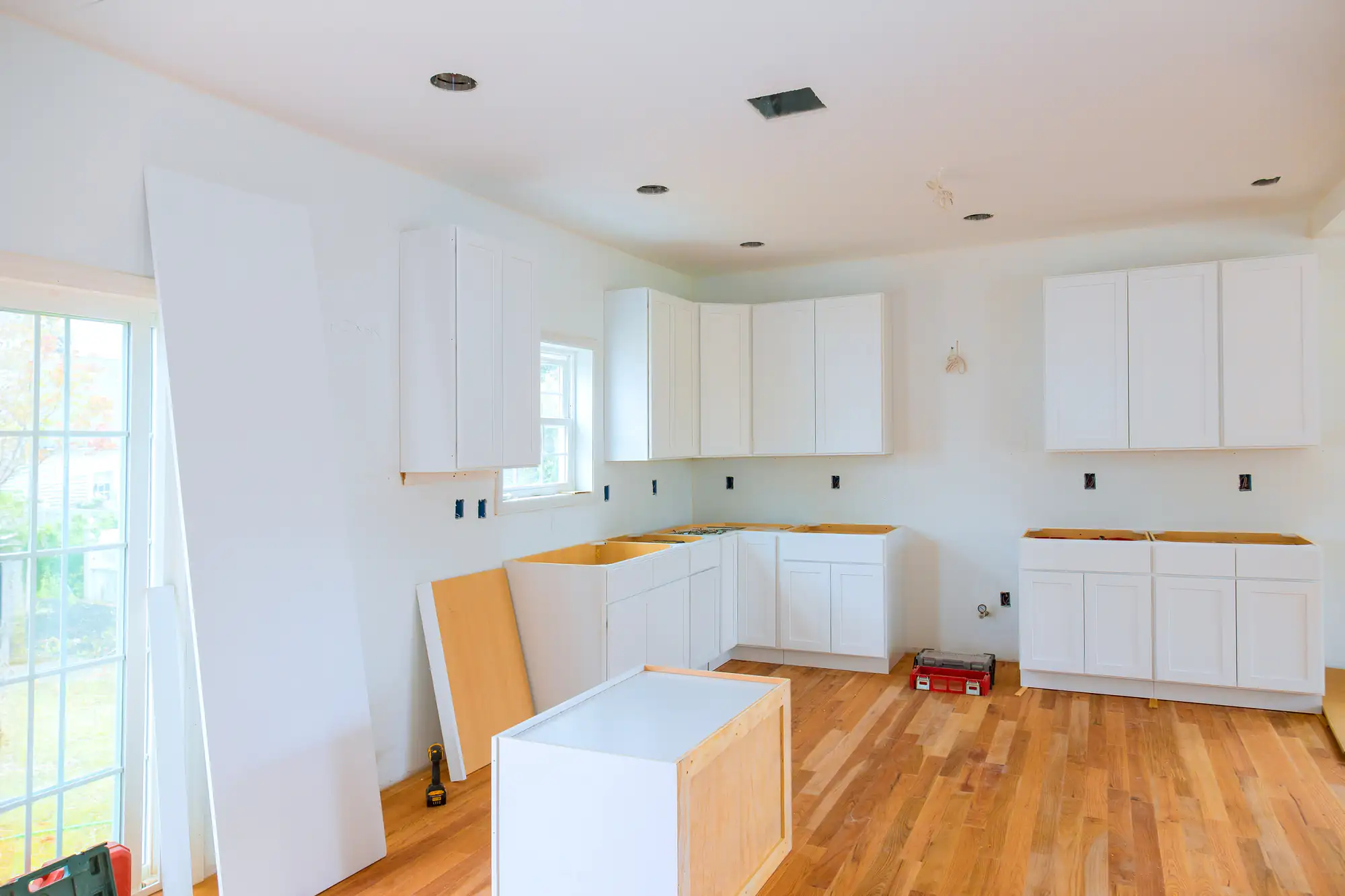
Demo happens first. Then rough-in work for plumbing and electrical if needed. Then drywall, paint, and cabinet installation. Countertops go in last, followed by backsplash and final fixtures. We clean up daily and keep disruption as minimal as possible given that we’re tearing apart your kitchen.
Ready to get started?
Custom kitchen cabinets installation is usually the biggest line item, and for good reason. Cabinets define your storage, your layout, and a lot of the visual feel. We work with quality manufacturers and help you choose styles that fit Smithtown homes—not trendy stuff that’ll look dated in three years, but clean, functional designs that age well.
Countertops come next. Quartz is popular right now because it’s durable and doesn’t need sealing like granite. We template and install in-house so there’s no coordination headache with a third party. Same goes for backsplash—tile, stone, or whatever fits your style and maintenance preference.
Lighting is underrated. Most older kitchens have one ceiling fixture and maybe an over-the-sink light. We add recessed lighting, under-cabinet LEDs, and pendant lights over islands. It changes how the space feels and how well you can actually see what you’re doing.
Flooring, paint, and trim round it out. If your appliances are outdated, we coordinate delivery and installation timing so everything’s ready when the space is. And if you want energy-efficient upgrades—new windows, better insulation, Energy Star appliances—there are federal tax credits up to $3,200 annually that offset some of the cost.
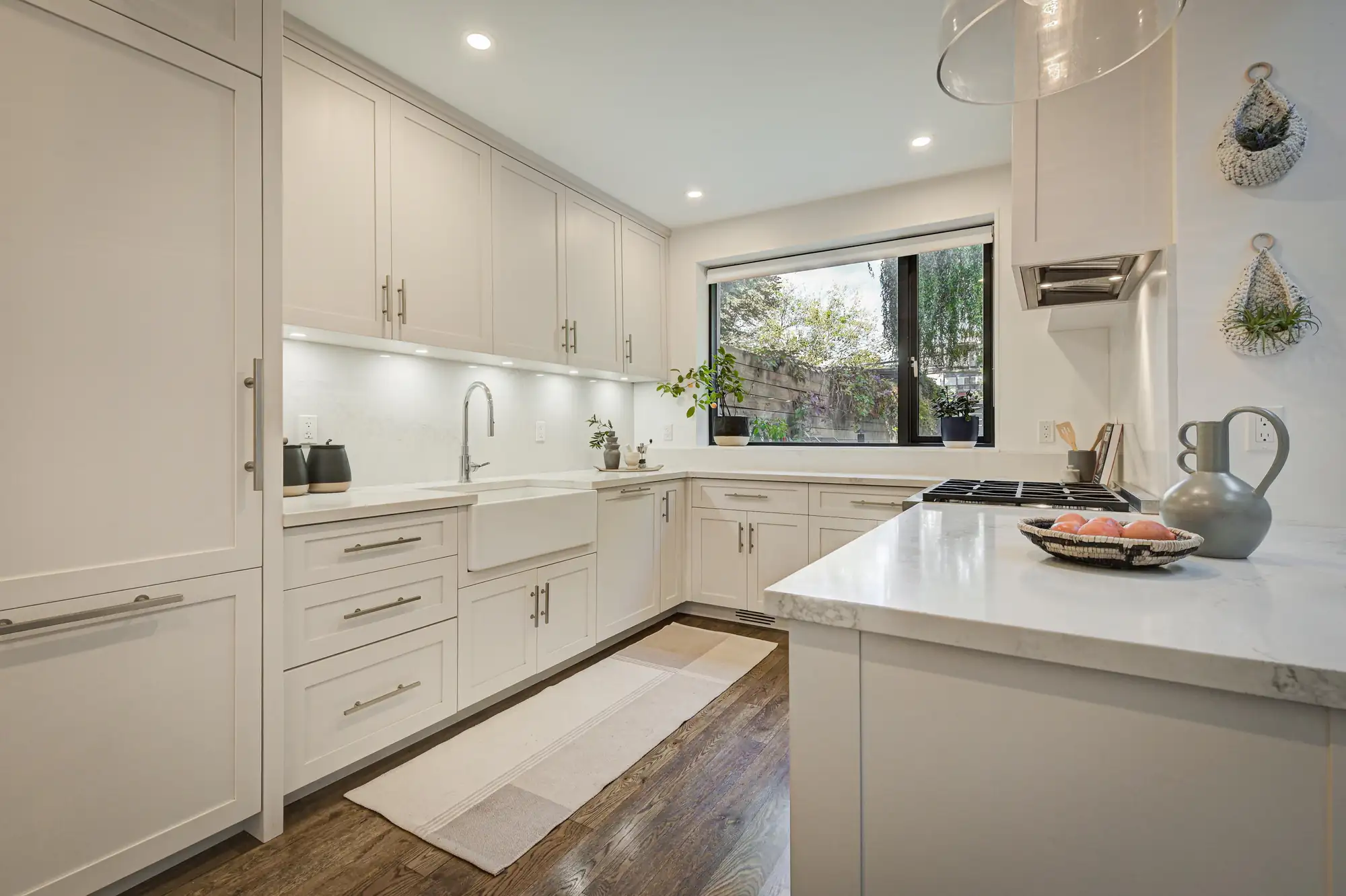
Most kitchen renovations in Smithtown run between $25,000 and $60,000 depending on size, materials, and how much you’re changing. A minor remodel—new cabinets, countertops, paint, and fixtures without moving walls—usually lands in the $25,000 to $35,000 range. A major remodel with layout changes, new appliances, and high-end finishes can push $60,000 or more.
The biggest cost driver is cabinets. Custom kitchen cabinets installation typically accounts for 30-40% of your total budget. Countertops are next at 10-15%, then labor, then everything else. If you’re working with an older home and need to address electrical, plumbing, or structural issues, that adds to the scope.
We give you a detailed estimate upfront so there’s no guessing. Every line item is spelled out—materials, labor, permits, disposal. If your budget is firm, we work within it and tell you what’s possible. If it’s flexible, we show you where spending more actually makes sense and where it doesn’t.
Most kitchen remodels take 4 to 8 weeks depending on scope and whether we’re waiting on custom orders. A straightforward cabinet swap with new countertops and paint might be done in 3-4 weeks. A full gut renovation with layout changes, new electrical, and custom everything can stretch to 8-10 weeks.
Permitting adds time upfront. Suffolk County typically takes 2-3 weeks to issue permits once we submit plans. We factor that into the timeline so you’re not surprised. Once permits are approved and materials arrive, the physical work moves steadily—demo in a few days, rough-in work in a week, then finish work over the next few weeks.
The wildcard is custom cabinets. Lead times vary by manufacturer but usually run 3-5 weeks. We order early and coordinate delivery so they arrive right when we need them. If you’re on a tight timeline, we can work with semi-custom or stock options that ship faster without sacrificing quality.
No, most families stay in their homes during kitchen renovations. It’s inconvenient, but it’s manageable with some planning. You’ll need a temporary kitchen setup—microwave, coffee maker, mini fridge—in another room. A lot of people use their dining room or basement. You won’t have a functioning sink or stove for a few weeks, so plan on takeout, simple meals, and paper plates.
We clean up daily and contain dust as much as possible, but there will be noise and disruption during work hours. If you work from home or have young kids, it helps to plan around that. Some people take a week off and stay with family during the messy demo phase, then come back once things are cleaner.
The alternative is moving out entirely, which some people do if they’re doing multiple rooms at once or if the kitchen is the only bathroom access point. But for a standalone kitchen remodel, staying put is usually the easier call. We’ve done hundreds of these with families in the house—it’s temporary, and the result is worth it.
Yes, but how much depends on what you’re starting with and what you’re upgrading to. A minor kitchen remodel with midrange finishes recoups about 113% of the cost in this market, which is exceptional. That means if you spend $30,000, you’re adding roughly $34,000 to your sale price. A major upscale remodel recoups closer to 60-80%, so there’s a point where you can overspend for the neighborhood.
Smithtown buyers expect updated kitchens. Homes with original 1970s cabinets and laminate countertops sit longer and sell for less. Homes with clean, modern kitchens get multiple offers and sell in under 30 days. The difference isn’t subtle—it’s often the deciding factor between a buyer making an offer or moving on to the next listing.
The smartest approach is to match the quality level of your neighborhood. If comparable homes have quartz countertops and shaker cabinets, that’s your baseline. Going significantly above or below that won’t serve you well. We help you find that sweet spot where you’re competitive without overbuilding for the area.
Start with licensing and insurance. Any kitchen remodel contractor working in New York should carry general liability insurance and workers’ comp. Ask to see proof. If they hesitate or say they’re covered under someone else’s policy, walk away. You’re liable if someone gets hurt on your property and they’re not properly insured.
Next, ask how long they’ve been working locally and whether they handle permits. Suffolk County has specific building codes, and kitchen renovations usually require permits for electrical, plumbing, and structural work. A contractor who’s been operating in Smithtown for years will know the process and have relationships with local inspectors. Someone from out of the area might not.
References matter more than reviews. Anyone can get a few five-star Google reviews. Ask for a list of recent projects in your town and call a few. Ask about communication, timeline, budget, and how they handled problems. Every job has something go wrong—what matters is how the contractor responds.
Finally, get everything in writing. Scope, timeline, payment schedule, materials, and what happens if you want to make changes mid-project. Vague contracts lead to disputes. Detailed ones protect both sides and keep expectations clear from the start.
We can work with your existing layout if it’s functional and you’re happy with the flow. Keeping the same footprint saves money because you’re not moving plumbing, gas lines, or electrical. You can still update everything—cabinets, countertops, flooring, lighting—and completely transform how the kitchen looks and works without touching the layout.
That said, a lot of older Smithtown homes have layouts that don’t make sense anymore. Kitchens from the 60s and 70s were designed when families cooked differently and didn’t need as much counter space or storage. If your layout feels cramped, has wasted space, or creates bottlenecks, changing it might be worth the extra cost.
We walk through your space and talk through what’s working and what’s not. Sometimes it’s a small change—removing a wall to open up the kitchen to the dining room, or adding an island for more prep space. Other times it’s a full reconfiguration. We’ll tell you what’s realistic for your budget and whether the improvement justifies the cost. The goal is a kitchen that works for how you actually live, not just one that looks nice.