
Hear from Our Customers
You’re tired of floors that warp when humidity spikes. Tired of laminate that bubbles after one wet winter. Tired of contractors who disappear mid-project or tack on costs you never saw coming.
Here’s what changes: you get flooring that’s chosen specifically for how Copiague homes actually live. Materials that handle moisture, kids, pets, and the occasional nor’easter without falling apart in three years. Installation done right the first time, with proper acclimation and moisture barriers—not shortcuts.
Your floors should make your home feel finished, not give you something else to stress about. That’s the difference between picking materials off a showroom wall and working with someone who knows what actually holds up here.
We’ve been handling interior renovations across Copiague and Suffolk County for almost ten years. We’ve seen what works in homes near the water and what fails six months in.
We don’t do sales pressure. We don’t hide costs in fine print. You get straightforward pricing, clear communication, and flooring that’s installed with the kind of attention you’d expect if it were going in our own house.
Licensed, insured, and focused on doing the work right—not fast, not cheap, but right. If you’ve been burned by contractors before, you’ll notice the difference in how we show up.

First, we come out to see what you’re working with. We measure, check subfloors, talk about how you actually use the space, and recommend materials that make sense for your home and budget. No upselling. Just honest input.
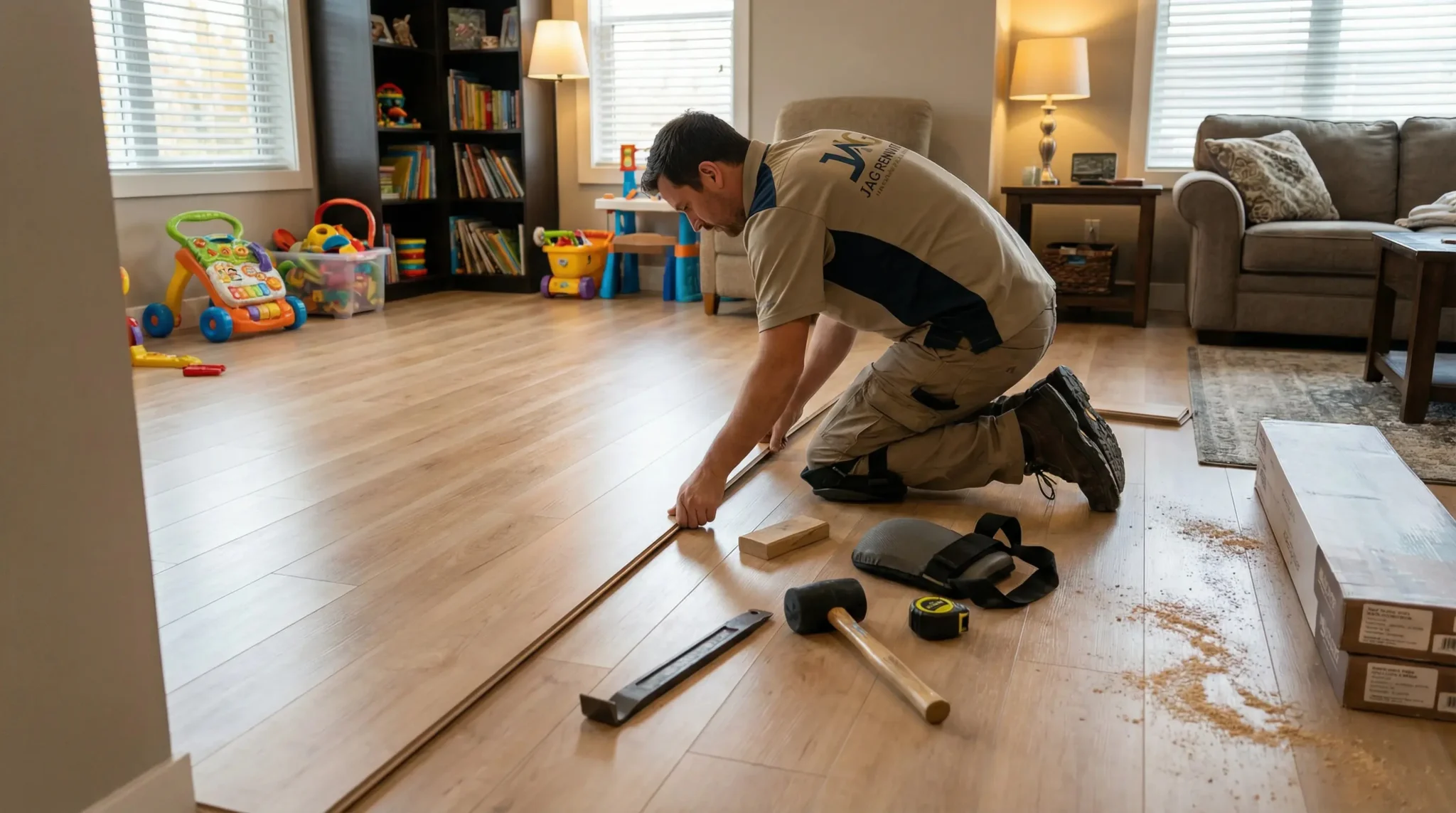
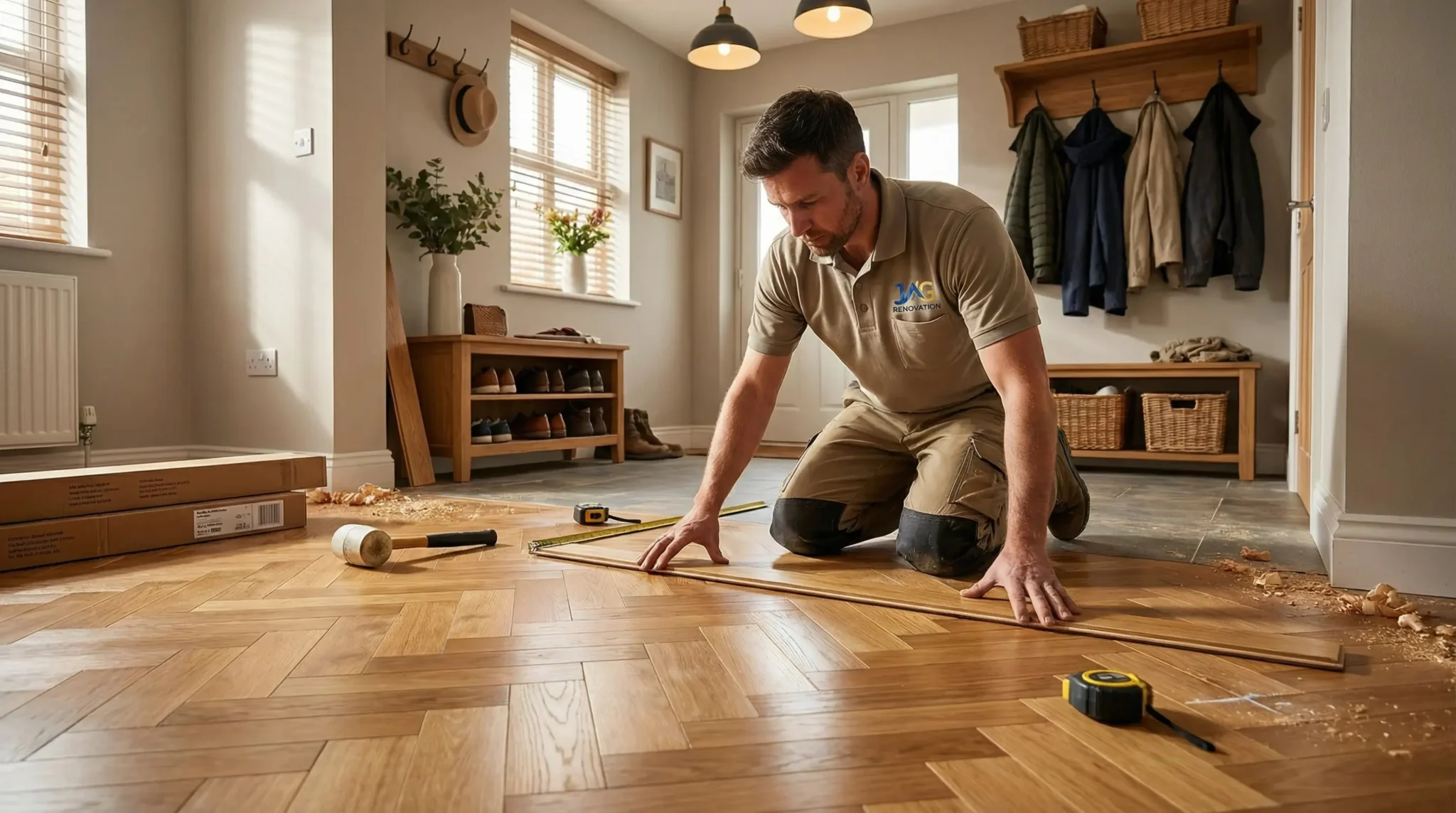
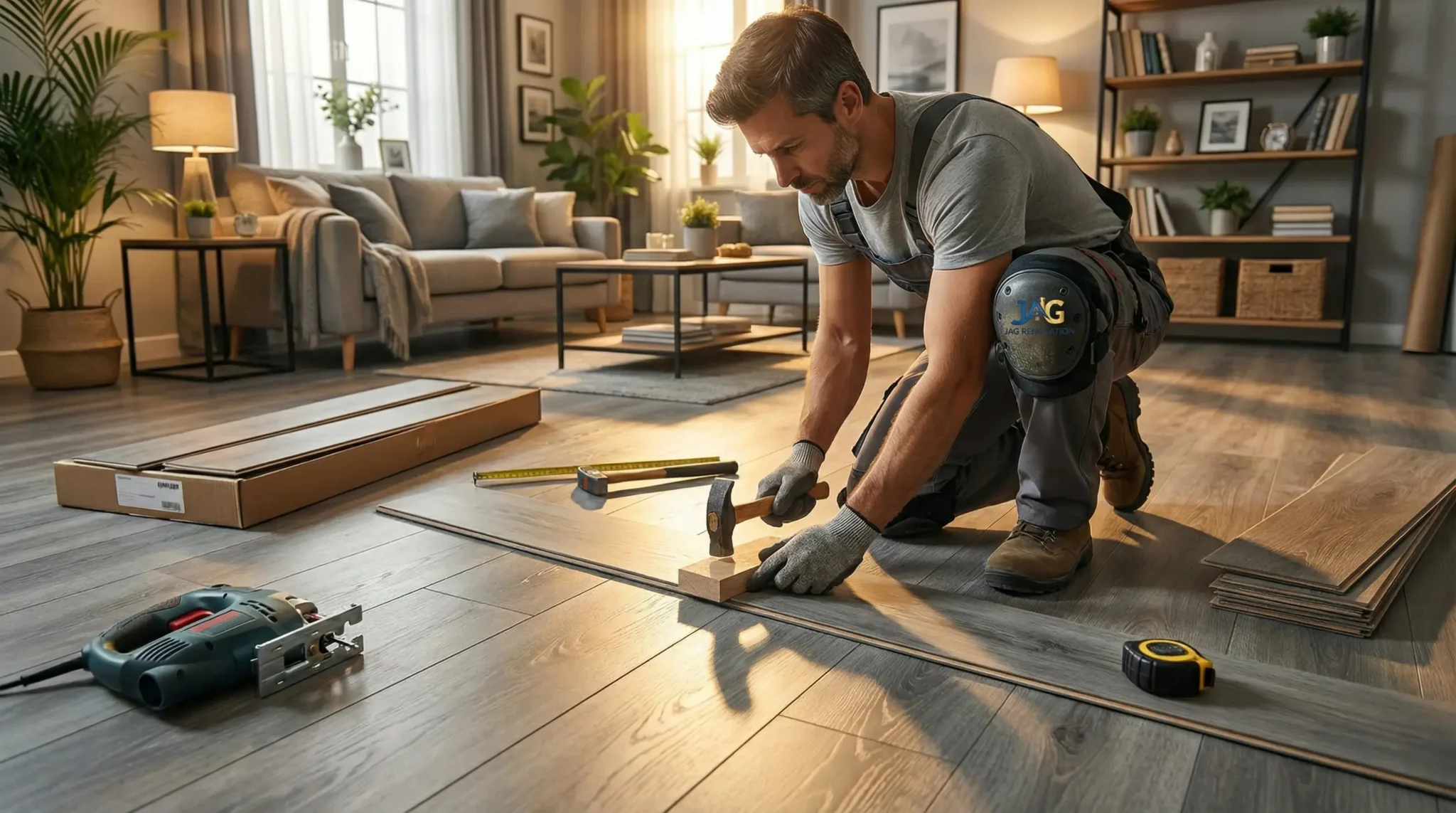
Once you’re ready to move forward, we schedule the work and handle removal of your existing flooring if needed. We prep the subfloor properly—leveling, moisture barriers, the stuff that matters but nobody sees. Then we install your new floors with the right acclimation time and technique for the material.
Most residential flooring projects take two to five days depending on square footage and material. Hardwood needs more time to acclimate. Luxury vinyl goes faster. We keep you updated, clean up daily, and don’t leave until it’s done right.
You’re not guessing what’s happening or when we’ll show up. You know the plan, the timeline, and the cost before we start.
Ready to get started?
We handle hardwood, engineered wood, luxury vinyl plank, laminate, tile, and ceramic tile floor installation. Each material has trade-offs, and we’ll walk you through what actually makes sense for your space.
Luxury vinyl plank is the most requested option going into 2026 for good reason—it’s waterproof, looks like real wood, and handles the kind of abuse Copiague homes deal with. Engineered hardwood gives you the look of traditional wood with better moisture resistance. Tile works great in bathrooms, kitchens, and basements where water’s a concern.
Copiague’s coastal climate means humidity swings, salt air, and moisture creeping up from below. We account for that in material selection and installation. If your basement floods every few years, we’re not putting down laminate. If you’ve got kids and dogs, we’re steering you toward something durable, not delicate.
This isn’t about selling you the most expensive option. It’s about installing floors that still look good and function well five, ten, fifteen years from now.

Luxury vinyl plank and engineered hardwood are your best bets. Luxury vinyl is fully waterproof, so it handles spills, humidity, and even minor flooding without warping or swelling. It’s become the go-to for Suffolk County homes because it performs well in basements, kitchens, and high-traffic areas where moisture’s a concern.
Engineered hardwood gives you the look of real wood but with a construction that’s more stable in humid conditions than solid hardwood. The layers resist expansion and contraction better, which matters when you’re dealing with coastal air and seasonal humidity swings.
Traditional solid hardwood can work if it’s properly acclimated and installed with the right moisture barriers, but it requires more maintenance and care. Laminate looks similar to hardwood but isn’t waterproof—it can bubble and warp if it gets wet, which makes it a riskier choice here.
Most residential flooring installations take two to five days depending on the size of the space and the material you choose. Luxury vinyl plank typically goes in faster—often one to two days for an average room once prep is done.
Hardwood and engineered wood need more time because the material has to acclimate to your home’s temperature and humidity for at least 48 hours before installation. Rushing this step leads to gaps, buckling, and problems down the road. Once acclimated, installation usually takes three to four days.
Tile work takes longer because of setting time and grouting. Expect three to five days depending on the layout and square footage.
If we’re removing old flooring first, add a day. We also factor in subfloor prep, which can add time if there’s damage or leveling needed. We’ll give you a realistic timeline upfront so you can plan around it.
Sometimes yes, sometimes no—it depends on what you currently have and what’s going in. We handle the removal if it’s needed, so you’re not stuck ripping up old floors yourself.
If you’ve got old carpet, that comes out. Same with damaged laminate, vinyl, or tile. We need a clean, level subfloor to work with, and leaving old material down can create height issues, uneven surfaces, or moisture problems.
In some cases, like installing luxury vinyl over existing vinyl or tile, we can go over the old floor if it’s in good shape and properly adhered. But if there’s any buckling, loose sections, or moisture damage underneath, it needs to come up first.
We assess this during the initial visit and include removal costs in your quote if it’s necessary. No surprises later. You’ll know exactly what’s involved and what it costs before we start.
Flooring costs vary based on material, square footage, and the condition of your subfloor. Luxury vinyl plank typically runs between $3 to $7 per square foot installed. Engineered hardwood ranges from $6 to $12 per square foot. Tile installation usually falls between $5 to $15 per square foot depending on the tile type and pattern complexity.
Those are ballpark ranges. Your actual cost depends on what we’re working with. If your subfloor needs leveling, moisture barriers, or repairs, that adds to the project. If we’re removing old flooring, that’s factored in too.
We don’t give vague estimates or lowball quotes just to get in the door. You get transparent pricing that includes labor, materials, prep work, and removal if needed. No hidden costs tacked on later.
The best way to know what your project will cost is to have us come out, measure, and talk through what you’re looking for. We’ll give you an honest number based on your actual space and needs.
Yes, but only if we use the right materials and prep work. Basements in Copiague deal with groundwater, humidity, and occasional flooding, so not every flooring type works below grade.
Luxury vinyl plank is the best option for basements because it’s completely waterproof. It won’t warp, swell, or grow mold if moisture comes up through the concrete. We install it with proper underlayment and moisture barriers to add an extra layer of protection.
Tile also works well in basements since ceramic and porcelain are moisture-resistant. The grout needs to be sealed properly, but tile can handle damp conditions without issues.
We don’t recommend laminate or solid hardwood in basements. Laminate absorbs moisture and falls apart. Solid hardwood warps and cups when humidity levels fluctuate. Even engineered hardwood is risky below grade unless the basement is completely dry and climate-controlled, which most aren’t.
Before installing anything, we check for active moisture issues. If your basement has water problems, we address those first or recommend solutions that won’t get destroyed the next time it rains.
They look similar but perform very differently, especially in Suffolk County’s climate. Laminate is made from compressed wood fibers with a photographic image on top and a protective coating. It’s not waterproof. If it gets wet—from spills, humidity, or leaks—it swells, bubbles, and warps. Once that happens, it’s ruined.
Luxury vinyl plank is made from PVC plastic with a printed design layer and a wear layer on top. It’s fully waterproof, which means spills, humidity, and even standing water won’t damage it. It’s more flexible, more durable, and handles the kind of moisture exposure that destroys laminate.
Luxury vinyl also feels more comfortable underfoot and tends to be quieter than laminate, which can sound hollow when you walk on it. Installation is similar for both, but vinyl is more forgiving if your subfloor isn’t perfectly level.
Laminate is usually cheaper upfront, but it doesn’t last as long in homes near the coast. Luxury vinyl costs a bit more but holds up better and doesn’t need replacement in five years when the humidity finally gets to it. For most Copiague homes, vinyl is the smarter investment.