
Hear from Our Customers
The right floor changes how your home feels the second someone walks in. It’s quieter underfoot, easier to clean, and stops looking worn after six months.
When flooring is installed correctly, you’re not dealing with gaps that collect dirt or boards that creak every time you walk to the kitchen. The material sits flat, the transitions are clean, and nothing shifts when humidity changes with the seasons.
Long Island’s coastal climate makes proper installation even more critical. Homes in Coram see humid summers and cold winters, which means your flooring needs to acclimate before it goes down. Skip that step and you’ll see warping, buckling, or gaps within the first year. Professional installation accounts for these conditions from the start, so your investment actually lasts.
We’ve been handling flooring projects across Suffolk County for almost ten years. That’s enough time to see what holds up in local homes and what doesn’t.
We work in Coram regularly. The homes here range from older builds that need careful prep work to newer construction where precision matters from the start. Either way, the process stays the same: transparent communication, no hidden costs, and work that’s done right the first time.
You’re not getting a sales pitch when you call. You’re getting an honest assessment of what your floors need, what your options are, and what each choice actually costs. That’s how we’ve built our reputation here.

First, we come to your home in Coram and assess what you’re working with. That means looking at your subfloor condition, measuring the space, and talking through what you actually need the floor to do. If you have kids, pets, or high traffic areas, that changes the recommendation.
Once you decide on a material—whether that’s hardwood, tile, laminate, or vinyl—we order it and let it acclimate in your home for at least 72 hours. This step matters more than most people realize, especially with Long Island’s humidity. Skipping acclimation is how you end up with gaps or buckling later.
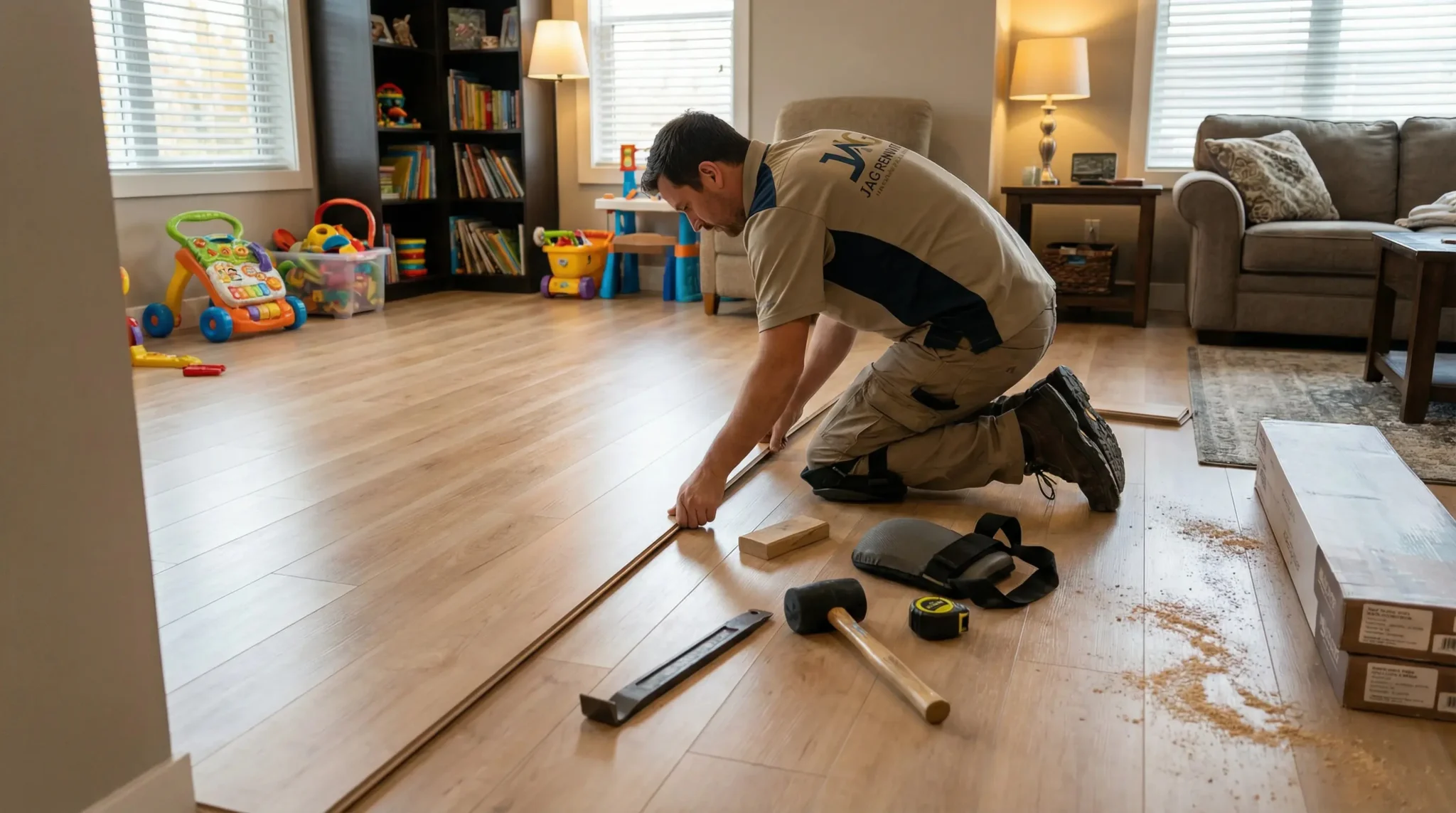
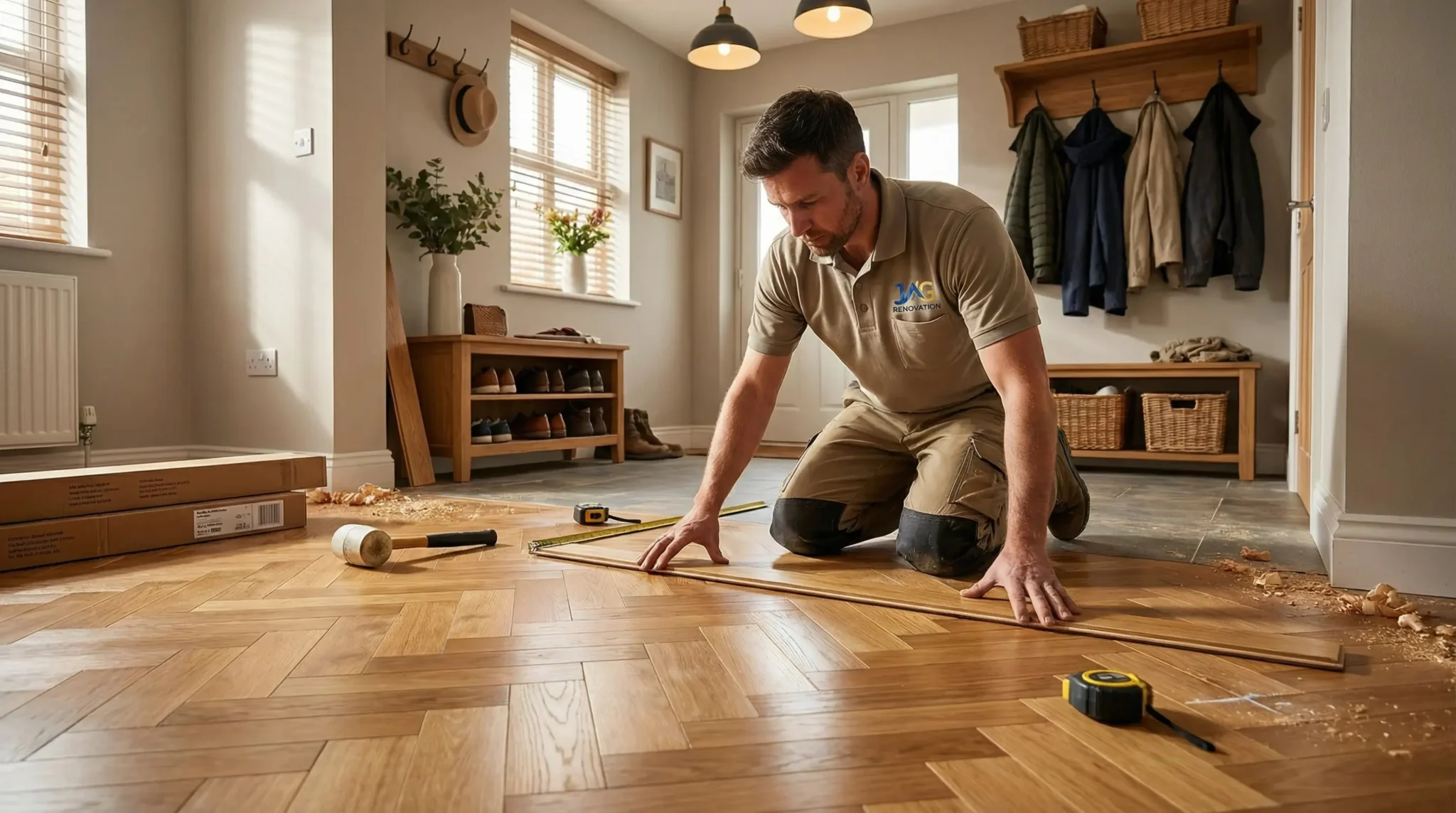
Installation day, we show up with professional equipment and dust containment systems that capture most of the mess. The subfloor gets prepped, the material goes down with proper spacing for expansion, and transitions between rooms are finished clean. We don’t leave until the job is done right and you’ve walked through it with us.

Ready to get started?
We handle hardwood, tile, laminate, vinyl, and carpet installation for residential and commercial projects in Coram. Each material has different prep requirements, and we adjust our process accordingly.
Tile floor installation requires a completely level subfloor and proper waterproofing in areas like bathrooms and kitchens. Ceramic tile and porcelain both need careful layout to avoid awkward cuts at doorways or along walls. Laminate flooring installation is faster but still requires underlayment and expansion gaps around the perimeter.
Vinyl flooring has become one of the most requested materials in Suffolk County homes because it handles moisture well and holds up to heavy use. It’s a smart choice for basements, kitchens, and entryways where water exposure is common. Hardwood is still the top choice for living areas and bedrooms when you want that classic look and feel underfoot.
If you’re replacing flooring in your house, we also handle removal of old material, subfloor repairs, and disposal. That keeps the project moving without you coordinating multiple contractors or making dump runs yourself.

If your hardwood has deep gouges, water damage, or has already been sanded multiple times, replacement makes more sense. But if the damage is mostly surface-level scratches and wear, refinishing costs a fraction of replacement and gives you essentially new-looking floors.
Refinishing runs about $3 to $8 per square foot in Suffolk County. Full replacement with new hardwood starts around $11 per square foot and goes up from there depending on the wood species. That’s a significant difference when you’re covering several rooms.
The other factor is whether your floors are solid hardwood or engineered. Solid hardwood can be refinished multiple times over its life. Engineered hardwood has a thinner wear layer, so it might only handle one or two refinishes before you’re into the plywood core. We can tell you what you’re working with after a quick look.
Most residential flooring projects take two to five days depending on square footage and material type. A single room with vinyl plank might be done in a day. A whole first floor with hardwood installation takes closer to a week when you factor in acclimation time and finishing.
Tile floor installation moves slower because of mortar drying time and grouting. You’re usually looking at three to four days for a standard kitchen or bathroom, longer if the subfloor needs significant prep work.
We’ll give you a realistic timeline upfront based on your specific project. The goal is to minimize disruption to your daily routine while making sure nothing gets rushed. Cutting corners on dry time or skipping proper prep just leads to callbacks and problems down the road.
Engineered hardwood and luxury vinyl plank handle Long Island’s climate better than solid hardwood in most cases. Both are built with multiple layers that resist expansion and contraction when humidity swings between summer and winter.
Solid hardwood still works great in Coram homes, but it requires proper acclimation and installation techniques to account for seasonal movement. That means leaving expansion gaps around the perimeter and making sure your subfloor moisture levels are in the right range before anything goes down.
Tile is the most stable option for moisture-prone areas like bathrooms, laundry rooms, and entryways. It doesn’t react to humidity at all. Laminate flooring is more affordable than hardwood but needs to be kept dry—standing water will cause it to swell and buckle. For basements or areas where moisture is a concern, vinyl is usually your best bet.
Most flooring manufacturers void their warranty if the product isn’t installed by a licensed contractor. That alone makes DIY risky if something goes wrong with the material itself.
The bigger issue is that improper installation causes most flooring failures. Subfloors that aren’t level lead to cracked tiles and bouncy laminate. Hardwood installed without proper expansion gaps will buckle when humidity rises. Vinyl that’s not acclimated will shrink and leave gaps at the seams.
Professional installation also means access to the right equipment. Floor sanders, tile saws, and moisture meters aren’t cheap to rent, and using them correctly takes experience. We’ve fixed plenty of DIY projects in Coram where homeowners spent a weekend and several hundred dollars on materials, only to end up with a floor that needs to be ripped out and redone.
Vinyl and laminate flooring installation typically runs $4 to $8 per square foot including materials and labor. Hardwood installation ranges from $11 to $25 per square foot depending on the wood species and finish. Tile installation falls somewhere in between at $8 to $15 per square foot for most ceramic and porcelain options.
Those ranges shift based on your subfloor condition, room layout, and any prep work needed before installation. If we’re pulling up old flooring, repairing damaged subfloor, or dealing with an uneven surface, that adds to the total.
We give you a detailed estimate upfront that breaks down material costs, labor, and any additional work your project requires. No surprises, no pressure to upsell you on things you don’t need. Just a clear number based on what your floors actually need.
We fix it before any new flooring goes down. An uneven or damaged subfloor will telegraph through your finished floor and cause problems immediately. Tile will crack, hardwood will feel bouncy, and vinyl will show every dip and rise in the surface below it.
Subfloor repair might mean replacing sections of damaged plywood, adding a leveling compound to smooth out low spots, or reinforcing floor joists that have sagged over time. Older homes in Coram sometimes have subfloor issues from past water damage or settling that needs attention before we can move forward.
This is one area where cutting corners costs you more in the long run. Laying new flooring over a bad subfloor means you’ll be tearing it all up again in a year or two to fix what should have been addressed from the start. We’d rather do it right the first time and have your floors last.