
Hear from Our Customers
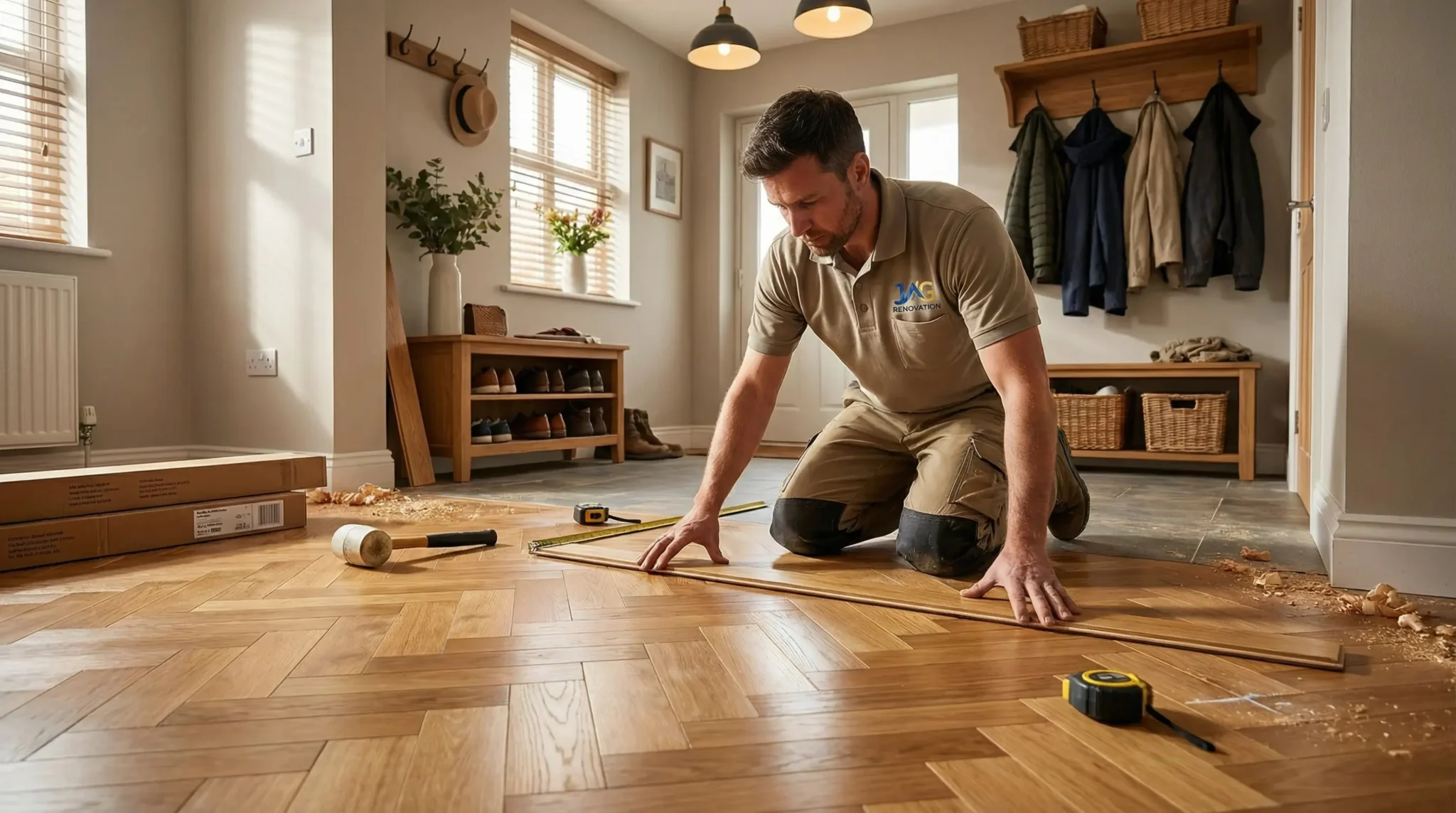
The difference between flooring that looks good for six months and flooring that performs for decades comes down to installation. Not the brand you picked or how much you spent at the showroom.
Proper subfloor prep prevents those gaps that show up after the first winter. Correct moisture barriers stop buckling in your kitchen or bathroom. Expansion spacing that actually accounts for Long Island’s humidity swings means your planks won’t cup or separate when the seasons change.
You’re not just paying for someone to lay down material. You’re paying for floors that don’t creak, grout lines that stay intact, and transitions between rooms that don’t become trip hazards. That’s what happens when a residential flooring contractor actually knows what they’re doing and doesn’t cut corners to finish faster.
We’ve been handling flooring installations across East Farmingdale and Suffolk County since 2016. We’ve seen what happens when contractors rush jobs, skip prep work, or disappear halfway through—and we built our business doing the opposite.
We’re not the cheapest option, and that’s intentional. You’re hiring someone who shows up on time, communicates clearly about what’s happening and when, and doesn’t leave you guessing about costs or timelines.
East Farmingdale homeowners deal with specific challenges—older homes with uneven subfloors, moisture issues common to Long Island basements, and the need for flooring that can handle real family traffic. We’ve handled hundreds of these projects and know exactly what works in this area.

First, we come to your home for an actual assessment—not a sales pitch. We look at your subfloor condition, check for moisture issues, measure everything, and talk through what type of flooring makes sense for how you actually use the space. You get a detailed quote that day or the next, with everything included.
Once you’re ready to move forward, we schedule the work around your life, not ours. We handle the removal of old flooring if needed, prep the subfloor properly (this is where most contractors cut corners), and then install your new floors using manufacturer-recommended methods. That means your warranty stays valid and your floors perform the way they should.
During installation, we keep the work area contained, clean up daily, and keep you updated on progress. No disappearing for days or leaving your home torn apart. When we’re done, we walk through everything with you, answer any questions about care and maintenance, and make sure you’re completely satisfied before we consider the job finished.

Ready to get started?
We handle hardwood flooring installation for homeowners who want that classic look and are willing to maintain it properly. We install engineered hardwood when you want the appearance of real wood with better moisture resistance—important for Long Island’s humidity levels.
Tile floor installation is a big part of what we do, especially in kitchens, bathrooms, and entryways where water resistance matters. We’re talking ceramic tile floor installation with proper waterproofing, not the shortcuts that lead to cracked grout and loose tiles within a year.
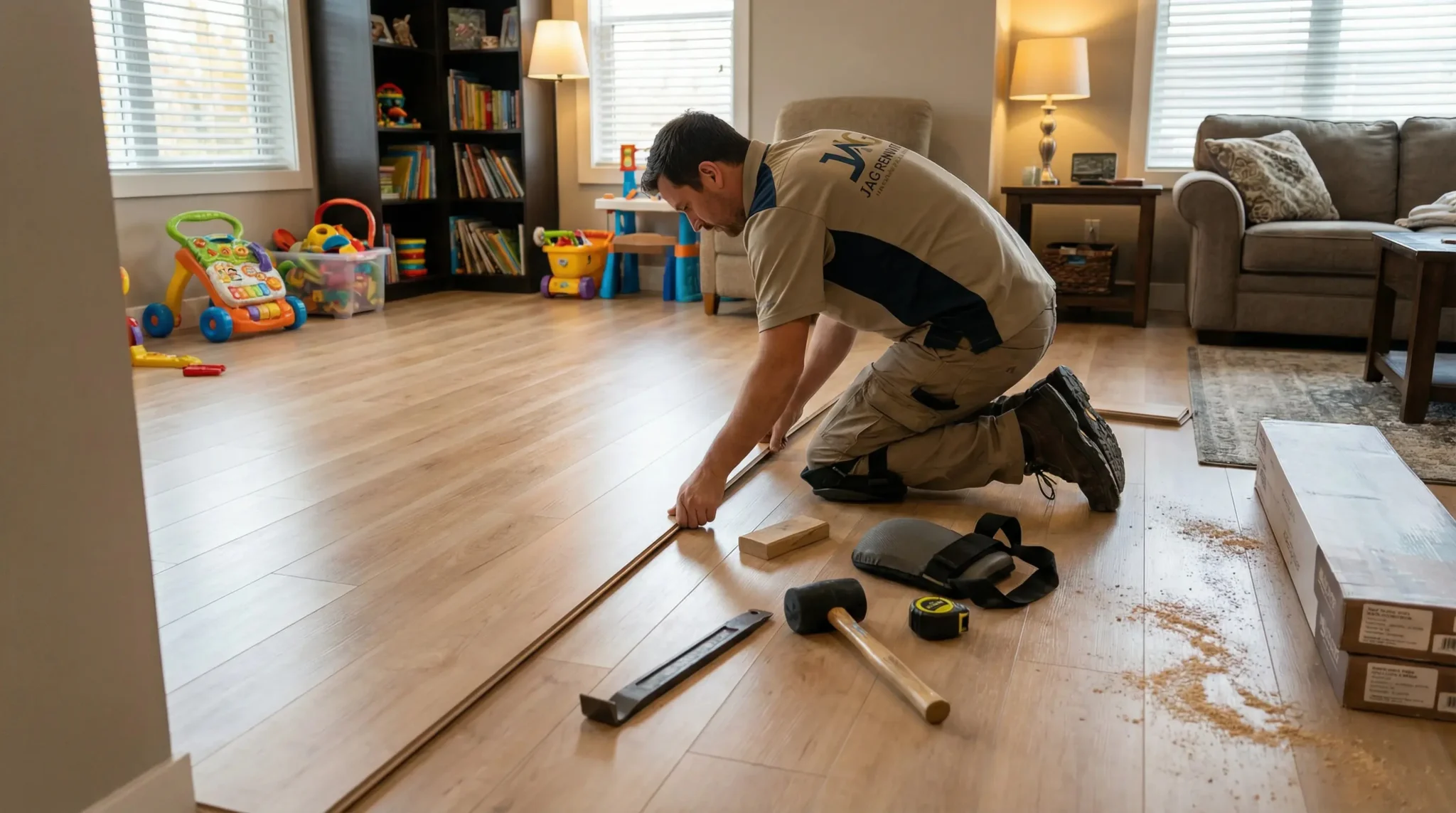
Vinyl flooring has come a long way, and luxury vinyl plank is now one of the most requested options we install. It holds up to everything—kids, pets, moisture—and looks significantly better than the vinyl floors from ten years ago. Laminate flooring installation is another solid option when budget matters but you still want durability and a quality appearance.
For homeowners replacing flooring throughout their house, we coordinate the entire project so transitions between rooms make sense and everything gets done in a logical sequence. We’re a full-service floor remodeling contractor, which means we can handle whatever your project needs without passing you off to someone else.

For a typical room—say a living room around 300 square feet—you’re looking at two to three days for most flooring types. That includes removing old flooring if needed, prepping the subfloor, and installing the new material.
Larger projects where you’re replacing flooring throughout your house take longer, usually one to two weeks depending on square footage and how many rooms we’re working on. Tile takes longer than vinyl or laminate because of setting time and grouting. Hardwood installation falls somewhere in the middle.
The timeline also depends on what we find when we pull up your old floors. If there’s subfloor damage or moisture issues that need addressing, that adds time—but it’s time well spent because installing new flooring over a compromised subfloor is asking for problems. We give you realistic timelines upfront and keep you updated if anything changes.
Tile or luxury vinyl plank. Those are your two best options for any space where water and moisture are regular concerns, which includes most Long Island kitchens and all bathrooms.
Ceramic or porcelain tile floor installation with proper waterproofing underneath gives you maximum water resistance and durability. It’s more expensive and takes longer to install, but it lasts decades when done correctly. The key is proper installation—waterproof membrane, correct mortar, sealed grout lines.
Luxury vinyl flooring is the other smart choice. It’s completely waterproof, costs less than tile, installs faster, and feels warmer underfoot. The quality has improved dramatically in recent years, and it holds up remarkably well to moisture, scratches, and daily wear. For homeowners who want performance without the tile price tag, vinyl is hard to beat.
For labor and materials together, vinyl plank typically runs $6 to $12 per square foot installed. Laminate is similar, around $5 to $10 per square foot. Tile installation ranges from $10 to $20 per square foot depending on tile size and pattern complexity. Hardwood is the most expensive, usually $12 to $20+ per square foot installed.
Those ranges vary based on the specific product you choose, the condition of your subfloor, and what prep work is needed. A 200-square-foot room in decent shape might cost $1,200 to $2,400 for vinyl or laminate, $2,000 to $4,000 for tile, and $2,400 to $4,000+ for hardwood.
We give you exact pricing after seeing your space and understanding what you want. No ballpark estimates that turn into something completely different later. The quote we give you is what you pay unless you change the scope of work or we discover structural issues that need addressing—and we discuss those before doing any additional work.
Sometimes, but it’s usually not the best approach. Installing over existing flooring might save a day of work, but it often creates more problems than it solves.
If your current floor is relatively flat, stable, and in good condition, we can occasionally install certain types of flooring over it—laminate over old vinyl, for example. But we can’t inspect the subfloor underneath without removing what’s there, which means we’re guessing about whether there’s moisture damage, rot, or structural issues.
Most of the time, proper installation means removing the old flooring so we can assess and prep the subfloor correctly. That’s how you prevent squeaks, movement, and premature failure. It adds a bit of cost and time upfront, but it’s the difference between flooring that lasts five years and flooring that lasts twenty. We’ll always tell you honestly whether installing over existing material makes sense for your specific situation.
Yes, rooms need to be empty before we start work. We can move smaller furniture items if needed, but large pieces like beds, dressers, and entertainment centers should be moved out beforehand or we can recommend local movers who coordinate with renovation schedules.
Moving furniture yourself saves money and gives you a chance to clean and organize before new floors go in. If that’s not realistic—maybe you’re dealing with heavy antiques or a tight timeline—we can work with you to figure out a solution.
For whole-house projects, some homeowners move furniture from room to room as we work through the house. We install the living room, you move bedroom furniture into the finished space, then we do the bedrooms. It takes coordination, but it’s doable if moving everything out isn’t an option. We just need the space we’re actively working in to be completely clear.
Start with how you actually use the space and what matters most to you—appearance, durability, maintenance, or budget. Every flooring type has tradeoffs.
Hardwood looks great and adds resale value, but it scratches, dents, and doesn’t handle moisture well. It needs refinishing eventually and costs the most upfront. If you have kids, large dogs, or moisture-prone areas, hardwood might not be your best choice regardless of how much you like the look.
Tile is extremely durable and waterproof, perfect for bathrooms, kitchens, and entryways. It’s cold underfoot, hard on dropped dishes, and more expensive to install. But it lasts forever when installed correctly and handles anything you throw at it.
Vinyl plank gives you a wood or tile look with better moisture resistance and lower cost. It’s comfortable to stand on, easy to maintain, and holds up well to scratches and dents. The tradeoff is it’s not real wood or stone—some people care about that, others don’t.
Laminate sits between vinyl and hardwood on cost and durability. It looks good, installs relatively quickly, and handles normal wear well. It’s not waterproof like vinyl, so avoid it in bathrooms or anywhere water sits regularly. When we assess your space, we talk through these options based on your specific situation and help you make a decision that actually makes sense for how you live.