Choosing flooring for your kitchen or bathroom remodel? Discover how subflooring condition and proper wall prep impact your results—and your budget.
Walk into any flooring showroom and you’ll face dozens of options. Hardwood, luxury vinyl plank, porcelain tile, engineered wood—each with someone telling you it’s the best choice. The truth? There’s no universal “best.” There’s only what works for your space, your lifestyle, and your budget.
Hardwood brings that classic warmth and can be refinished multiple times over its life. But it doesn’t handle moisture well, which makes it risky for bathrooms and even some kitchens. Vinyl—especially luxury vinyl plank—has come a long way. It’s waterproof, costs significantly less, and can mimic wood convincingly enough that most guests won’t know the difference. Tile offers unmatched durability and total water resistance, though it’s cold underfoot and harder on your joints if you’re standing a lot.
The real question isn’t which material wins in general. It’s which one fits where you actually live.
If you have kids, pets, or a kitchen that sees real cooking (not just reheating takeout), vinyl flooring deserves a serious look. It handles spills without panicking. Drop water on hardwood and you’re racing to wipe it up before it seeps into the seams. Vinyl? You can clean it up whenever you get around to it.
Luxury vinyl plank typically runs $2 to $5 per square foot for materials. Hardwood starts around $8 and can easily hit $25 per square foot depending on the species and grade. That’s not a small difference when you’re covering a whole kitchen or multiple bathrooms.
The waterproof factor matters more than most people realize. Bathrooms and kitchens are moisture zones. Even with good ventilation, humidity builds up. Hardwood expands and contracts with moisture changes, which leads to cupping, warping, and gaps over time. Vinyl stays stable. It’s built for exactly these conditions.
Vinyl also installs faster in most cases, especially the click-lock varieties. Less installation time means lower labor costs. And if a plank gets damaged years down the road, you can often replace just that section without redoing the whole floor.
That said, vinyl won’t increase your home’s resale value the way real hardwood does. Buyers still see hardwood as premium. If you’re renovating a home you plan to sell soon, that perception matters. But if you’re staying put and want flooring that handles daily life without constant worry, vinyl makes practical sense.
The key is matching the material to how you actually use the space. A formal dining room that rarely sees traffic? Hardwood might be perfect. A mudroom where wet boots and dog paws are daily occurrences? Vinyl is the smarter choice. Nobody’s handing out awards for choosing the “fanciest” material if it can’t handle your real life.
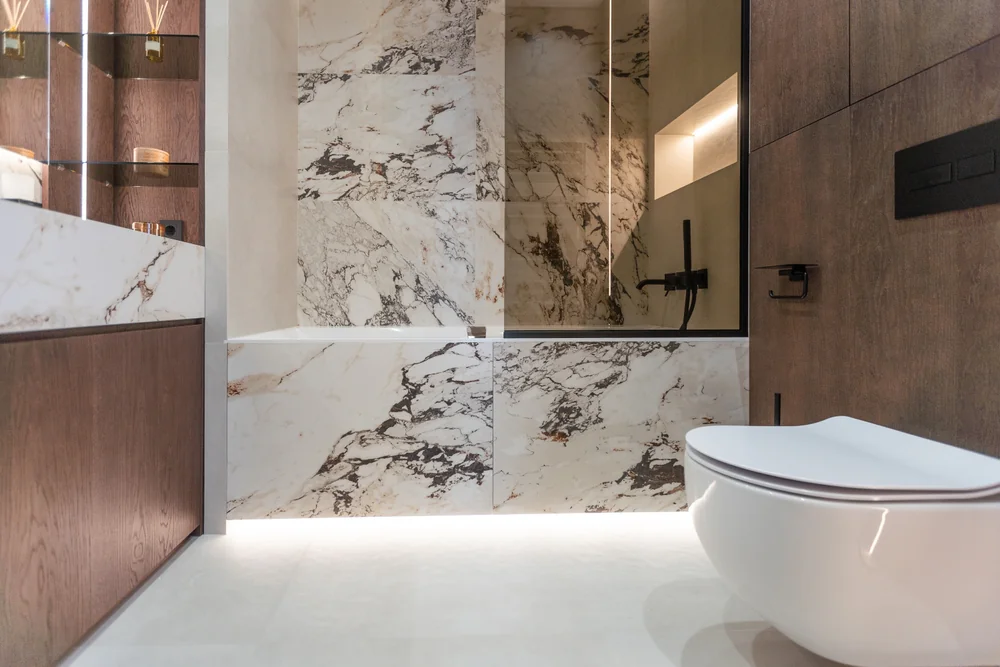
Tile is nearly indestructible. Porcelain and ceramic tile can last decades without showing wear, even in high-traffic areas. It doesn’t scratch, dent, or fade. Water literally can’t hurt it. For bathrooms, especially around tubs and showers, tile is often the most logical choice. You’re not going to find a more moisture-resistant option.
But tile isn’t without downsides. It’s hard underfoot. If you spend a lot of time cooking or getting ready in the bathroom, that hardness translates to fatigue in your feet, knees, and back. Drop a glass on tile and it’s shattering. Drop your phone and you’re probably looking at a cracked screen. Tile doesn’t forgive impacts the way vinyl or even hardwood does.
Temperature is another factor. Tile stays cold. In winter, stepping onto a tile bathroom floor first thing in the morning is unpleasant without a bath mat or radiant floor heating. Some homeowners install heated floors under tile to solve this, but that adds cost and complexity to the project.
Installation costs run higher for tile than vinyl. It requires more skill, takes longer, and involves more materials—mortar, grout, sealing. Expect to pay more in labor even if the tile itself is reasonably priced. And if you ever need to replace damaged tile, matching the exact color and style years later can be difficult if that product line has been discontinued.
Grout is tile’s weak point. It stains, it cracks, and it requires periodic resealing to stay water-resistant. Darker grout hides stains better than light grout, but you’ll still need to maintain it. Epoxy grout resists staining better than traditional cement grout, but it costs more and is harder to work with during installation.
So when does tile make the most sense? Bathrooms where water exposure is constant. Entryways and mudrooms where you need something bombproof. Kitchens where you value longevity over comfort and aren’t worried about standing for long periods. Tile works beautifully in the right applications. It just demands that you go in knowing what you’re signing up for—durability in exchange for hardness and coldness underfoot.
For many Suffolk County, NY homeowners, a mix makes sense. Tile in the bathroom where water is inevitable. Vinyl in the kitchen where comfort and budget matter. Hardwood in living areas where moisture isn’t a concern. You don’t have to pick one material for your whole renovation. You can match each space to what it actually needs.
Want live answers?
Connect with a Jaguar Renovation expert for fast, friendly support.
Most homeowners don’t think about subflooring until a contractor points to a soft spot and says, “We’ve got a problem.” By then, you’re mid-project, and what seemed like a straightforward flooring update just got more complicated. The smarter approach? Understand when subflooring matters before you start tearing things up.
Subflooring is the structural layer underneath your finished floor. It’s usually plywood or oriented strand board attached to the floor joists. When it’s solid, you never think about it. When it’s damaged, everything above it is compromised. Your new flooring can’t perform properly on a failing subfloor. It’s like building a house on a cracked foundation—it might look fine initially, but problems show up fast.
The most common culprit? Water. Leaky toilets, dripping sinks, tub overflows, appliance malfunctions—moisture is subflooring’s enemy. Once water gets into that plywood, it swells, weakens, and eventually rots. You might not see it happening because it’s hidden under your flooring, but you’ll feel it. Soft spots, squeaking, sagging—those are all signs that the subflooring underneath needs attention.
Walk across your bathroom or kitchen floor. Does it feel spongy in spots? Does it squeak excessively when you step in certain areas? Those aren’t just annoying quirks. They’re your subfloor telling you it’s compromised.
Squeaking happens when the subflooring has pulled loose from the joists, usually because the wood has warped or the fasteners have worked themselves free. A little squeaking is normal in older homes. A lot of squeaking, especially in areas near water sources, means the subfloor is moving when it shouldn’t be.
Soft or spongy spots are more serious. Press down on the floor near your toilet, under the sink, or in front of the dishwasher. If it gives more than it should, the subflooring has likely absorbed water and lost its structural integrity. You might also notice that tiles are cracking in those areas, or that vinyl flooring is bubbling. The flooring above can’t stay stable when the foundation beneath it is failing.
Visible water damage is the most obvious sign. If you’re pulling up old flooring and you see dark stains, mold, or wood that crumbles when you touch it, that section of subfloor needs to come out. Don’t try to install new flooring over it. It won’t hold. Even if it looks okay at first, it’ll fail within months, and then you’re paying to redo the work.
Sagging floors are another red flag. If your floor has developed a noticeable dip or slope, especially near plumbing fixtures, the subflooring and possibly even the joists below have sustained damage. This isn’t something you can patch with a little extra adhesive. It requires cutting out the damaged section and installing new material properly secured to the joists.
Bathroom floors around toilets are the most common problem area in Suffolk County, NY homes. Toilets can develop slow leaks at the base that go unnoticed for years. By the time you see water on the surface, the subflooring underneath has already soaked it up. If you’re doing a bathroom remodel and pulling the toilet, take a close look at the subfloor in that area. Press on it. If it feels soft, it needs replacement before your new flooring goes down.
Kitchen floors under sinks and dishwashers are the second most common trouble spot. A dripping pipe or a dishwasher that leaks a little bit each cycle can saturate the subfloor over time. When you’re updating your kitchen, don’t skip the step of checking what’s underneath. Finding the problem now, before new cabinets and flooring are installed, saves you from a much bigger headache later.
Ignoring subfloor damage doesn’t make it go away. It makes it worse. And when you install beautiful new flooring over a compromised subfloor, you’re just covering up a problem that will resurface. Tiles will crack. Vinyl will buckle. Hardwood will develop gaps and movement. Then you’re looking at tearing out that new flooring and doing the subfloor work you should have done the first time—except now you’ve wasted money on flooring that had to be removed.
The right move? Address subflooring issues during your remodel, not after. It adds time and cost to the project, yes. But it’s the only way to ensure your new flooring performs the way it’s supposed to for the long term.
Nobody wants to hear that their remodel just got more expensive. But if we find damaged subflooring and recommend replacement, that’s not upselling. That’s preventing a bigger problem down the road. The question becomes: how much does it add to your timeline and budget, and is it worth it?
Subflooring replacement isn’t cheap, but it’s also not as catastrophic as some homeowners fear. For a typical bathroom, replacing a damaged section of subfloor might add $500 to $1,500 to your project, depending on the extent of the damage and how much needs to be cut out. Kitchen subfloor work can run higher because the area is usually larger. If you’re dealing with extensive water damage that’s spread across a significant portion of the floor, costs go up accordingly.
The timeline impact depends on the scope. Replacing a small section near a toilet might add a day to your project. Replacing most of the subfloor in a kitchen could add several days, especially if we discover that the floor joists underneath also need reinforcement. The work itself isn’t particularly time-consuming—it’s the drying time and the need to ensure everything is structurally sound before moving forward that extends the schedule.
Here’s what most contractors won’t tell you upfront: we often can’t know the full extent of subfloor damage until we pull up your old flooring. That means you might get a quote for your flooring installation, start the project, and then hear, “We found some issues underneath.” It’s not a bait-and-switch. It’s the reality of working with hidden structural components. You can’t see through vinyl or tile to know what’s underneath until you remove it.
The smart approach is to budget a contingency for subflooring work if your home is older or if you know there have been plumbing issues in the past. Setting aside an extra 10-15% of your flooring budget for potential subfloor repairs gives you breathing room. If you don’t need it, great. If you do, you’re not scrambling to figure out how to pay for necessary work mid-project.
Is it worth the extra cost? Absolutely. Think of it this way: you’re about to spend thousands of dollars on new flooring. If that flooring is installed over a compromised subfloor, its lifespan is cut short. You might get a few years before problems show up, but then you’re either living with a failing floor or paying to redo the whole thing. Spending a bit more now to replace damaged subflooring means your new flooring lasts as long as it’s supposed to. That’s not an upsell. That’s smart renovation planning.
Subflooring also affects how your flooring performs day-to-day. A solid subfloor means your tile doesn’t crack, your vinyl doesn’t shift, and your hardwood doesn’t develop squeaks and gaps. It’s the foundation that everything else relies on. Skipping that step to save money in the short term almost always costs more in the long run.
When you’re working with a contractor you trust, we’ll be upfront about what’s necessary and what’s optional. Subflooring replacement falls firmly into the “necessary” category when damage is present. It’s not something you can patch or work around. It either gets fixed properly, or it causes problems later. There’s no middle ground.
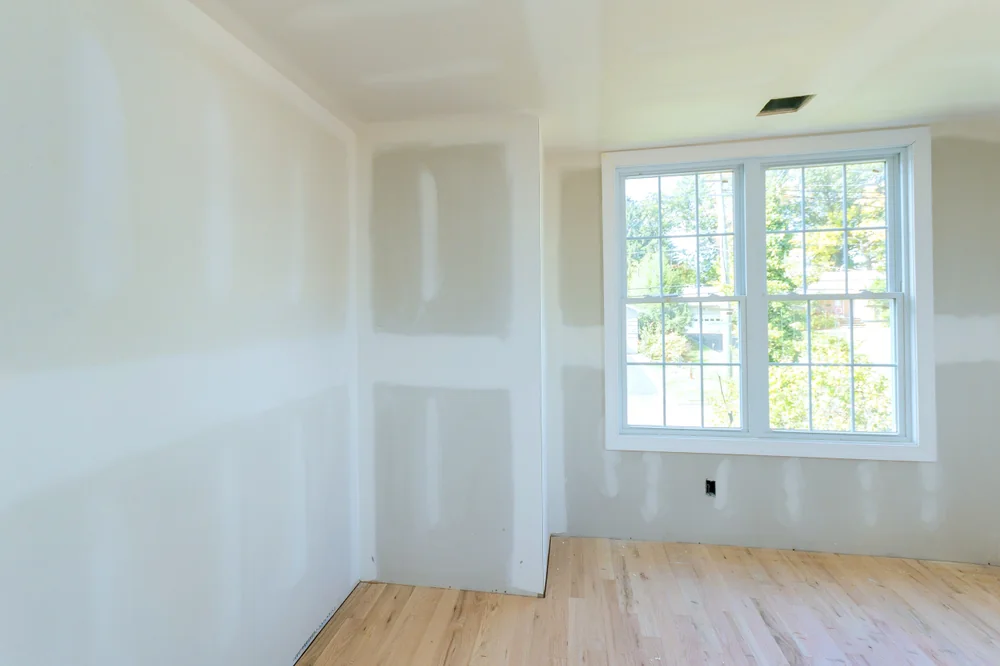
You’ve probably seen it: a freshly painted room that somehow still looks…off. The color is right, the trim is clean, but something’s not quite professional. Usually, the problem isn’t the paint. It’s what’s underneath. Drywall repair and wall prep are the unglamorous parts of renovation that determine whether your paint job looks DIY or done by someone who knows what they’re doing.
Paint doesn’t hide flaws. It highlights them. Every nail hole you didn’t fill properly, every crack you skipped, every ridge from poorly applied joint compound—paint makes all of it more visible, not less. Light hits those imperfections and casts shadows. What looked “good enough” before painting suddenly stands out once the walls are a fresh color.
This is where sheetrock finishing and spackling separate average work from excellent work. It’s not about slapping some compound in a hole and calling it done. It’s about building up layers, feathering edges, sanding smooth, and creating a surface that’s truly ready for paint. That process takes time. It takes skill. And it’s the difference between walls that look flawless and walls that look patched.
Summary:
Share: