Small bathrooms need smart solutions, not sales pitches. Here's how to find a remodeler in Suffolk County who actually understands tight spaces and delivers honest work.
A small bathroom remodel isn’t just a scaled-down version of a big one. Every decision carries more weight. There’s no room to hide mistakes.
In a larger bathroom, you can shift a vanity six inches and barely notice. In a small bathroom, six inches is the difference between functional and frustrating. The door swing matters. The depth of your vanity matters. Even the grout lines can make the space feel busier or calmer.
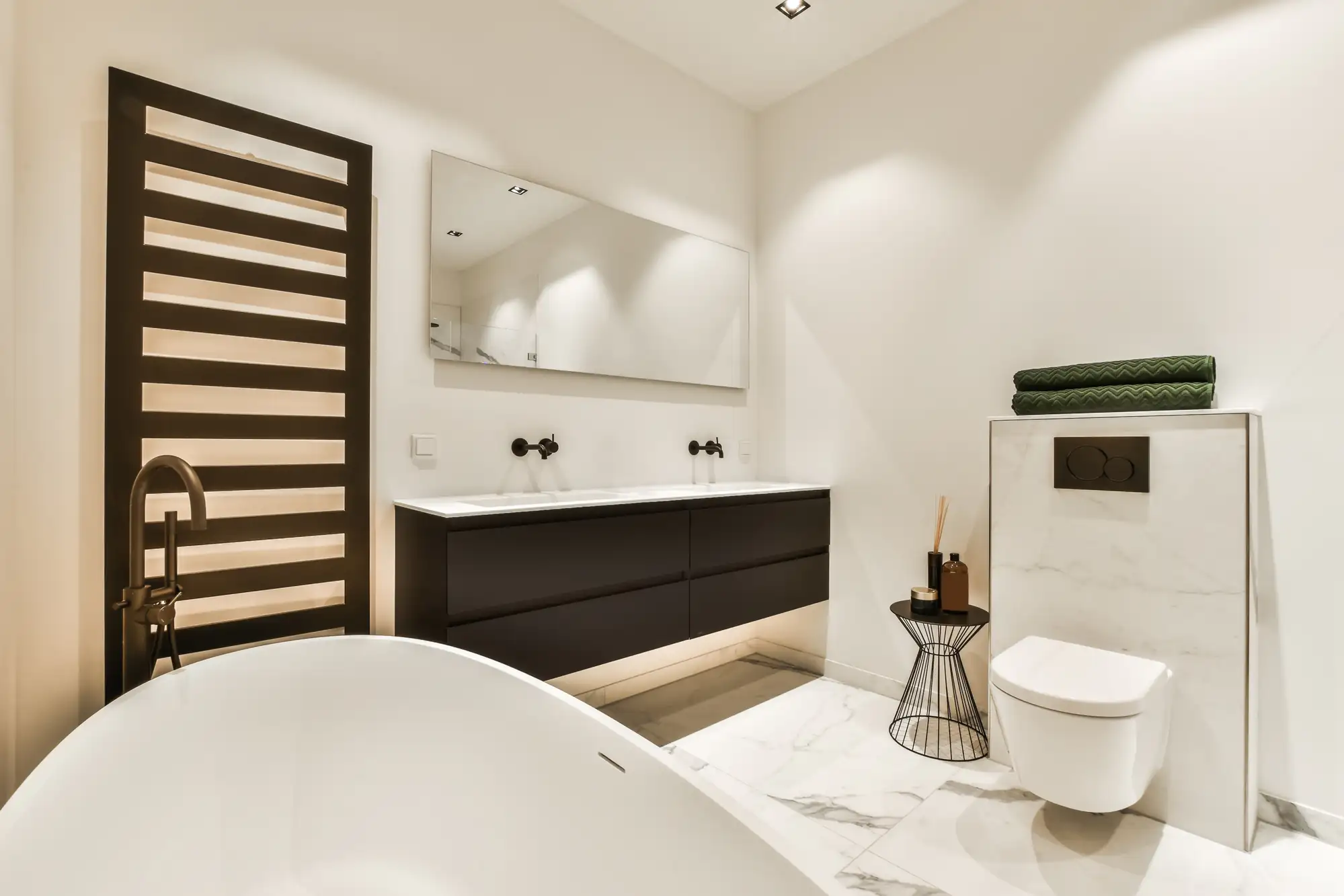
That’s why you need a remodeler who actually understands small space solutions—not just someone who does bathrooms in general. We think about things like floating vanities to open up floor space, pocket doors to eliminate swing clearance, and vertical storage to maximize what you’ve got. If a contractor isn’t bringing up these kinds of details early on, that’s your first clue they might not have the experience you need.
Layout is everything in a small bathroom. Get it wrong and you’ll be bumping into cabinets and squeezing past the toilet for years.
The best tiny bathroom layouts keep fixtures on one or two adjacent walls so the center stays open. That open center is what makes the room feel usable, even when the square footage is fixed. Think linear, not scattered.
A good remodeler will measure your clearances before suggesting anything. We know that you need at least 21 inches in front of a toilet and 30 inches in front of a sink. We’ll ask how you actually use the space—do you need counter space for getting ready, or is storage more important?
Compact wet rooms are another option worth discussing. Instead of boxing off a separate shower area, a wet room treats the whole bathroom as the shower zone. You slope the floor to a drain and use minimal glass to manage splash. It sounds unconventional, but in a truly tiny space, it can feel almost magic. No curb to step over. Fewer visual breaks. More breathing room.
Floating vanities are another smart move. By lifting the vanity off the floor, you expose more tile and trick the eye into seeing a bigger footprint. It also makes cleaning easier and gives you a spot to tuck in a small stool or scale without eating up cabinet space.
Your remodeler should be walking you through these kinds of trade-offs. If they’re just handing you a standard layout and calling it done, keep looking.
Fixtures can make or break a small bathroom. The wrong choices eat up space. The right ones give it back.
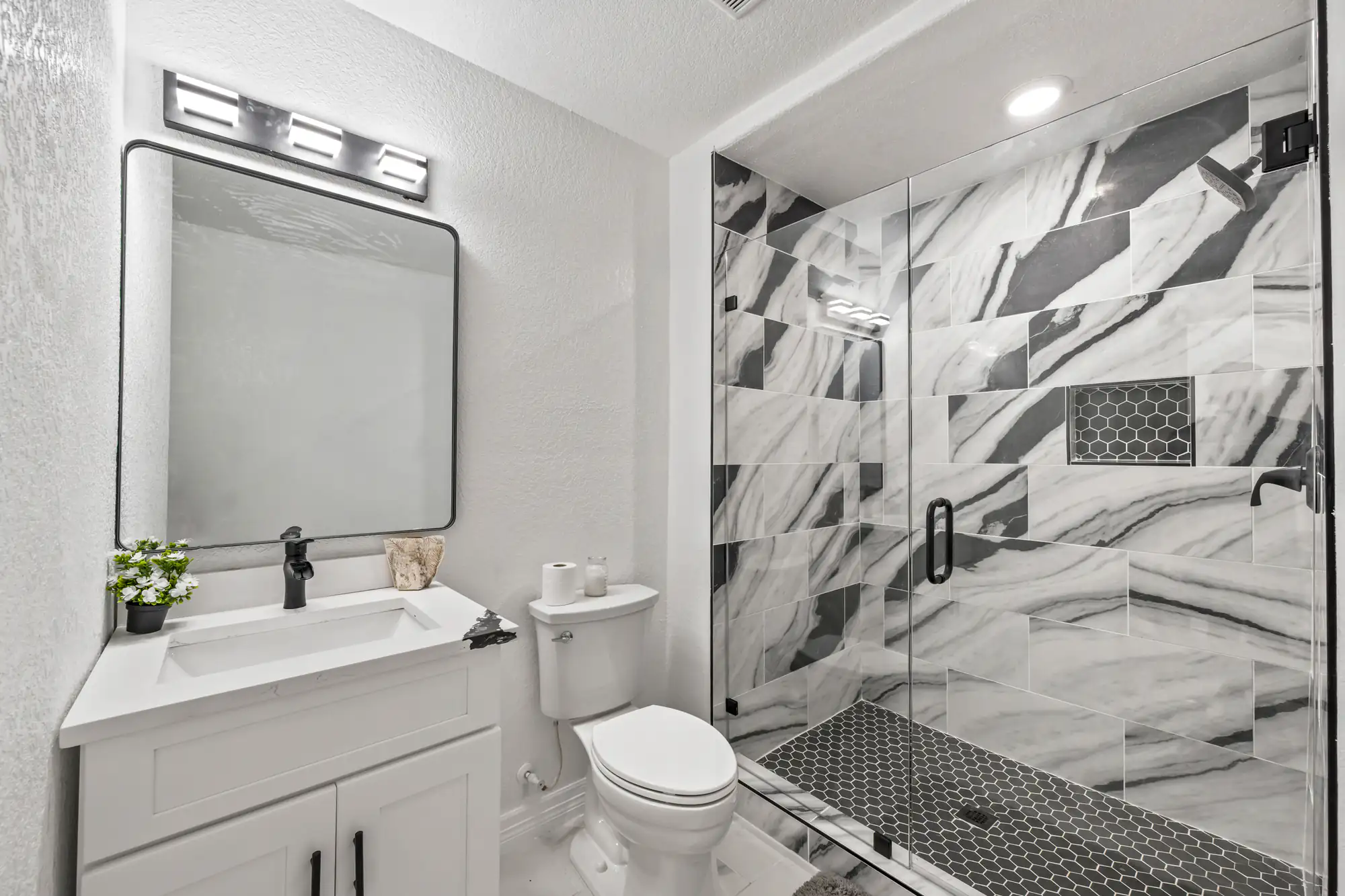
Start with your vanity. Standard vanities are often 21 inches deep, but in a tight bathroom, even a few inches matter. A shallower vanity—say, 16 or 18 inches—can protect your walkway and reduce that cramped feeling. Pair it with a wall-mounted faucet and you gain even more counter space.
Floating vanities are especially effective. They create visual lightness by showing the floor beneath, which makes the whole room feel less crowded. Plus, they’re easier to clean around and can be mounted at a custom height that works for your household.
Toilets matter too. A wall-hung toilet eliminates the bulky base and tank, freeing up floor space and making the bathroom easier to clean. If that’s not in the budget, at least consider a compact elongated bowl or a corner toilet to tuck the fixture out of the main traffic path.
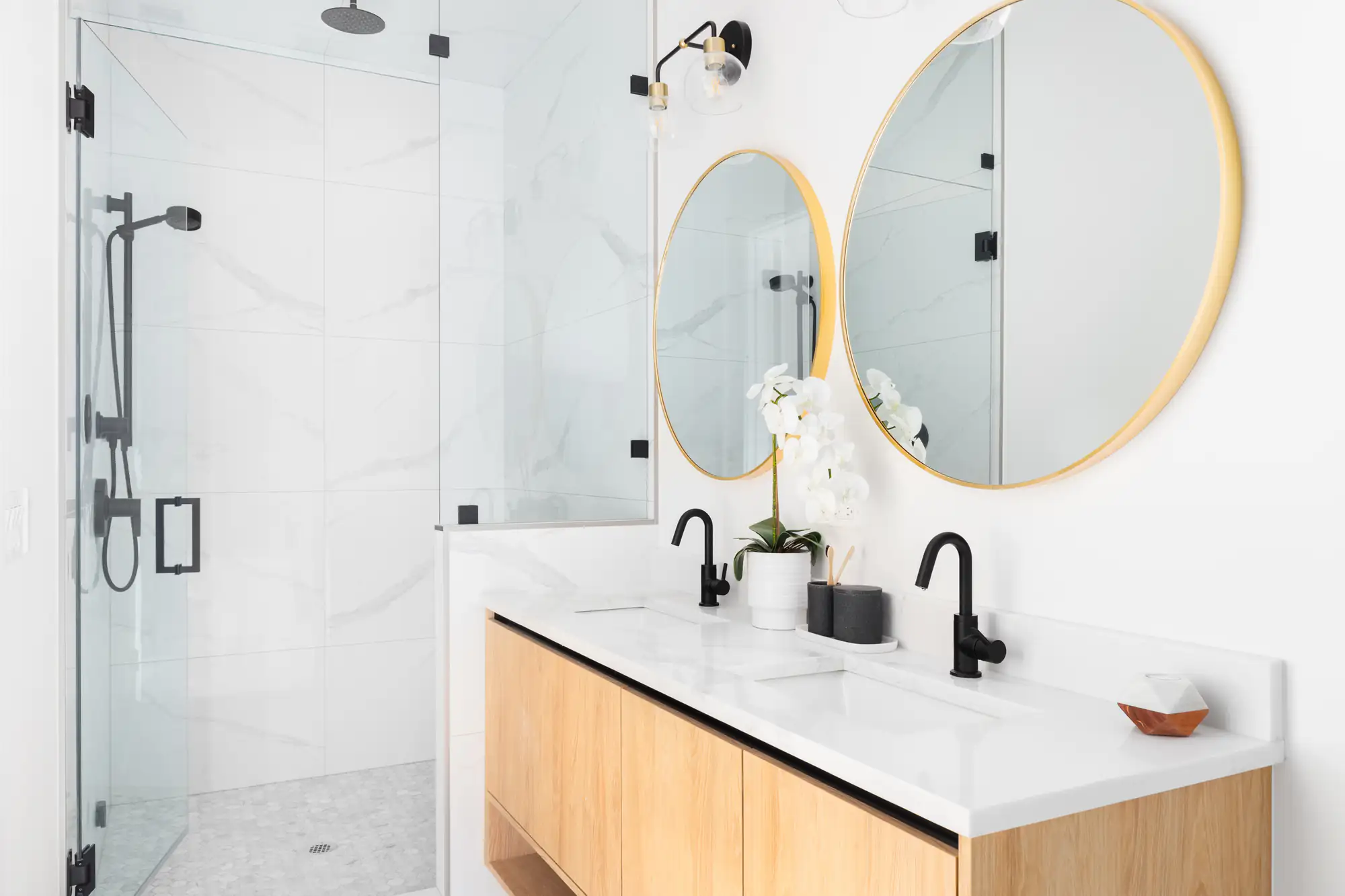
Shower doors are another decision point. Swinging doors take up space when open. Sliding doors or a simple curved shower rod can save you several square feet of clearance. In some cases, eliminating the door entirely and using a partial glass panel creates an open, airy feel without sacrificing function.
Storage optimization is where a lot of bathroom contractors drop the ball. Small bathrooms need creative storage—not just a medicine cabinet and a vanity. Recessed niches in the shower. Shallow shelving above the toilet. Even the space behind the door can be used with hooks or slim cabinets. If your remodeler isn’t asking where you plan to store towels, toiletries, and cleaning supplies, they’re not thinking ahead.
Want live answers?
Connect with a Jaguar Renovation expert for fast, friendly support.
There are a lot of contractors in Suffolk County, NY. Not all of them are worth your time.
The ones who show up late to the estimate, give you a vague quote, or pressure you to sign that day? Walk away. The good ones will take time to understand what you’re dealing with, ask about your routine, and explain their process without making you feel rushed.
Start by checking reviews, but dig deeper than the star rating. Look for patterns. Do past clients mention communication? Did the contractor show up when they said they would? Were there surprise costs? Those details tell you more than a five-star score with no context.
You’re not just hiring someone to install tile. You’re inviting them into your home and trusting them to deliver on a significant investment. Ask the right questions up front and you’ll avoid a lot of headaches later.
First, ask if they’re licensed and insured. This isn’t optional. A valid license means they’ve met local requirements and know the building codes. Insurance protects you if something goes wrong during the project. If they hesitate or can’t provide proof, move on.
Next, ask about their experience with small bathrooms specifically. Have they done compact layouts before? Can they show you examples? A bathroom contractor who’s only worked on spacious master baths might not have the problem-solving skills you need for a 40-square-foot powder room.
Find out who will actually be doing the work. Some contractors manage multiple jobs and send different crews to each site. Others bring in subcontractors for plumbing, tile, and electrical. There’s nothing wrong with subcontractors—but you should know who’s coming into your home and whether they’re insured and experienced.
Ask how they handle permits and inspections. A professional remodeler will pull the necessary permits and schedule inspections without putting that burden on you. If they suggest skipping permits to save time or money, that’s a major red flag. Unpermitted work can come back to haunt you when you sell your home or file an insurance claim.
Communication is another big one. How will they keep you updated? Will you have a dedicated point of contact, or will you be chasing down different people depending on the day? Find out their preferred method—text, email, phone—and make sure it aligns with how you like to stay informed.
Finally, ask about warranties. What’s covered if something goes wrong after the project wraps? A contractor who stands behind their work will offer a clear warranty on labor and sometimes materials. If they’re vague or dismissive about this, it’s a sign they might not be around to fix issues down the road.
Some warning signs are obvious. Others are subtle but just as important.
If a contractor asks for a large deposit up front—anything more than 10 to 15 percent—be cautious. Legitimate remodelers don’t need huge cash advances to get started. We have relationships with suppliers and enough working capital to order materials. A big upfront ask often signals financial trouble or inexperience.
Vague estimates are another red flag. A good quote breaks down labor, materials, and any additional fees. It specifies what’s included and what’s not. If you’re getting a one-line number with no detail, you have no way to know what you’re actually paying for or where you might face upcharges later.
Watch out for contractors who bad-mouth their previous clients. If they blame every problem on “difficult homeowners,” that’s a sign they don’t take accountability. Bathroom remodeling projects involve two-way communication. A professional knows that and won’t throw past clients under the bus.
Pushy sales tactics are a dealbreaker. If they’re offering a “discount” that expires today, or pressuring you to sign before you’ve had time to think, walk away. A confident, experienced remodeler doesn’t need to rush you. We know our work speaks for itself.
Finally, trust your gut. If something feels off—whether it’s their communication style, their answers to your questions, or just the vibe you get—listen to that instinct. You’re going to be working with this person for weeks. If you don’t feel comfortable now, it’s not going to get better once the project starts.
Finding the best bathroom remodeler for a small space comes down to experience, communication, and trust. You need someone who understands that every inch counts, who asks the right questions, and who won’t disappear when the job gets tricky.
Take your time. Compare a few options. Ask about their process, their past work, and how they handle the inevitable surprises that come with remodeling. Check references. Read reviews. And make sure their answers feel honest, not rehearsed.
A small bathroom remodel done right can completely change how you start and end your day. But it only works if you’re working with someone who knows what they’re doing. When you’re ready to move forward with a team that values transparency, craftsmanship, and honest communication, we’re here to help at Jaguar Renovations.
Summary:
Share: