Not all flooring works in Suffolk County's coastal climate. Find out which materials handle humidity, pets, and real life—without the sales pitch.
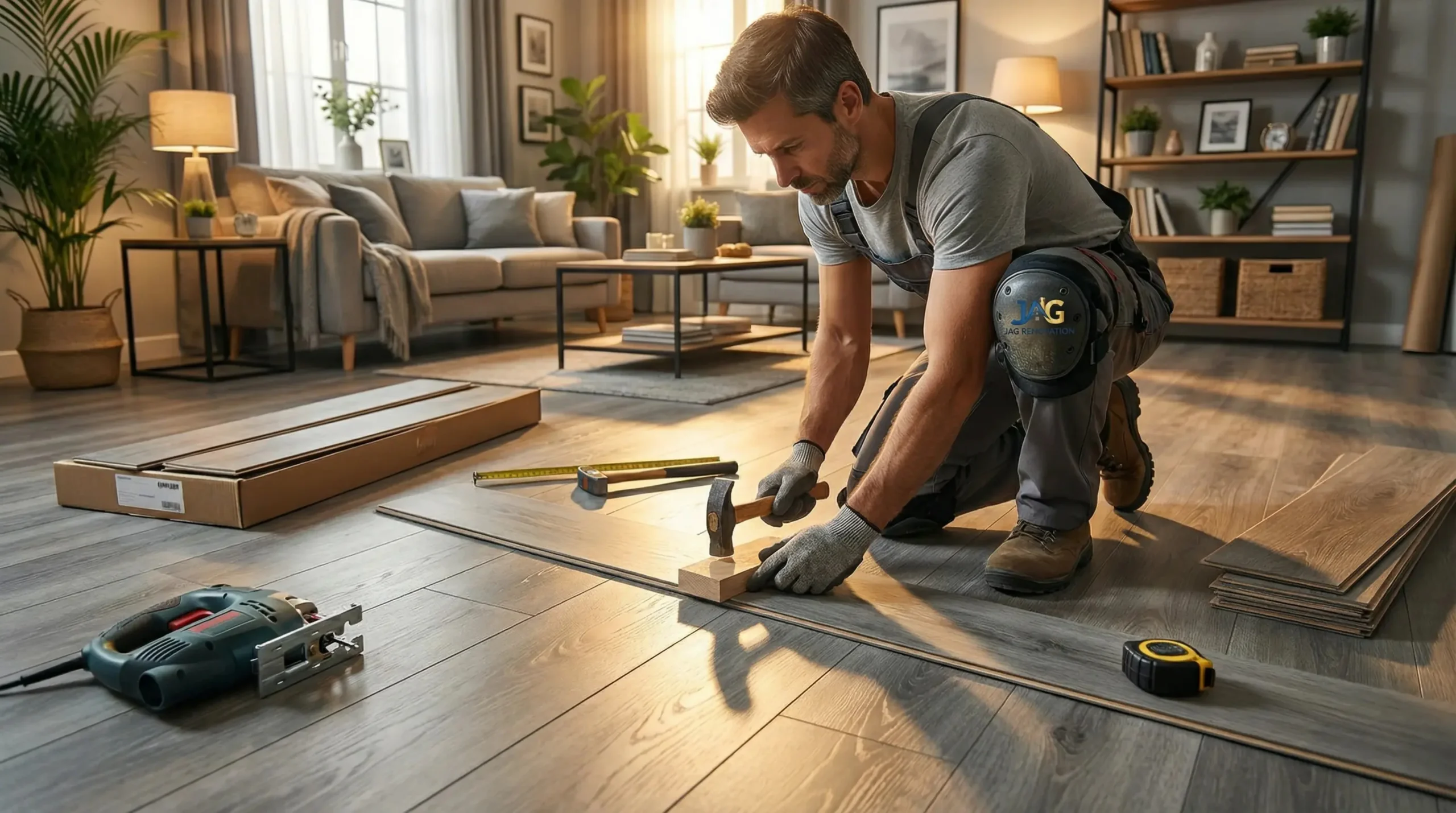
Walk into any flooring conversation and you’ll hear the same names: hardwood, engineered wood, luxury vinyl plank, laminate, tile, carpet. They all have their place. But not every material belongs in every home.
Suffolk County sits close enough to the water that humidity becomes part of the equation. Summers bring moisture in from the Sound and the Atlantic. Winters dry things out when the heat kicks on. Your floors expand and contract with those shifts, and some materials handle that better than others.
The goal isn’t to find the “best” flooring in some universal sense. It’s to find what works for your home, your family, and the way you actually live. That starts with knowing what each option brings to the table—and where it falls short.

Hardwood is real wood, milled from solid timber. It’s warm underfoot, adds resale value, and can be refinished multiple times over its lifespan. Oak and maple are popular because they’re durable and widely available. The grain patterns are unique to each plank, which gives the floor character. In 2026, warm wood tones like honey and chestnut are replacing the cool grays that dominated for years—bringing depth and coziness back to Long Island homes.
But hardwood is also a natural material, which means it reacts to its environment. In coastal areas like Suffolk County, that reaction can be a problem. When humidity rises in summer, hardwood absorbs moisture from the air and expands. When winter dries things out, it contracts. If those swings are significant enough, you’ll see cupping, where the edges of the planks rise higher than the center, or gaps that open up between boards.
Solid hardwood also doesn’t love standing water. Spills need to be wiped up quickly. It’s not the best choice for kitchens or bathrooms where moisture is constant. It requires maintenance—periodic refinishing to keep it looking good—and it’s one of the more expensive flooring options upfront.
Laminate, on the other hand, is a manufactured product. It’s made from high-density fiberboard with a photographic layer on top that mimics the look of wood. A protective wear layer sits on top of that, which makes laminate resistant to scratches and fading. It’s more affordable than hardwood, easier to install, and holds up better to everyday wear.
The trade-off? Laminate isn’t waterproof. The fiberboard core can absorb moisture if water gets between the seams or sits on the surface too long. In humid climates, that core can swell, causing the floor to buckle or warp. And unlike hardwood, laminate can’t be refinished. Once it’s damaged, you replace the planks.
Laminate works well in low-moisture areas and for homeowners on a budget who want the look of wood without the cost. But in Suffolk County, where humidity is a recurring issue, it’s not always the most reliable long-term choice. Hardwood offers more durability and refinishing potential, but only if you’re prepared to manage moisture levels and maintain it properly.
Engineered hardwood splits the difference between solid wood and synthetic options. It’s built with a real wood veneer on top—usually oak, maple, or walnut—bonded to multiple layers of plywood underneath. That construction gives it about twice the dimensional stability of solid hardwood, which matters in areas where humidity fluctuates.
The plywood base doesn’t expand and contract as aggressively as solid wood does. That makes engineered hardwood a better fit for Long Island homes where summer humidity can spike and winter heating systems dry out the air. You still get the look and feel of real wood, but with less risk of cupping, warping, or gapping.
Engineered hardwood can be refinished, though not as many times as solid wood. The veneer layer is thinner, so once you sand through it, you’re done. Depending on the thickness of that top layer, you might get one to three refinishes over the floor’s life. That’s still more flexibility than laminate or vinyl, which can’t be refinished at all.
Installation is typically easier than solid hardwood. Many engineered products come with click-lock systems that allow for floating installation, meaning the planks aren’t nailed or glued down. They sit on top of an underlayment and interlock with each other. This method also accommodates the natural expansion and contraction of the material better than a glued or nailed floor.
Cost-wise, engineered hardwood sits between solid hardwood and laminate. It’s more expensive than laminate but less than premium solid wood. For Suffolk County homeowners who want real wood but need something that can handle coastal conditions, engineered hardwood is often the most practical middle ground. Wide planks—eight inches or more—are trending in 2026, creating a more seamless, high-end look that shows off the natural grain.
Want live answers?
Connect with a Jaguar Renovation expert for fast, friendly support.
Luxury vinyl plank—often shortened to LVP—has become one of the most popular flooring choices for a reason. It’s waterproof, scratch-resistant, affordable, and looks more realistic than vinyl did a decade ago. For homes with pets, kids, or moisture concerns, it checks a lot of boxes.
LVP is made from multiple layers. The bottom layer provides stability. The core is typically made from stone plastic composite or wood plastic composite. The top has a photographic design layer protected by a clear wear layer. That construction makes it completely impervious to water. You can install it in basements, bathrooms, kitchens, or anywhere else moisture shows up.
The waterproof factor is a big deal in Suffolk County. Coastal humidity doesn’t affect LVP the way it does hardwood or laminate. Spills, tracked-in rain, or even a plumbing leak won’t ruin the floor as long as you address the issue before mold develops underneath. That peace of mind is hard to overstate when you’re living near the water.
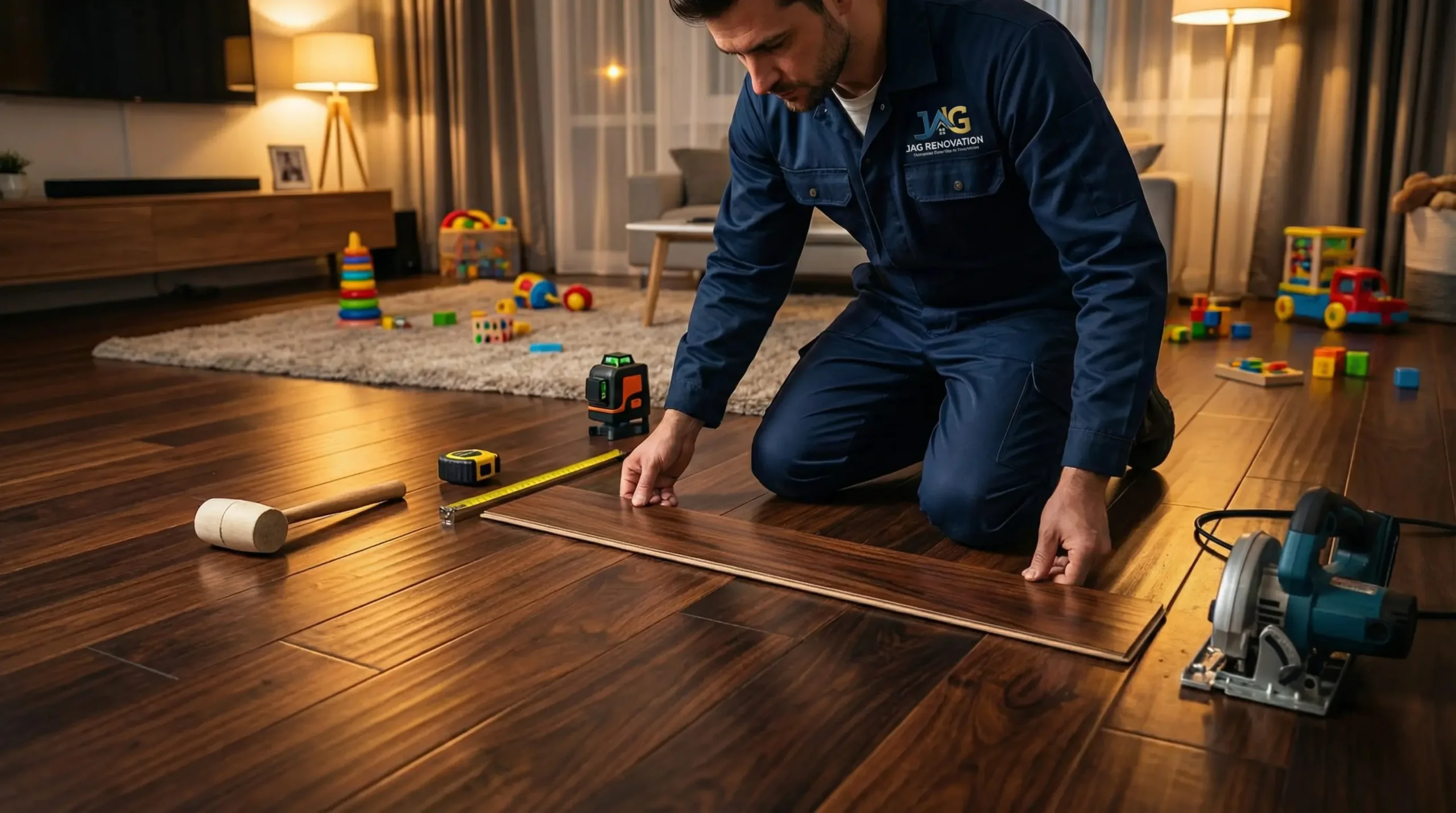
If your household includes dogs, cats, or children, durability becomes non-negotiable. LVP holds up better than most flooring types in active homes. The wear layer protects against scratches from pet claws, scuffs from toys, and the general chaos of daily life. Thicker wear layers—measured in mils—offer more protection, so it’s worth paying attention to that spec when you’re comparing products.
Cleaning is straightforward. Sweep or vacuum regularly to keep dirt and debris from scratching the surface. Mop with a damp cloth when needed. There’s no need for special treatments, waxing, or sealing like you’d need with hardwood. Spills wipe up easily, and the waterproof core means you don’t have to panic if someone knocks over a glass of water.
LVP also tends to be softer underfoot than tile or hardwood, which makes it more comfortable to stand on for long periods. Some products come with attached cork or foam underlayment, which adds cushioning and helps with sound absorption. That’s useful in multi-story homes where noise transfer between floors is a concern. Matte and satin finishes—trending in 2026—hide wear better than glossy surfaces and feel more natural underfoot.
The trade-off is that LVP can’t be refinished. If a plank gets deeply scratched or damaged, you replace it rather than sanding it down. Most LVP installations are floating floors, which makes individual plank replacement possible, but it’s still more work than just buffing out a scratch on hardwood.
Heavy furniture can also leave dents over time, especially with thinner LVP products or softer cores. Using furniture pads under chair and table legs helps prevent that. And while LVP is durable, it’s not indestructible. Sharp objects or extreme impacts can still cause damage.
For Suffolk County homeowners dealing with humidity, pets, or high-traffic areas, LVP delivers performance that’s hard to match. It’s not trying to be hardwood—it’s trying to be practical. And in most cases, it succeeds.
Tile—especially porcelain—is one of the most durable flooring options available. It’s waterproof, scratch-resistant, and holds up to heavy use without showing wear. Porcelain is denser and less porous than ceramic, which makes it the better choice for areas where moisture is a factor. Kitchens, bathrooms, mudrooms, and entryways are all good candidates for tile.
The downside is that tile is cold and hard underfoot. In winter, walking on tile without slippers isn’t pleasant. It’s also unforgiving if something heavy gets dropped—both the tile and whatever hits it are likely to crack or break. For homes with young kids or older family members, the hardness can be a concern. Area rugs help, but they don’t solve the problem entirely.
Tile installation requires precision. It needs a flat, stable subfloor, and the grout lines need to be sealed properly to prevent moisture from getting underneath. Large-format tiles are trending because they minimize grout lines and create a cleaner, more seamless look. But they also require skilled installation to avoid lippage, where the edges of adjacent tiles don’t sit flush.
Carpet, on the other hand, is soft, warm, and sound-absorbing. It’s comfortable for kids to play on and easier on joints than hard surfaces. Bedrooms, living rooms, and family rooms are common places for carpet. Stain-resistant options have improved significantly, and some carpets are even designed to resist pet accidents.
But carpet isn’t ideal for moisture-prone areas. It can trap allergens, pet hair, and dust, which makes it less suitable for people with allergies. Spills need to be cleaned quickly, and even with stain-resistant treatments, some stains are permanent. Carpet also has a shorter lifespan than hard flooring—typically 10 to 15 years before it needs replacement.
In Suffolk County, where humidity can be an issue, carpet works best in climate-controlled rooms away from entryways or basements. Tile works where moisture and durability are priorities. Neither is a one-size-fits-all solution, but both have their place depending on the room and how it’s used.
The right flooring isn’t about trends or what looks good in someone else’s house. It’s about what works in yours. Suffolk County’s coastal climate, your household’s activity level, and your long-term plans all factor into that decision.
Hardwood offers timeless appeal but demands attention to humidity and maintenance. Engineered hardwood gives you real wood with better stability. LVP delivers waterproof durability that handles pets, kids, and moisture without breaking a sweat. Laminate works on a budget but doesn’t love humidity. Tile and carpet each have their place depending on the room and how it’s used.
When you’re ready to move forward with flooring that’s built to last—without the runaround or hidden costs—we bring nearly a decade of experience to Suffolk County homes. Transparent guidance from material selection through installation. Quality craftsmanship that extends the life of your investment. Flooring that actually performs the way it should. That’s what you should expect, and that’s what we deliver.
Summary:
Share: