Small bathroom problems rarely stay small. Discover the warning signs that signal it's time to remodel before water damage, mold, or outdated fixtures cost you thousands.
Water is patient. It finds every crack, every gap, every weak seal—and it waits. What starts as a small leak behind your tile or under your toilet becomes a hidden disaster that you won’t see until the damage is done.
Bathrooms are high-moisture environments by design, but when that moisture gets where it shouldn’t, problems multiply fast. And in Suffolk County homes, especially those 10-15 years or older, aging materials and outdated waterproofing make these issues even more common.
If you’re seeing water stains on your ceiling below the bathroom, soft or spongy spots in your flooring, or dark patches on walls that won’t go away, you’re not dealing with surface-level cosmetic problems. You’re looking at water that’s already gotten into places it shouldn’t be—and it’s doing damage you can’t see yet.

Mold doesn’t need much. Just moisture, a little warmth, and time. Bathrooms provide all three, which is why mold growth is one of the most common—and most dangerous—issues homeowners face when they delay bathroom renovations.
You might see black spots on your ceiling near the exhaust fan. Maybe there’s a musty smell that lingers even after you clean. Or your bathroom mirror fogs up and stays that way long after your shower ends, with drywall that feels damp to the touch. These aren’t just inconveniences. They’re signs that moisture isn’t being controlled properly, and mold is likely growing in places you can’t see—behind tiles, inside walls, under flooring.
Here’s what makes this serious: mold doesn’t just damage your home’s structure. It affects your health. Breathing in mold spores can trigger respiratory problems, chronic coughing, allergic reactions, asthma attacks, and even lung infections. For kids, elderly family members, or anyone with existing respiratory issues, the risks are even higher. Professional mold remediation isn’t optional when you find it during a bathroom remodel—it’s necessary to protect both your home and your family.
The real problem with bathroom mold is that by the time you see it, it’s usually been growing for a while. That small black spot on your ceiling? It’s often connected to a much larger colony behind the drywall. Water that seeps through cracked grout or failed caulking creates the perfect environment for mold to thrive where you can’t reach it with a bottle of bleach and a scrub brush.
Proper bathroom ventilation is your first line of defense, but if your exhaust fan isn’t working correctly—or if your bathroom doesn’t have one—moisture has nowhere to go. It settles on surfaces, soaks into materials, and creates conditions where mold spreads quickly. A bathroom remodel gives you the opportunity to address ventilation issues, replace water-damaged materials, and install moisture-resistant products that prevent future growth.
If you’re noticing mold in your Suffolk County bathroom, a simple cleaning won’t solve the underlying problem. You need to identify where the moisture is coming from, remove contaminated materials safely, and rebuild with proper waterproofing and ventilation. That’s not a weekend DIY project—it’s a job for licensed renovation services that understand how to handle mold correctly and prevent it from coming back.
Water doesn’t respect boundaries. When it gets into your bathroom subfloor or behind your walls, it doesn’t stop there. It travels along joists, soaks into adjacent rooms, and compromises structural elements you can’t see until the damage becomes obvious—and expensive.
Maybe you’ve noticed the ceiling below your bathroom starting to stain or sag. That’s water that’s made its way through your flooring, past the subfloor, and into the ceiling below. Or perhaps the flooring near your toilet or tub feels soft when you step on it, like there’s a sponge underneath. That’s your subfloor rotting from prolonged moisture exposure, and it’s only going to get worse.
Here’s how it typically happens: a small crack in your tile or a failing seal around your tub allows water to seep underneath. At first, it’s just a little moisture. But over weeks and months, that moisture accumulates. Wood subfloors absorb it. Drywall wicks it up. Mold starts growing in the damp environment. Before long, what started as a hairline crack in one tile has turned into a structural issue that requires tearing out the entire bathroom floor and possibly repairing damage in the room below.
The frustrating part is that this damage is happening whether you can see it or not. By the time you notice soft flooring or ceiling stains, the water has usually been there for a while. That’s why small bathroom problems shouldn’t be ignored—they’re often symptoms of bigger issues that are actively getting worse.
During a bathroom renovation, we can assess the extent of water damage, replace compromised materials, and install proper waterproofing to prevent future problems. This might include cement board instead of regular drywall, waterproof membranes under tile, and ensuring all plumbing connections are sealed correctly. These aren’t expensive upgrades—they’re standard practices that protect your investment and prevent the kind of damage that turns a $15,000 bathroom remodel into a $25,000 structural repair.
If you’re seeing any signs of water damage in your Suffolk County bathroom—staining, soft spots, peeling paint, or persistent moisture—it’s worth getting a professional assessment. What you’re seeing on the surface is usually just a fraction of what’s happening behind the scenes, and addressing it sooner rather than later can save you thousands in repairs down the road.
Want live answers?
Connect with a Jaguar Renovation expert for fast, friendly support.
That hairline crack in your bathroom tile might not seem like a big deal. It’s small, barely noticeable, and it’s not like the tile is falling off the wall. So you ignore it. Maybe you’ve even re-caulked around it a few times, hoping that’ll keep water out.
But here’s the thing about cracks in bathroom tile: they don’t get better. They get worse. And more importantly, they let water through. Every time you shower, every time water splashes on that cracked tile, moisture is seeping underneath—into your grout, your adhesive, your subfloor, and eventually into the structure of your home.
Cracked tiles are often a symptom of something bigger. Maybe your subfloor is shifting. Maybe there’s water damage underneath that’s causing the tile to lose its bond. Or maybe the tile was installed incorrectly to begin with, without proper waterproofing or on an uneven surface. Whatever the cause, the crack itself is just the visible part of a larger problem.
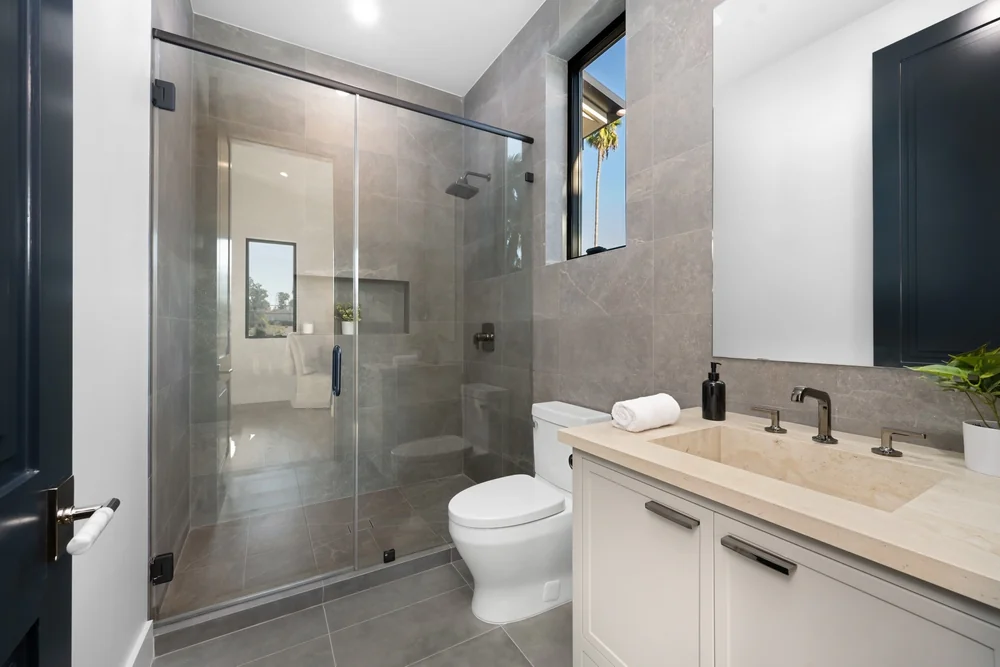
You can fill a hairline crack with epoxy. You can replace a single broken tile if you have a spare. But if you’re seeing multiple cracks, if tiles are coming loose, or if the grout around your tiles is cracking and crumbling, repair isn’t going to solve the underlying issue.
Cracked bathroom tiles are often the first visible sign of water damage, foundation settling, or subfloor problems. When we remove damaged tile during a bathroom remodel, we frequently find water-damaged subfloors, failed waterproofing, or structural issues that have been developing for years. That’s why trying to patch individual tiles without addressing what’s causing them to crack is like putting a band-aid on a broken bone—it might cover the problem temporarily, but it doesn’t fix anything.
If your bathroom floor feels uneven, if tiles are cracking in multiple areas, or if you’re seeing cracks that seem to follow a pattern, there’s likely something happening beneath the surface. It could be a subfloor that’s rotted from water exposure. It could be settling in your home’s foundation. Or it could be that the tile was never installed on a proper substrate to begin with, and now it’s failing.
A professional bathroom renovation addresses these root causes. We remove the damaged tile, inspect and repair the subfloor, install proper waterproof underlayment, and then install new tile correctly. This doesn’t just make your bathroom look better—it prevents the same problems from happening again in a few years.
For Suffolk County homeowners dealing with cracked tile, the question isn’t whether to fix it. It’s whether to keep patching the same problem over and over, or invest in a bathroom remodel that solves it permanently. And when you factor in the cost of repeated repairs, the water damage that’s happening while you wait, and the potential for structural issues that’ll cost exponentially more to fix later, a remodel starts looking like the smarter financial decision.
Your bathroom walls shouldn’t need constant patching. If you’re seeing cracks in your sheetrock, paint that keeps peeling, or areas where you’ve spackled multiple times and the problem keeps coming back, moisture is the likely culprit—and spackling over it won’t fix it.
Bathrooms are humid environments, and regular drywall isn’t designed to handle that kind of moisture exposure long-term. That’s why modern bathroom renovations use moisture-resistant materials like cement board or green board in wet areas. If your bathroom was built with standard drywall, or if water has been getting behind your walls through failed seals or leaky plumbing, you’re going to see signs on the surface—peeling paint, bubbling texture, cracks that reappear after you patch them.
Here’s what’s usually happening: water vapor or liquid water is getting into your walls, either through poor ventilation, leaks, or failing waterproofing. That moisture causes the drywall paper to separate from the gypsum core, which creates bubbles and peeling. It also creates perfect conditions for mold growth inside your walls, where you can’t see it. The paint fails because it can’t adhere to a damp, compromised surface. And no amount of spackling or repainting will solve the problem if the moisture source isn’t addressed.
During a bathroom remodel, we can identify where moisture is coming from—whether it’s a leaky pipe, inadequate ventilation, or failed waterproofing around your shower or tub. We can remove damaged drywall, treat any mold, and install moisture-resistant materials that are designed for bathroom environments. We can also upgrade your ventilation system to ensure humidity doesn’t build up in the first place.
If you’re constantly repairing the same spots on your bathroom walls, or if you’re seeing signs of moisture damage like peeling, bubbling, or persistent cracks, it’s time to look deeper than the surface. A professional bathroom assessment can identify what’s causing the problem and give you a clear picture of what needs to be fixed—before the damage spreads to other areas of your home.
For homeowners in Suffolk County dealing with recurring sheetrock and spackling issues, the solution isn’t better spackle—it’s a bathroom renovation that addresses the moisture problems causing the damage in the first place. And the sooner you address it, the less extensive (and expensive) the repairs will be.
Your bathroom isn’t going to fix itself. Small problems don’t stay small—they grow, they spread, and they get more expensive the longer you wait. That crack in your tile is letting water through right now. That mold spot on your ceiling is connected to a bigger problem behind your drywall. Those outdated fixtures are wasting water and money every single day.
The good news is that you don’t have to wait until things get worse. A professional bathroom remodel in Suffolk County, NY addresses these issues before they turn into structural nightmares. It protects your home’s value, improves energy efficiency, and gives you a bathroom that actually works the way it should—without the constant repairs, the health concerns, or the worry that you’re one leak away from a major problem.
If you’re seeing any of the warning signs we’ve covered—water damage, mold growth, cracked tiles, failing surfaces, or outdated fixtures that waste money—it’s worth getting a professional assessment. We bring nearly a decade of hands-on experience to Suffolk County homeowners, with a focus on transparent communication, honest pricing, and craftsmanship that solves problems the right way the first time. Excellence built in, extra cost left out.
Summary:
Share: