Mixed-material countertops let you combine durability with design. Get the luxury look, better functionality, and smarter budgeting—all in one kitchen.
Mixed-material countertops mean using two or more different surfaces in your kitchen—usually on your island versus your perimeter, or in specific work zones. Think granite around your sink and stove, with a butcher block section for prep work. Or quartz on the main counters with a statement marble island.
This isn’t about being trendy for the sake of it. It’s about function. Different materials have different strengths. Granite handles heat. Butcher block is perfect for chopping. Marble stays cool for rolling dough. When you mix them strategically, each surface does what it does best.
It also opens up your budget. You can invest in that marble or quartzite you love for your island—the focal point everyone sees—while using more affordable, durable quartz or granite for the areas that take daily abuse. You get the designer look without the designer price tag on every square foot.

The difference between a kitchen that looks custom and one that looks confused comes down to intention. You’re not just throwing materials together. You’re creating contrast that makes sense.
Start with patterns. If one material has bold veining or lots of movement—like a dramatic marble or busy granite—pair it with something quieter. A solid quartz or honed surface balances it out. Two loud patterns competing for attention will overwhelm the space and make your kitchen feel chaotic instead of cohesive.
Color matters too, but not in the way you might think. You don’t need everything to match. You need everything to coordinate. Pull tones from your cabinetry, backsplash, or flooring. If you have warm wood cabinets, a butcher block island makes sense. If your space leans cool and modern, pair light quartz with darker granite or a sleek concrete look.
Texture adds another layer. Mixing a polished surface with a honed or matte finish gives you depth without clashing. A glossy marble island against matte quartz perimeters creates visual interest while keeping the overall feel grounded.
Most designers recommend limiting yourself to two, maybe three materials max. More than that and you risk losing the cohesive thread that ties everything together. The goal is intentional contrast, not a countertop showroom.
And here’s something most people don’t think about until it’s too late: edge profiles. Keeping your edge treatments consistent across different materials—whether that’s a simple straight edge or a more decorative profile—helps everything feel like it belongs in the same kitchen. Small detail, big impact.
Some material pairings just work. They balance durability with aesthetics, maintenance with style, and budget with impact. Here’s what actually makes sense for Suffolk County homeowners tackling a kitchen remodel.
Granite and quartz is probably the most practical combination out there. Granite brings natural beauty and serious heat resistance—perfect around your cooktop or anywhere you’re setting down hot pans. Quartz is non-porous, which means it doesn’t stain, doesn’t need sealing, and handles daily life without complaint. Put quartz on your perimeter for easy maintenance, and use granite where you need that extra durability. Both are widely available on Long Island, and you’ll find plenty of options in every price range.
If you want warmth, consider quartz with butcher block. Butcher block on an island gives you a dedicated prep surface that’s gentle on knives and adds a cozy, organic feel to the space. Quartz everywhere else keeps maintenance simple. Just know that butcher block needs regular oiling and shouldn’t be placed near sinks or high-moisture areas. Use it strategically, and it’s a beautiful, functional addition.
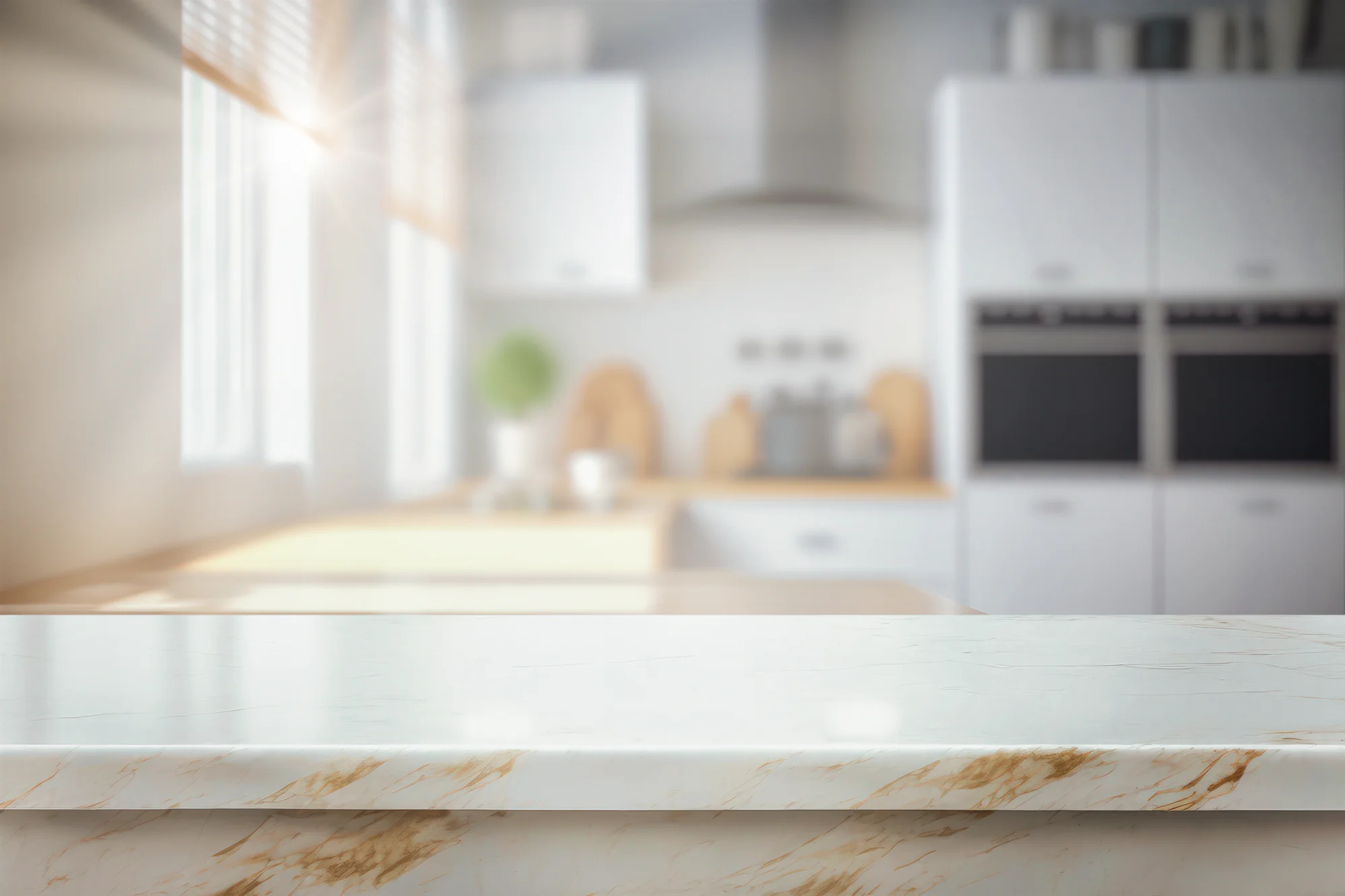
Marble and quartz is the combination when you want luxury but also need to live in your kitchen. Real marble is stunning—those veins, that depth—but it’s porous, stains easily, and requires careful maintenance. Using it on your island, where it becomes a focal point, gives you that high-end look. Pair it with quartz on the perimeter, and you get the best of both worlds: beauty where it counts, practicality where you work.
For a more modern, industrial vibe, granite with stainless steel makes a statement. Stainless is heat-proof, hygienic, and brings a professional kitchen feel. It’s not for everyone—it shows fingerprints and scratches—but if that aesthetic speaks to you, pairing it with granite balances the cool metal with natural warmth.
Butcher block and granite is another classic. Granite handles the heavy-duty zones, while butcher block creates a dedicated cutting and prep area. The contrast between the natural wood grain and the stone adds character without feeling forced.
What you probably want to avoid: mixing laminate with natural stone or engineered materials. Even high-quality laminate looks noticeably different when placed next to granite or quartz, and it cheapens the overall impression. If budget is tight, it’s better to use one affordable material throughout than to mix in a way that highlights the difference in quality.
Want live answers?
Connect with a Jaguar Renovation expert for fast, friendly support.
Let’s talk about what this actually gets you. Because mixing materials isn’t just about aesthetics—it’s about making your kitchen work better for how you use it.
First, you create functional zones. Your kitchen isn’t one uniform workspace. You have areas for different tasks. Mixing materials lets you match the surface to the job. Heat-resistant granite or quartz near the stove. A butcher block section where you do most of your chopping. Marble in a baking zone where you need a cool surface for working with dough. Each area performs at its best.
Budget flexibility is the other big win. You don’t have to choose between the countertop you love and the countertop you can afford. Put the premium material—marble, quartzite, specialty stone—on your island or in a smaller, high-visibility area. Use more affordable, durable options like quartz or granite for the perimeter. You get the visual impact of luxury materials without covering every inch of counter space with them.
Every kitchen has weak points. Places where your countertops take a beating, or where certain materials just don’t hold up. Mixing materials lets you address those problems directly instead of compromising across the board.
Moisture is a big one. If you love the look of butcher block or wood countertops but worry about water damage near the sink, don’t use it there. Put butcher block on your island or a dry prep area, and use non-porous quartz or granite around water sources. You get the warmth and character of wood without the constant stress of keeping it dry.
Heat is another. Not all materials handle hot pans the same way. Quartz, while durable and low-maintenance, can be damaged by extreme heat. Granite and quartzite laugh it off. If you do a lot of cooking and frequently move pots from stove to counter, having granite in that zone makes sense. Quartz can live happily everywhere else.
Maintenance compatibility matters too. If you’re mixing materials, you’re also mixing care routines. Granite needs periodic sealing. Marble requires careful cleaning to avoid etching. Butcher block needs regular oiling. Quartz needs… nothing, really. Just soap and water. Pairing a high-maintenance material with a low-maintenance one—like marble on the island, quartz on the perimeter—means you’re only babying one area instead of the entire kitchen.
Then there’s the scratch and stain factor. Marble scratches and stains easily. Butcher block shows knife marks. Granite and quartz are much more forgiving. If you have kids, entertain often, or just use your kitchen hard, put the tougher materials in the high-traffic zones. Save the more delicate surfaces for areas that see lighter use.
And here’s something people don’t always consider: resale value. A well-executed mixed-material kitchen signals custom design and thoughtful planning. It shows buyers that someone invested in the space and made intentional choices. A poorly executed one—materials that clash, or an obvious attempt to cut corners—does the opposite. If you’re planning to sell within a few years, stick with classic combinations that have broad appeal. If you’re staying put, design for how you live.
Before you start picking out slabs, there are a few things worth thinking through. Because while mixed materials offer a lot of flexibility, they also require more planning than a single-surface kitchen.
First, how do you actually use your kitchen? Be honest. If you’re someone who cooks every night, preps on multiple surfaces, and uses your kitchen island as command central, your material choices should reflect that. Prioritize durability and function over looks. If your kitchen is more for show—light cooking, occasional entertaining—you have more freedom to choose based on aesthetics.
Your maintenance tolerance matters. Some people don’t mind oiling butcher block every month or wiping up spills on marble immediately. Others want to set a hot pan down, walk away, and not think about it. There’s no wrong answer, but you need to match your materials to your reality. Mixing a high-maintenance material with low-maintenance ones can work, but only if you’re actually willing to do the upkeep on that one surface.
Budget is obviously a factor, but think beyond the initial cost. What’s the long-term expense? Materials that need regular sealing, special cleaners, or professional refinishing add up over time. Sometimes paying more upfront for a low-maintenance material saves you money and hassle down the road.
Design cohesion takes effort when you’re mixing materials. You need to think about how everything works together—not just the countertops, but the cabinetry, backsplash, flooring, and hardware. This is where the full scope of your renovation matters. If you’re also updating custom carpentry, installing new flooring, or refreshing paint and sheetrock, all those elements need to coordinate. We handle multiple aspects of interior work—not just countertops—so we can help you see the big picture and avoid mismatched choices.
Installation complexity goes up when you’re working with multiple materials. Different surfaces have different requirements. Some need more structural support. Some expand and contract at different rates. Seams between different materials need to be planned carefully. This isn’t a DIY project, and it’s not the time to hire the cheapest installer you can find. You need someone who understands how these materials interact and can execute the plan without creating problems down the line.
Finally, think about timeline. Mixing materials can mean coordinating different suppliers, fabricators, and installation schedules. If one material is backordered or takes longer to fabricate, it can delay your entire project. Build in some buffer time, and make sure everyone involved is on the same page about the schedule.
Mixed-material countertops aren’t right for every kitchen, but when they work, they really work. You get better functionality, smarter budgeting, and a space that feels custom instead of cookie-cutter.
The key is intention. Pair materials that complement each other. Match surfaces to how you’ll actually use each zone. Keep design cohesive by limiting your choices and coordinating with the rest of your kitchen. And work with someone who knows how to execute it properly—from countertop installation to the carpentry, flooring, and finishing work that ties it all together.
If you’re planning a kitchen remodel in Suffolk County and want to explore whether mixing materials makes sense for your space, we can walk you through the options. Nearly a decade of experience in kitchen and bathroom remodeling means we’ve seen what works, what doesn’t, and how to deliver the results you’re looking for—without the hidden costs or sales pressure you don’t need.
Summary:
Share: