

Hear from Our Customers
You’re not looking for a contractor who talks a good game. You need someone who shows up, does the work right, and doesn’t surprise you with costs that weren’t in the original conversation.
Here’s what actually happens when you work with a licensed contractor who’s been doing this in Suffolk County for nearly ten years. Your kitchen remodel gets finished on the timeline you discussed. Your bathroom renovation uses materials built for Long Island’s humidity and temperature swings. Your basement conversion doesn’t turn into a six-month nightmare because someone didn’t pull the right permits.
The difference isn’t just in how the work looks when it’s done. It’s in how you feel while it’s happening. You’re not chasing down responses or wondering if today’s the day someone finally shows up. You know what’s happening, when it’s happening, and exactly what it costs.
We’ve been working in Suffolk County since before the median home price hit $640,000. That means we’ve seen what happens when contractors cut corners on Long Island projects, and we’ve spent years learning how to do it right the first time.
Jaguar Renovations specializes in interior work: kitchens, bathrooms, basements, custom carpentry, flooring, and expert-level spackling and painting. We’re licensed in Suffolk County because it’s required by law, and we carry proper insurance because your home isn’t the place to take shortcuts.
Stony Brook University area homes come with their own considerations. Older construction, coastal weather impact, strict local building codes. You need residential contractors who know the difference between what works in theory and what actually holds up here.

First, we come look at your space and listen to what you’re trying to accomplish. Not a high-pressure sales visit. Just an actual conversation about what you want, what’s realistic, and what it costs.
Then you get everything in writing. New York state law requires written contracts for home improvement work, and ours includes your timeline, payment schedule, and project specifics. No verbal promises that disappear later. If we’re doing a kitchen remodel, you’ll know when cabinets get ordered, when plumbing work happens, and when countertops go in.
During the work, you’re not left guessing. We coordinate the trades, handle the Suffolk County building permits, and make sure each phase wraps before the next one starts. If something changes or if we hit an issue that wasn’t visible until we opened a wall, you hear about it immediately with options and costs.
After we’re done, you’ve got a finished space that works the way you wanted and a home that’s worth more in a market where values jumped 7.7% last year across Suffolk County.

Ready to get started?
Interior renovation covers everything inside your walls. Kitchen remodeling means cabinets, countertops, flooring, backsplash, lighting, and the coordination of plumbing and electrical work. Bathroom renovations include fixture replacement, tile work, vanities, and addressing the moisture issues that Long Island’s climate creates.
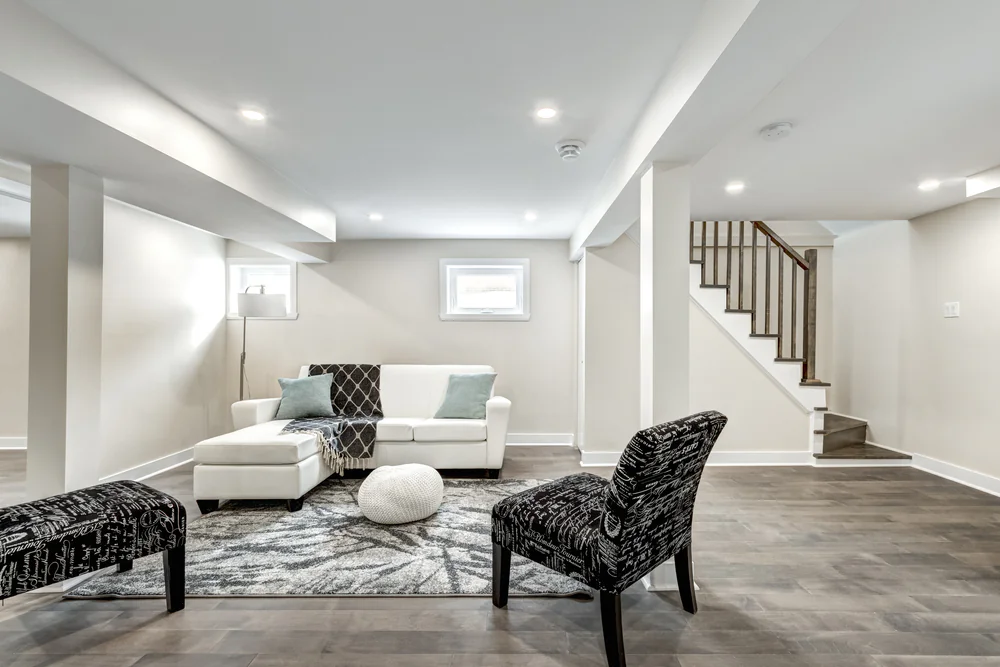
Basement remodeling in Suffolk County requires someone who understands local water table issues and proper waterproofing. We handle framing, insulation that meets code, flooring that can handle below-grade humidity, and lighting that turns a dark basement into usable space.
Custom carpentry and flooring work means built-ins that fit your specific space, trim work that’s actually level, and floor installation that accounts for Long Island’s seasonal temperature swings. We’re also talking about expert-level spackling and painting, which matters more than most people realize when you’re trying to get walls smooth enough that paint looks professional instead of DIY.
The Stony Brook University area has seen strong demand for open floor plans and spa-like bathroom features. Home values here support quality renovations, and homeowners are investing in upgrades that include smart home technology and energy-efficient materials. Your project should reflect current market trends while staying functional for how you actually live.

Ask for their Suffolk County home improvement license number and verify it. It’s against the law to operate a home improvement business in Suffolk County without one, but plenty of contractors dodge the question or claim they don’t need it.
A licensed contractor has met county requirements, carries proper insurance, and can be held accountable if something goes wrong. You can check license status through Suffolk County’s consumer affairs office. If someone hesitates or says licensing doesn’t apply to them, that’s your signal to keep looking.
We’re licensed because it’s required, and we’ll give you our license number before you even ask. It’s not a selling point. It’s the baseline for doing business legally in this county.
New York state law spells this out clearly. Your contract needs a start date, estimated completion date, detailed payment schedule, and a full description of the work being done. It should list materials being used, who’s responsible for permits, and what happens if changes come up mid-project.
Payment terms matter more than most homeowners realize. Suffolk County limits how much contractors can request upfront, and fair down payments typically run under 15%. If someone’s pushing for a large deposit or claiming their price is only good if you sign today, you’re looking at pressure tactics, not professional business practices.
The contract protects both sides. You know exactly what you’re getting and what it costs. We know the project scope is clear and agreed upon. Everything else is just conversation until it’s in writing.
Coastal humidity, temperature swings, and salt air impact how materials perform. Flooring that works fine in Arizona might warp here. Paint that’s perfect for dry climates can have adhesion issues in Long Island’s moisture levels. Bathroom exhaust and proper ventilation aren’t optional upgrades—they’re requirements for preventing mold.
Suffolk County homes, especially older construction around Stony Brook University, weren’t always built with modern moisture barriers. When we’re doing bathroom or basement work, we’re accounting for conditions that didn’t exist when your house was originally built. That means proper waterproofing, materials rated for high-humidity environments, and installation techniques that let materials expand and contract with seasonal changes.
Cutting corners on climate-appropriate materials saves money for about six months. Then you’re dealing with warped floors, peeling paint, or mold issues that cost more to fix than doing it right would have cost initially.
Kitchen remodels typically run six to eight weeks for a full renovation, assuming no major structural surprises. Bathroom renovations usually take three to four weeks. Basements vary widely depending on whether we’re finishing raw space or renovating existing finished areas.
Those timelines assume normal conditions: permits get approved on schedule, materials arrive when ordered, and we don’t open walls to find problems that need addressing before we can continue. The timeline also depends on scope. Replacing cabinets and countertops is faster than reconfiguring your entire kitchen layout and moving plumbing.
What slows projects down? Poor communication, contractors juggling too many jobs at once, and trying to skip the permit process to save time. We schedule your project, order materials in advance, and coordinate trades so you’re not waiting weeks between the plumber and the electrician. The timeline we give you in writing is the timeline we hit unless something genuinely unexpected comes up—and then you know about it immediately.
Kitchen remodels in Suffolk County typically start around $25,000 for basic updates and can run $75,000+ for high-end full renovations. Bathrooms usually range from $15,000 to $40,000 depending on size and finishes. Basement finishing runs $30,000 to $60,000 for most projects.
Those numbers reflect real costs in this market: licensed contractors, quality materials that hold up in Long Island’s climate, proper permits, and work that’s done to code. If someone’s quoting dramatically lower, ask what’s different. Are they licensed? Are they pulling permits? What grade of materials are they using?
With median home prices around $640,000 in this area and values increasing 7.7% annually, your renovation is an investment in your home’s market worth. Cheap work that needs redoing in three years isn’t a bargain. Quality work that lasts and adds real value to your home is what makes financial sense.
Licensing status, years of local experience, and whether they’re actually transparent about costs. Suffolk County has over 6,000 general contractors listed on major platforms. Most are legitimate. Some aren’t. The difference shows up in how they communicate, what they put in writing, and whether they’re still around if something needs addressing after the project wraps.
We’ve been doing interior renovations in Suffolk County for nearly a decade. We specialize in residential work: kitchens, bathrooms, basements, custom carpentry, and high-level finish work. We’re not the cheapest option, and that’s intentional. You’re paying for materials that last, work that’s done right the first time, and a contractor who’s still going to be in business next year if you need something.
The real differentiator is simple: we don’t play the games that give this industry a bad reputation. No pressure tactics, no hidden costs, no dodging questions about licensing or insurance. Excellence built in, extra cost left out. That’s not a slogan. It’s how we’ve stayed in business while other contractors come and go.
Other Services we provide in Stony Brook University