
Hear from Our Customers
Your basement right now is storage. Maybe laundry. Probably something you avoid showing guests.
It doesn’t have to stay that way. A finished basement gives you the square footage you need without the expense or hassle of building out. No foundation work. No roofing. No exterior permits that drag on for months.
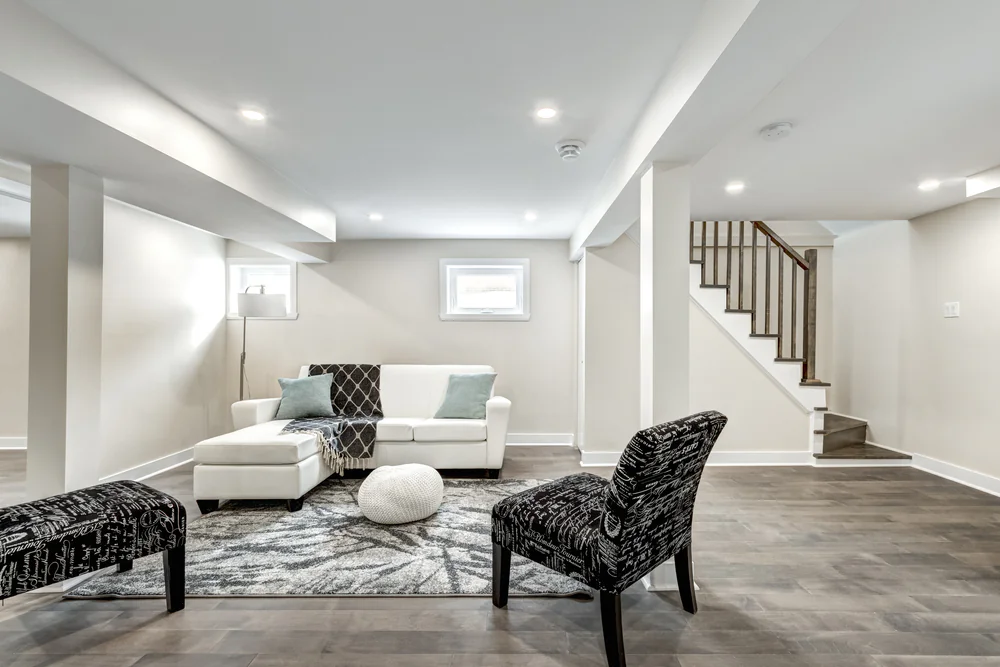
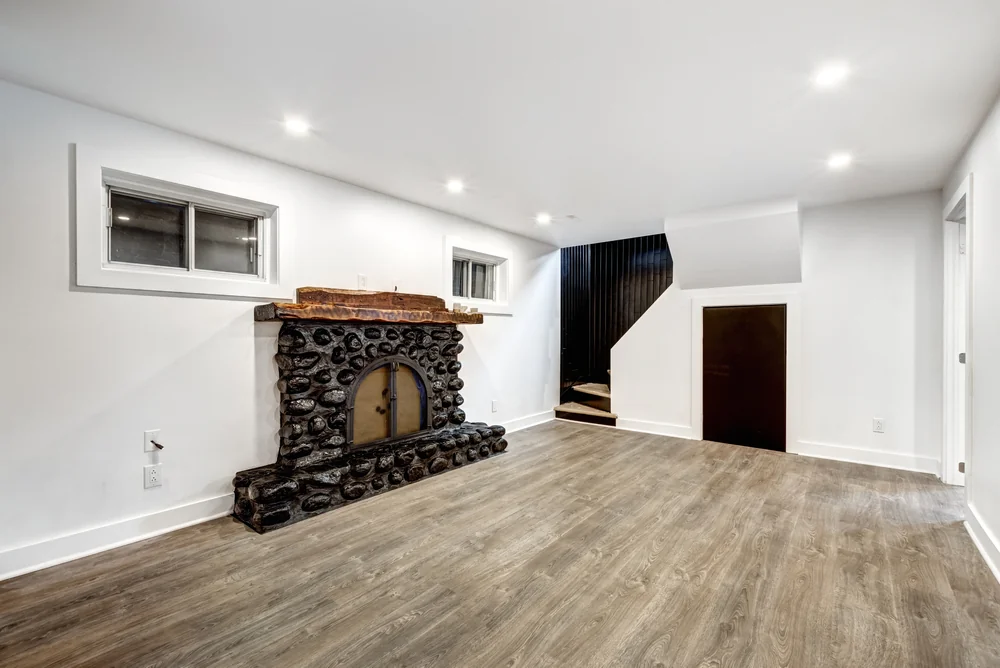
You get a family room where your kids actually want to hang out. A home office with a door that closes. A guest suite that doesn’t require giving up your own space. Whatever you need, it’s already under your feet—it just needs to be done right.
And “done right” matters more in a basement than anywhere else in your home. Get the moisture wrong and you’re repainting in two years. Skip proper insulation and it never feels comfortable. Use the wrong materials and you’re smelling mildew by summer.
Basements behave differently than the rest of your house. If you don’t account for that from the start, you’ll pay for it later.
We’ve been finishing basements across Suffolk County for nearly a decade. That means we’ve seen what works here and what doesn’t.
Long Island basements deal with humidity, coastal air, and a water table that doesn’t quit. If you don’t build for that, you’re setting yourself up for problems. We handle moisture control first, then build everything else around it.
Our crews are in-house. No subcontractors rotating through your home. You get the same team from demo to final walkthrough, and they answer to us—not some third party we can’t control.
We’re licensed, insured, and we pull permits the right way. That matters when you go to sell. Buyers and inspectors can tell when a basement was finished without permits, and it kills deals.
First, we come out and look at your space. Not to sell you—to see what you’re working with. We check for moisture issues, look at your mechanicals, measure everything, and talk through what you actually want to use the space for.
Then we give you a fixed price. Not an estimate that balloons later. A real number that includes permits, materials, labor, and cleanup.
Once you’re ready to move forward, we handle the permits and schedule the work. Our crew shows up on time, keeps the site clean, and stays until the job’s done. We’re not bouncing between five other projects—we finish what we start.
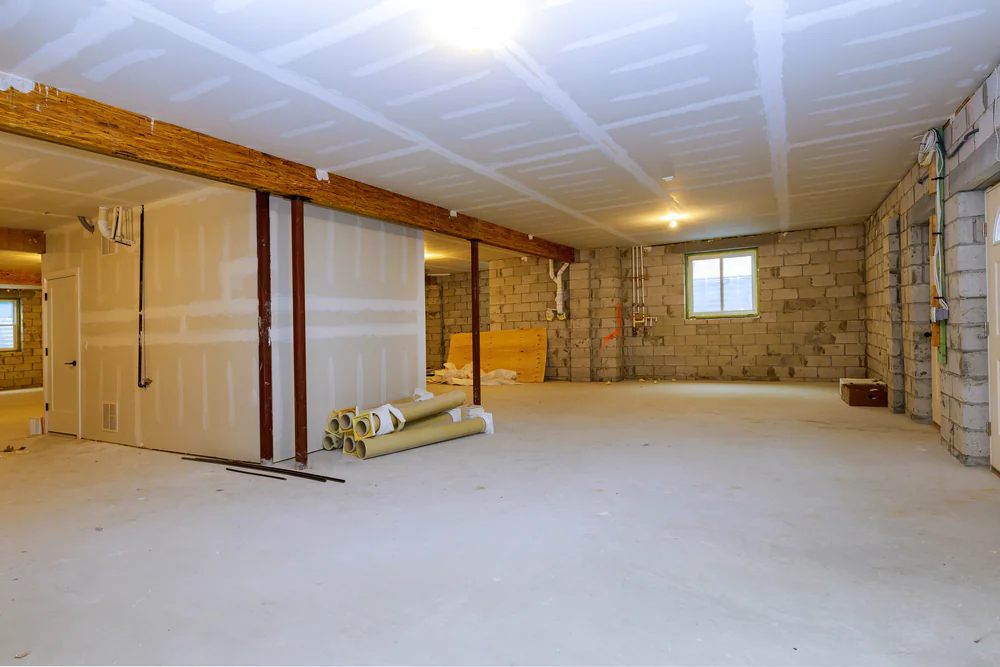
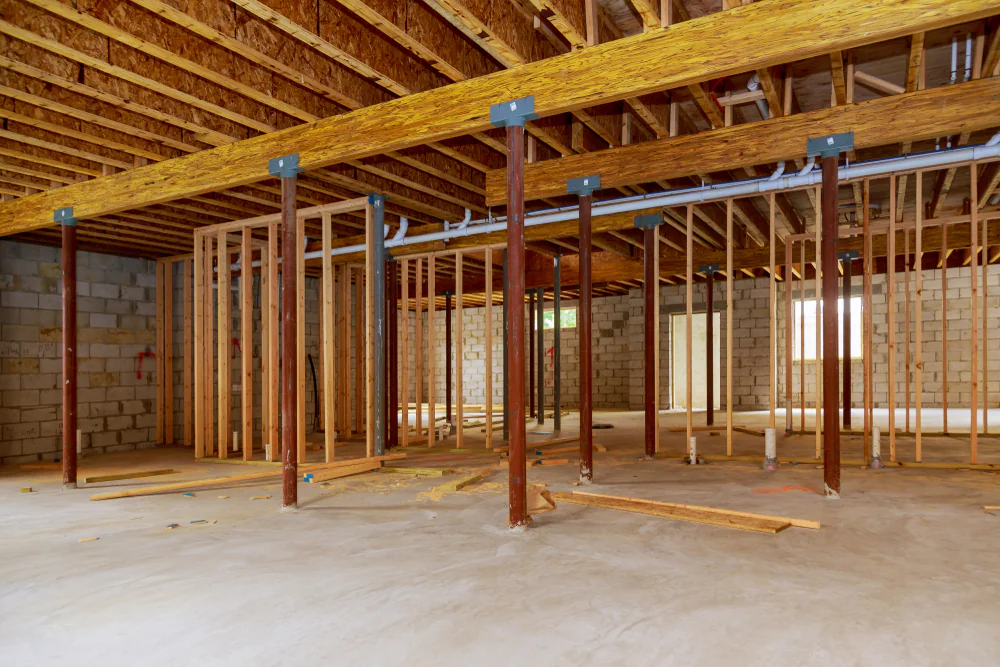
You’ll see progress every day. Framing goes up. Drywall goes in. Floors get laid. Paint goes on. We walk you through each stage so you know exactly where things stand.
At the end, we do a final walkthrough together. If something’s not right, we fix it before we call it done. Then you get a one-year warranty on the work, because we stand behind what we build.
Ready to get started?
Every basement remodel we do starts with moisture control. That means vapor barriers, proper insulation, and drainage if needed. Skip this and nothing else matters.
From there, we frame out your new walls, run electrical for lighting and outlets, and add HVAC if your current system can handle it. If it can’t, we’ll tell you upfront—not after we’ve already started.
Drywall goes up, gets finished smooth, then primed and painted. Flooring depends on what you want and what makes sense for a basement. Luxury vinyl plank is popular here because it handles moisture better than hardwood and looks better than basic carpet.
We install trim, doors, and any built-ins or custom carpentry you’ve planned for. If you’re adding a bathroom or wet bar, we handle the plumbing and fixtures too.
In Dix Hills and across Suffolk County, homeowners are adding an average of 600 to 1,000 square feet of finished space when they remodel a basement. That’s significant square footage without touching your lot coverage or dealing with zoning restrictions. And because the median home value in Suffolk County is now over $675K, the investment makes sense—you’re adding functional space to an already valuable asset.

Most basement finishing projects take between four and eight weeks, depending on size and scope. A straightforward remodel with one open room and a bathroom runs closer to four weeks. If you’re adding multiple rooms, a full bath, and custom carpentry, expect closer to eight.
Weather doesn’t slow us down the way it does with exterior work. We’re inside, so we’re not waiting on rain delays or temperature swings. The timeline depends more on inspections and material delivery than anything else.
We’ll give you a realistic schedule upfront. If something changes, we tell you right away—not the day before we’re supposed to finish.
Yes. Any work that involves framing, electrical, plumbing, or HVAC requires a permit in Suffolk County. That includes basement finishing.
Some contractors will tell you it’s optional or that you can skip it to save money. That’s a mistake. Unpermitted work shows up during home inspections, and it can kill a sale or force you to rip everything out and start over.
We pull permits for every job. It’s part of our process, and it’s included in your price. The work gets inspected at each stage, so you know it’s done to code. When you go to sell, there’s no issue.
Moisture is the biggest issue we deal with in Suffolk County basements. The water table is high, the air is humid, and coastal conditions make everything worse.
We start by checking for active water intrusion. If you’ve got water coming in through the foundation, we address that first—either with interior drainage or by fixing grading and downspouts outside. You can’t finish over a moisture problem and expect it to go away.
Once the space is dry, we install vapor barriers on the walls and use closed-cell foam insulation where it makes sense. We avoid materials that absorb moisture—no drywall directly against concrete, no carpet padding that holds water. Everything we use is chosen specifically because it can handle a basement environment. Then we make sure there’s airflow, because even a dry basement needs ventilation to stay comfortable year-round.
Most basement remodels in Suffolk County run between $50,000 and $90,000, depending on size and finishes. A basic 600-square-foot space with one bathroom and standard finishes is on the lower end. A 1,000-square-foot layout with a full bath, wet bar, and custom built-ins pushes toward the higher end.
The biggest variables are plumbing, HVAC, and finishes. Adding a bathroom or kitchenette increases cost because of the plumbing and fixture work. If your existing HVAC system can’t handle the added square footage, you’ll need to upgrade that too.
We give you a fixed price before we start. That number includes permits, labor, materials, and cleanup. No surprises, no change orders unless you decide to change the scope. You’ll know exactly what you’re spending before we touch a wall.
Yes. Adding a bathroom is common, and it’s one of the most useful upgrades you can make. A basement bathroom means guests don’t have to go upstairs, and it’s essential if you’re turning the space into a rental or in-law suite.
Bedrooms are possible too, but they require an egress window to meet code. That means a window large enough for someone to climb out in an emergency, with a window well outside if you’re below grade. We handle the egress work as part of the project if that’s what you need.
Both bathrooms and bedrooms add value, but they also add complexity. We’ll walk you through what’s required and what makes sense for your space during the initial consultation. If it’s doable, we’ll build it. If it’s going to create more problems than it solves, we’ll tell you that too.
Basements are not forgiving. Get the moisture wrong and you’re dealing with mold. Miss a code requirement and you fail inspection. Use the wrong insulation and the space never feels right.
If you’ve got carpentry experience and you’ve worked with foundations before, maybe you can handle some of it. But most homeowners don’t have the tools, the time, or the expertise to do it right—and the cost of fixing mistakes usually exceeds what you would’ve paid a contractor in the first place.
We’ve been doing this for nearly a decade in Suffolk County. We know the soil conditions, the code requirements, and the materials that hold up here. You’re not paying for labor—you’re paying for experience that keeps you from having to redo the job in three years.