
Hear from Our Customers
You shouldn’t have to police your own home. No more jumping up when someone walks in with wet shoes. No more sectioning off rooms from the dog. No more holding your breath every time a glass tips over.
The right flooring changes how you live in your space. Waterproof vinyl plank gives you the hardwood look without the hardwood panic. Luxury vinyl tile handles moisture that would destroy traditional laminate. Ceramic tile installation in high-traffic areas means you stop replacing floors every few years.
Suffolk County homes deal with humidity that most flooring wasn’t designed for. Summer moisture makes hardwood swell and buckle. Regular laminate traps water underneath and grows mold you can’t see until it’s expensive. You need materials that were built for this climate, installed by people who understand what fails here and why.
When your floors actually work for your life, you get your house back. You stop worrying about resale value tanking because of water stains. You stop calculating replacement costs in your head. You just live.
We’ve spent almost 10 years working inside Dix Hills homes. We’ve seen what holds up and what doesn’t when you’re this close to the water. We know which products handle humidity and which ones sales reps push because they’re profitable.
We’re not the cheapest option, and we won’t pretend to be. You’re paying for floors that don’t need replacing in three years. You’re paying for honest advice about what actually works in your home, not what’s on sale. You’re paying for installation done right the first time, so you’re not calling someone else to fix it later.
Most flooring contractors in Dix Hills will sell you whatever you ask for. We’ll tell you when your first choice won’t work and why. That’s the difference between a transaction and a renovation you’re happy with five years from now.

First, we come look at your space. We’re checking subfloor condition, moisture levels, and how your home is actually used. A house with three kids and two dogs needs different flooring than a couple who travels half the year. We ask questions that matter, not just square footage.
Then we talk through options that make sense for your situation. If you’re set on hardwood in a basement that floods, we’ll explain why that’s a bad investment. If you want luxury vinyl but you’re worried it looks cheap, we’ll show you what quality LVP actually looks like installed. We’re not here to upsell—we’re here to keep you from making expensive mistakes.
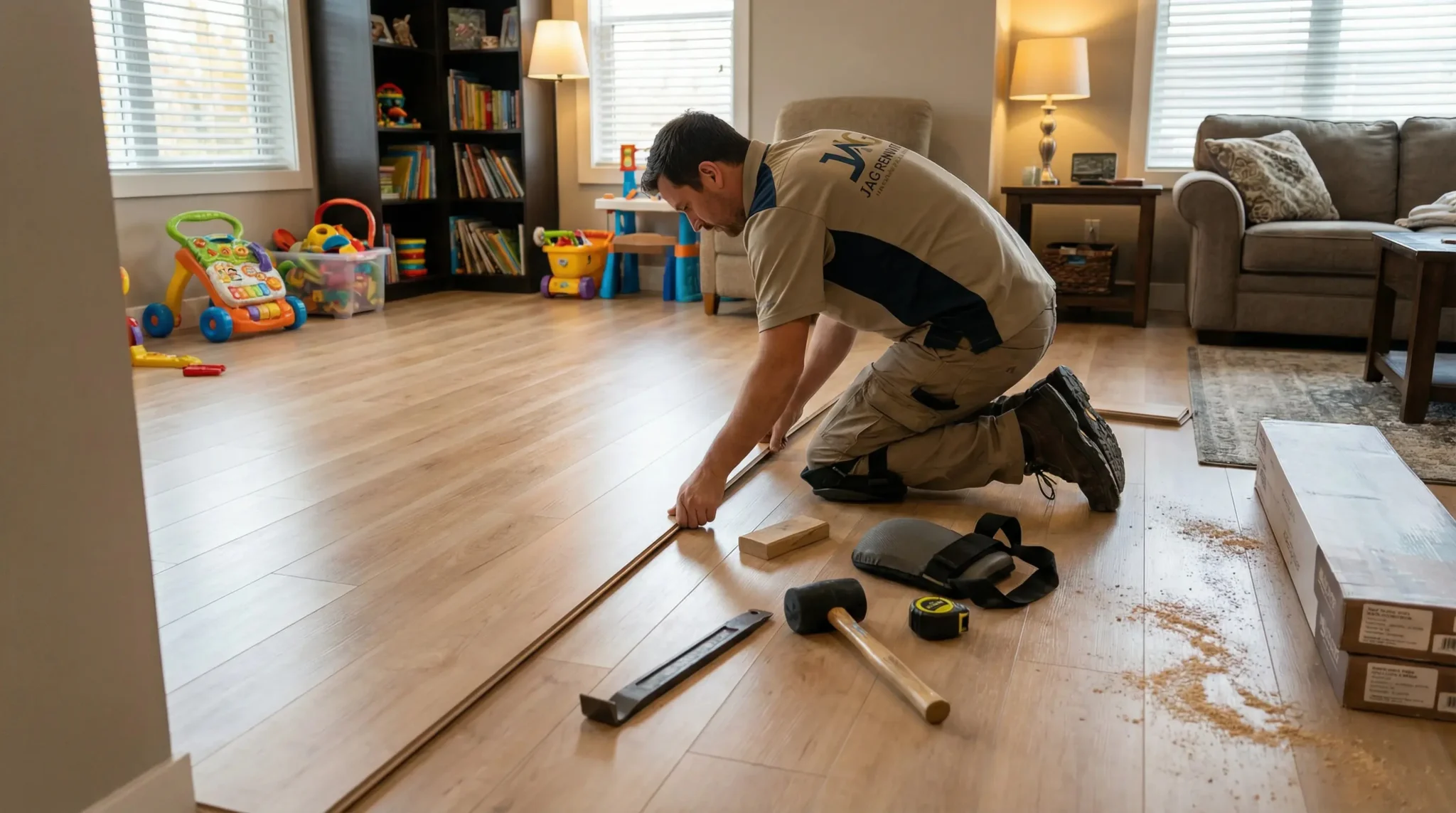
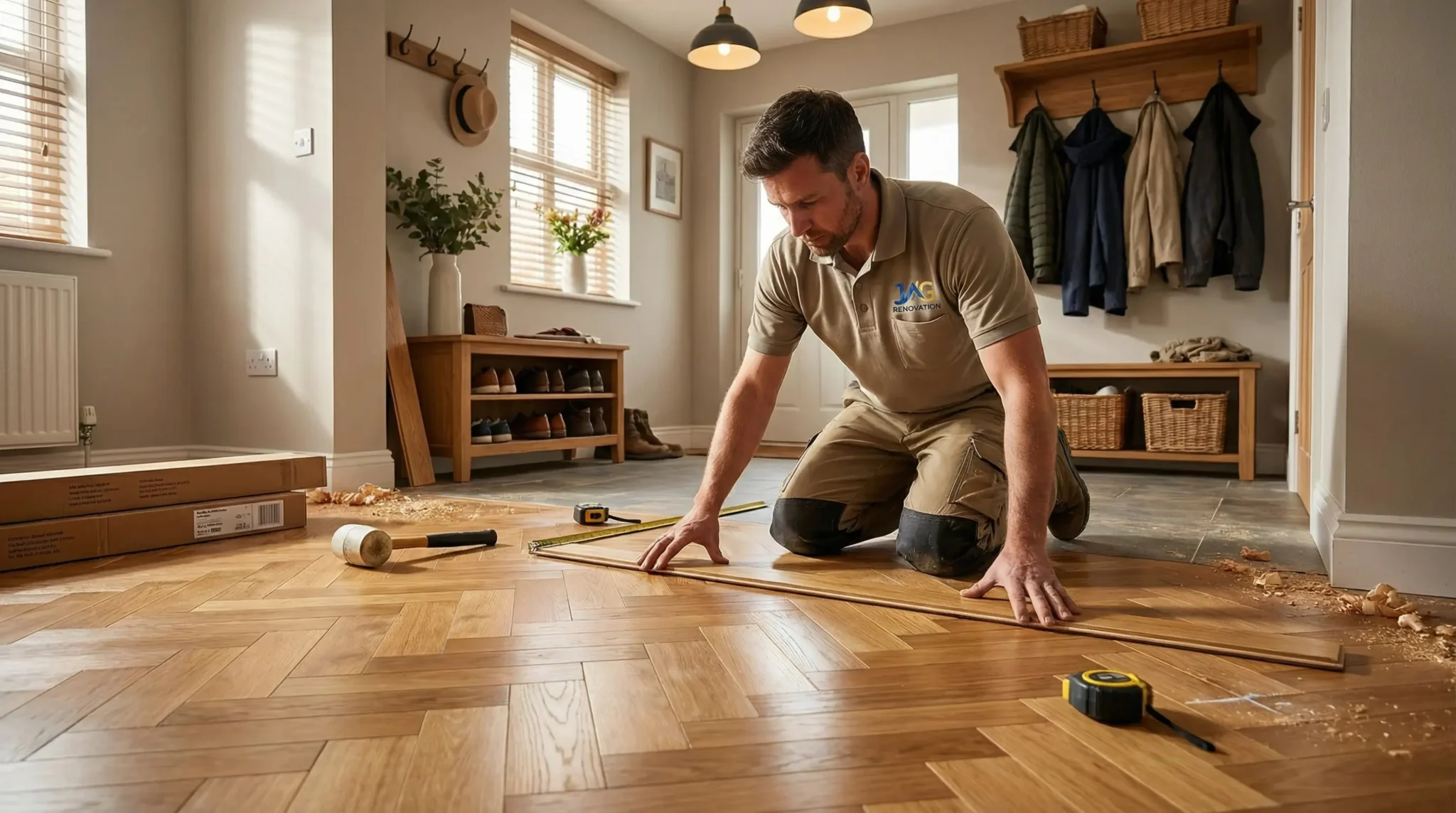
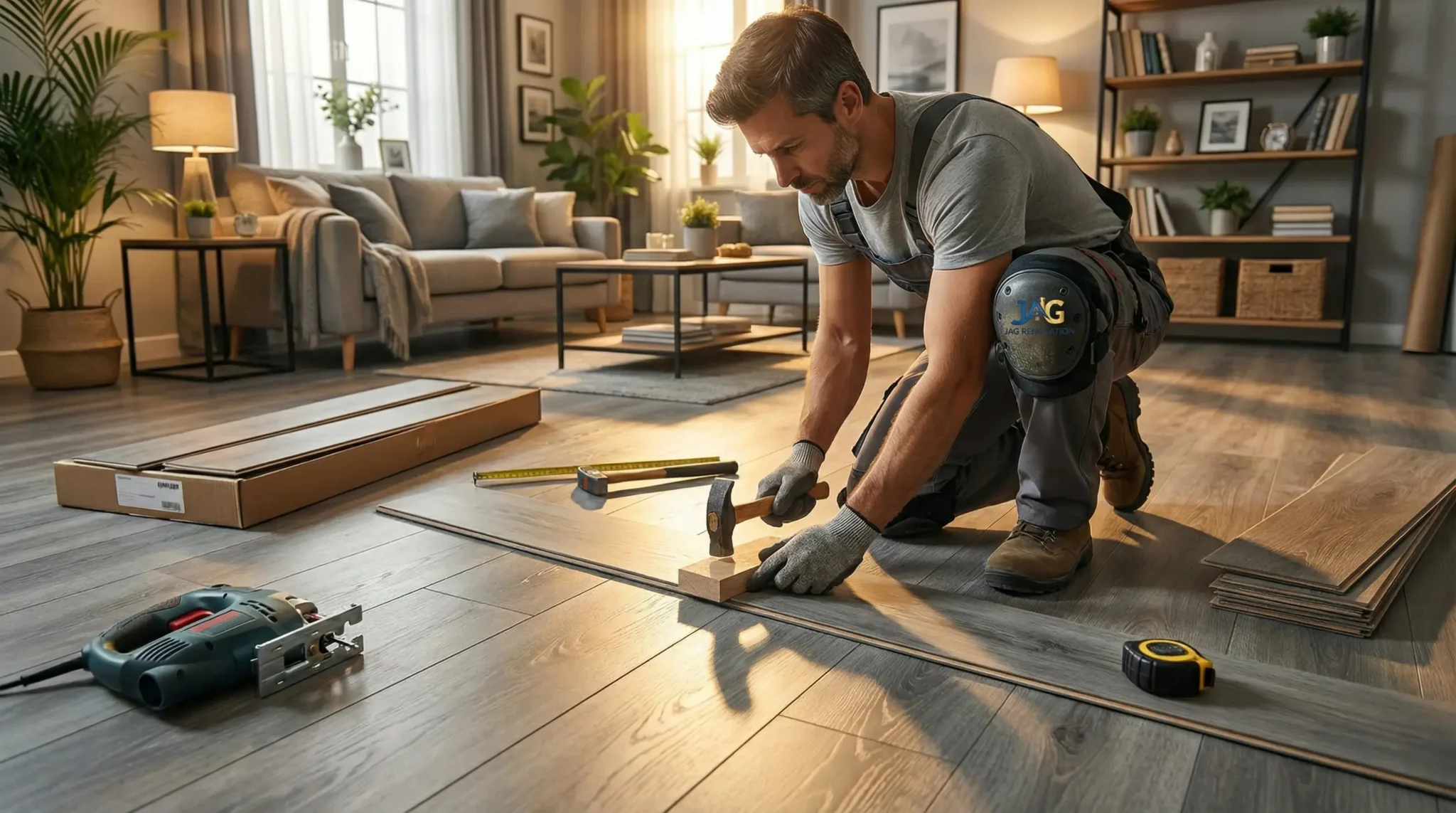
Installation starts with proper prep. We handle subfloor leveling, moisture barriers, and underlayment that most contractors skip because it takes time. Then we install your flooring with the kind of attention that means your transitions are clean, your cuts are tight, and nothing creaks when you walk on it.
The whole process is clear. You know what’s happening and when. You know what it costs before we start. And when we’re done, your floors look right and feel solid because they were installed correctly.
Ready to get started?
We install hardwood, engineered wood, laminate, luxury vinyl plank, luxury vinyl tile, and ceramic tile. If it goes on a floor, we’ve done it. That matters because the right material depends on the room, the subfloor, your budget, and how you live.
Dix Hills homes average over a million dollars. Your floors should reflect that value, but they also need to function. We’re seeing more homeowners move away from traditional hardwood in kitchens and basements—not because it doesn’t look good, but because one leak or humidity spike means thousands in repairs. Waterproof LVP has gotten good enough that most people can’t tell the difference until you explain why their neighbor is replacing warped boards and they’re not.
Every installation includes subfloor assessment and prep, moisture testing where needed, proper underlayment for sound and comfort, and professional-grade installation that doesn’t leave gaps or uneven transitions. We use the equipment that keeps dust contained because nobody wants to spend a week cleaning after their floors are done.
You’re also getting almost a decade of local experience. We know which products hold up in Suffolk County humidity. We know which manufacturers stand behind their warranties and which ones make you jump through hoops. And we know how to install floors so they don’t fail in two years when the moisture hits.

Waterproof luxury vinyl plank or luxury vinyl tile. Traditional hardwood and standard laminate don’t handle Suffolk County summers well—humidity makes hardwood expand and contract, which leads to gaps and buckling. Regular laminate isn’t waterproof, so any moisture that gets underneath (and it will) causes swelling and mold.
Waterproof LVP is engineered for moisture. It’s completely waterproof, not just water-resistant. That means spills, pet accidents, and humidity won’t damage it. The quality has improved dramatically in the last few years—premium LVP looks like real hardwood, feels solid underfoot, and costs less to install and maintain.
If you’re set on real wood, engineered hardwood is a better choice than solid hardwood. It’s more stable in humidity because of how it’s constructed. But even engineered wood isn’t waterproof. For kitchens, bathrooms, basements, and mudrooms, vinyl is the smarter play. For living areas and bedrooms where moisture is less of an issue, you have more options.
Most residential flooring projects take two to five days depending on square footage and material. Vinyl and laminate install faster than tile or hardwood. If we’re removing old flooring first, add a day or two.
Dust depends on what we’re doing. New installation over existing subfloor creates minimal dust—mostly from cutting materials, which we do outside or in a contained area when possible. If we’re removing old flooring or doing subfloor prep, there’s more dust, but we use equipment designed to contain it and we clean as we go.
Refinishing existing hardwood is the dustiest option, which is why many homeowners are choosing to replace instead of refinish. Modern dustless sanders help, but you’re still sanding wood, so some dust is inevitable. If dust is a major concern and your current floors are worn out, new installation of vinyl or laminate is cleaner than trying to save old hardwood. We’re honest about what to expect so you can plan accordingly—covering furniture, sealing off rooms, whatever makes sense for your situation.
Quality luxury vinyl plank looks like real hardwood. Cheap LVP looks like cheap LVP. The difference is in the wear layer thickness, the texture, the finish, and how realistic the wood grain pattern is.
Budget vinyl from big box stores often has repetitive patterns, thin wear layers that scratch easily, and a plastic sheen that gives it away immediately. Premium LVP has thick wear layers (20 mil or more), varied plank designs so the pattern doesn’t repeat, and textured surfaces that mimic real wood grain. When it’s installed well with quality underlayment, most people can’t tell it’s not hardwood until you tell them it’s waterproof.
The functional benefits are significant. It’s warmer underfoot than tile, quieter than laminate, and completely waterproof unlike hardwood. It doesn’t need refinishing. Scratches and dents that would ruin hardwood don’t penetrate quality vinyl. And if one plank does get damaged somehow, you can replace that single plank instead of refinishing an entire floor. For Dix Hills homes where you want the hardwood look but need moisture resistance, premium LVP is worth every penny. We’ll show you the difference between quality and cheap so you know what you’re paying for.
Depends entirely on material, square footage, and what condition your subfloor is in. Luxury vinyl plank typically runs less than hardwood or tile. Ceramic tile installation costs more because of labor intensity. If your subfloor needs leveling or repair, that adds to the cost.
For a ballpark: vinyl plank installation in an average-sized room might run a few thousand. Whole-house flooring projects in Dix Hills homes—which tend to be larger—can range from mid-five figures to higher depending on material choices and scope. Tile costs more per square foot than vinyl but lasts longer in high-moisture areas. Hardwood sits in the middle for material cost but has higher long-term maintenance expenses.
Here’s what matters more than the initial price: how long it lasts and what it costs to maintain. Cheap flooring installed poorly will need replacing in a few years. Quality materials installed correctly last decades. We price projects honestly based on what you’re actually getting—materials that work in Suffolk County humidity, proper installation that doesn’t fail, and realistic timelines. We’re not the lowest bid, but we’re also not the contractor you’re calling back in three years to fix water damage.
Sometimes you can install over existing flooring. Sometimes you can’t. It depends on what’s there now, what condition it’s in, and what you’re installing.
Vinyl plank and laminate can often go over existing vinyl, tile, or hardwood if the surface is level and stable. But if the old floor is damaged, uneven, or has moisture issues, installing over it just hides problems that will ruin your new floor. We’ve seen plenty of flooring failures that happened because someone skipped removal to save money, then ended up paying more to fix it later.
Tile usually requires removal. The height it adds creates tripping hazards at transitions, and tile needs a solid, level substrate. Hardwood installation almost always means removing old flooring so we can properly prepare the subfloor. Moisture barriers, leveling compound, underlayment—none of that works right if you’re stacking floors on top of each other.
We assess your subfloor before recommending anything. If we can install over existing flooring safely, we’ll tell you. If removal is necessary, we’ll explain why. The goal is flooring that lasts, not flooring that saves a few hundred dollars now and costs thousands later.
We handle both residential and commercial flooring installation in Dix Hills and throughout Suffolk County. Commercial projects have different requirements—higher traffic, stricter timelines, durability standards that go beyond residential needs.
Commercial flooring typically means luxury vinyl tile, sheet vinyl, or ceramic tile in high-traffic areas. Businesses need floors that handle constant use without showing wear, and they need installation done quickly so operations aren’t disrupted longer than necessary. We’ve worked in retail spaces, offices, and other commercial properties where downtime costs money.
The process is similar to residential—assess the space, recommend appropriate materials, install correctly—but the execution is faster and the material choices prioritize durability over aesthetics (though modern commercial flooring looks good too). We’re licensed and insured for commercial work, and we understand the difference between a homeowner who can wait an extra day and a business that needs floors done over a weekend.
Whether it’s your home or your business, the standard is the same: proper installation with materials that actually work for how the space is used. If you’re looking for a commercial flooring contractor in Dix Hills who shows up on time and does the job right, we can help.