
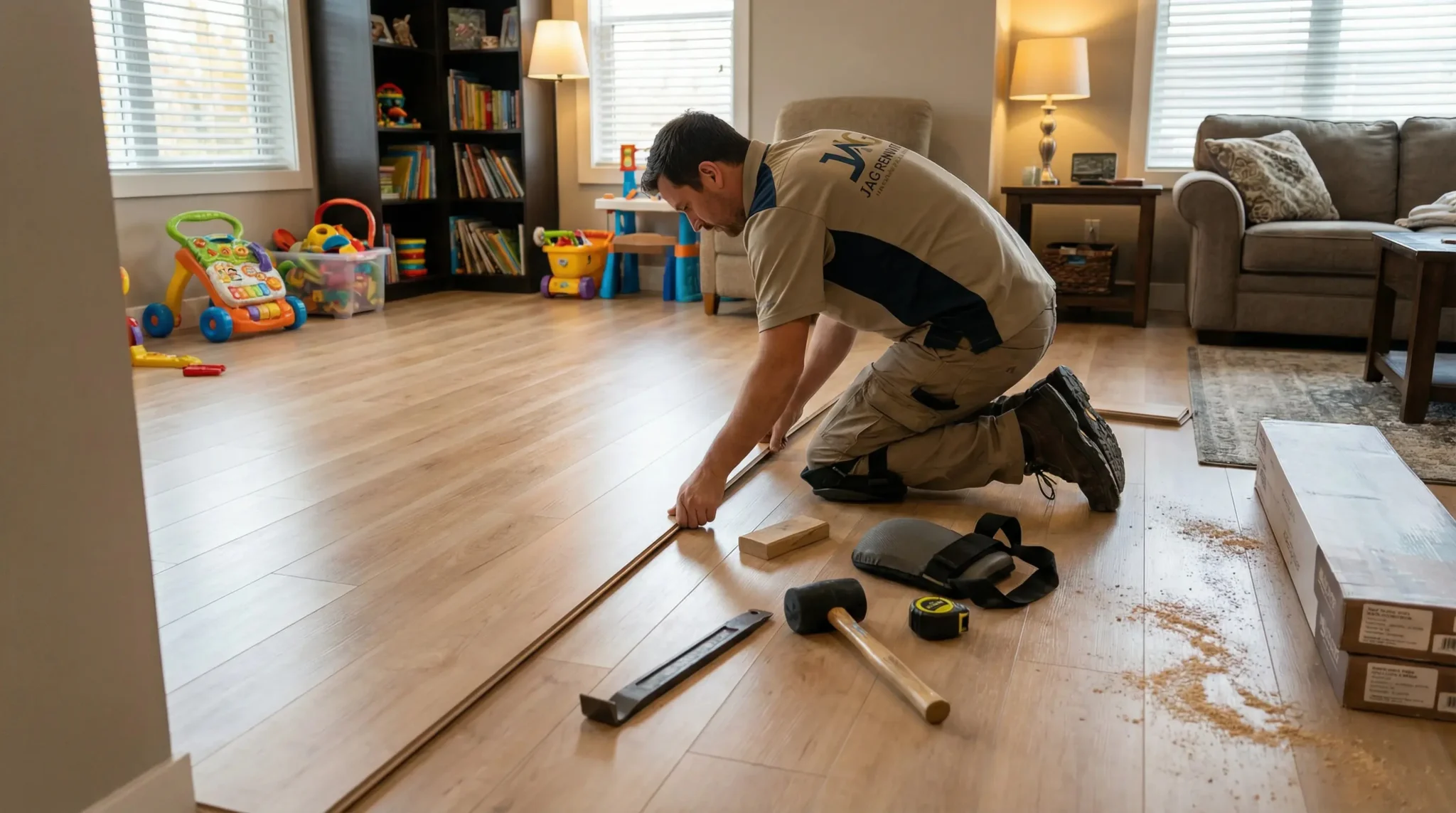
Hear from Our Customers
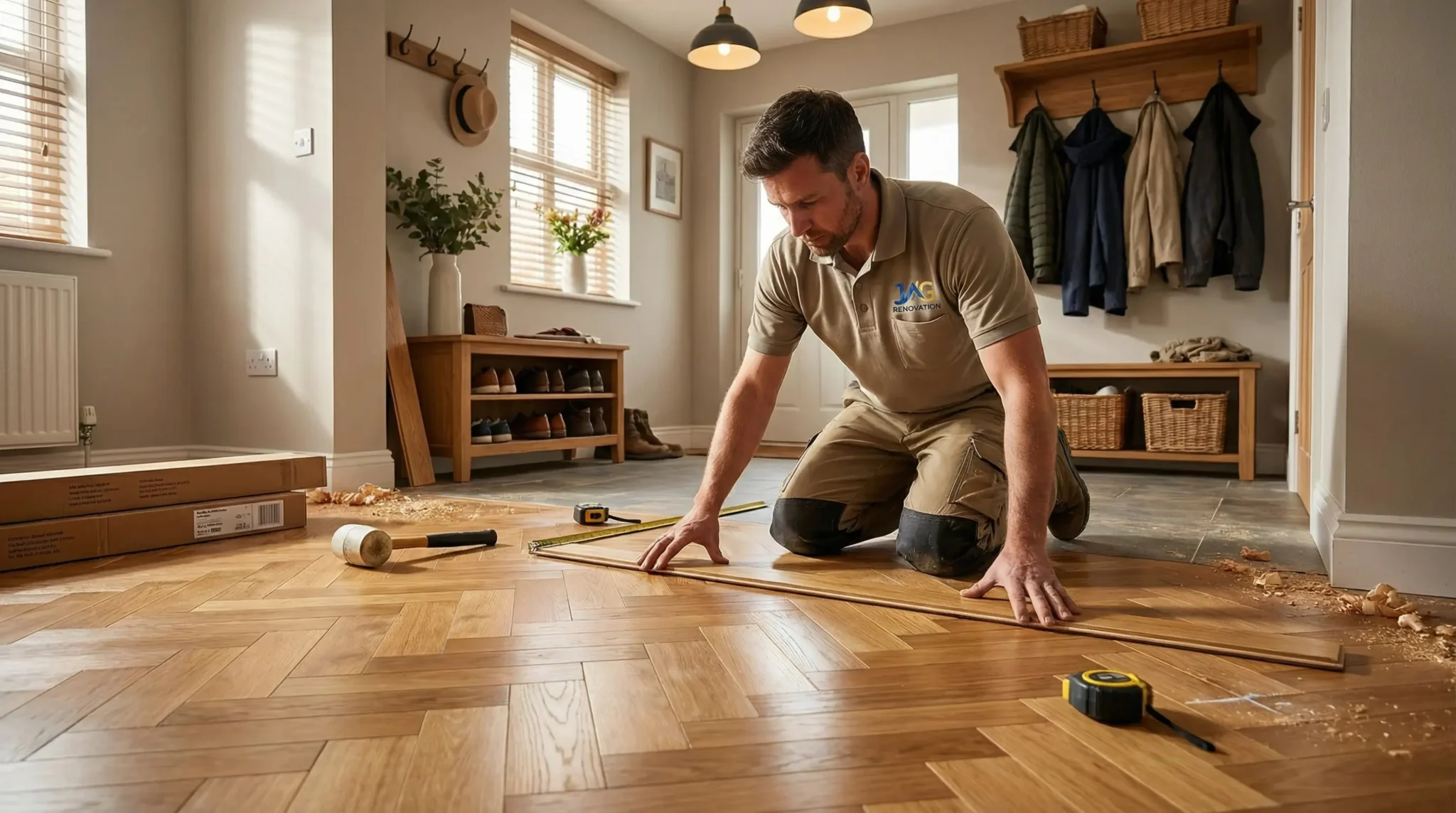
Your floors take more abuse than almost anything else in your home. Kids, pets, sand tracked in from the coast, moisture from Suffolk County’s humidity—it all adds up fast.
When flooring installation is done right, you’re not dealing with buckling planks six months later. You’re not seeing gaps open up between tiles or hearing that hollow sound when you walk across the room. The subfloor is level, the materials are appropriate for your home’s conditions, and the finish work actually looks finished.
Most homes in Baywood were built between 1940 and 1969. That means the subfloors have had decades to settle, shift, and sometimes rot in spots you can’t see. A good flooring contractor checks all of that before laying a single plank. A bad one just covers it up and hopes you don’t notice until after they’re paid.
Proper flooring installation can increase your home’s value by up to 15% and cut time on the market when you’re ready to sell. But more immediately, it means you’re not replacing floors again in five years because someone skipped the prep work.
We’ve been installing floors in Baywood and throughout Suffolk County for almost ten years. We’re licensed, insured, and we don’t operate like most contractors you’ve dealt with.
There’s no sales pitch. No pressure to upgrade to materials you don’t need. No surprise charges halfway through the job because we “found something.” We assess the subfloor, explain what needs to happen, give you a transparent price, and then do exactly what we said we’d do.
Baywood’s housing stock is older, which means most flooring projects here involve more than just laying new material. We handle subfloor repair, moisture barriers for homes near the water, and proper acclimation of materials before installation. That’s the difference between a floor that lasts and one that fails within a year.

First, we assess your existing floors and subfloor. This isn’t a quick glance—we’re checking for moisture issues, structural problems, and whether the subfloor is level enough to support new flooring. If it’s not, we fix it before moving forward.
Next, we discuss material options based on your home’s specific conditions. A coastal Suffolk County home needs different considerations than one further inland. Tile flooring installation works well in moisture-prone areas. Vinyl flooring offers durability with less maintenance. Hardwood and laminate flooring installation require proper acclimation to your home’s humidity levels before we install anything.
Then we prep the space. Old flooring comes out, subfloor gets repaired or leveled if needed, and we install moisture barriers where necessary. This is the part most contractors rush through, and it’s the part that determines whether your new floors last two years or twenty.
Installation happens with attention to expansion gaps, transitions between rooms, and making sure every plank or tile is properly secured. We don’t leave until the job is done right, which means you’re not waiting weeks for someone to come back and fix trim work or transitions.
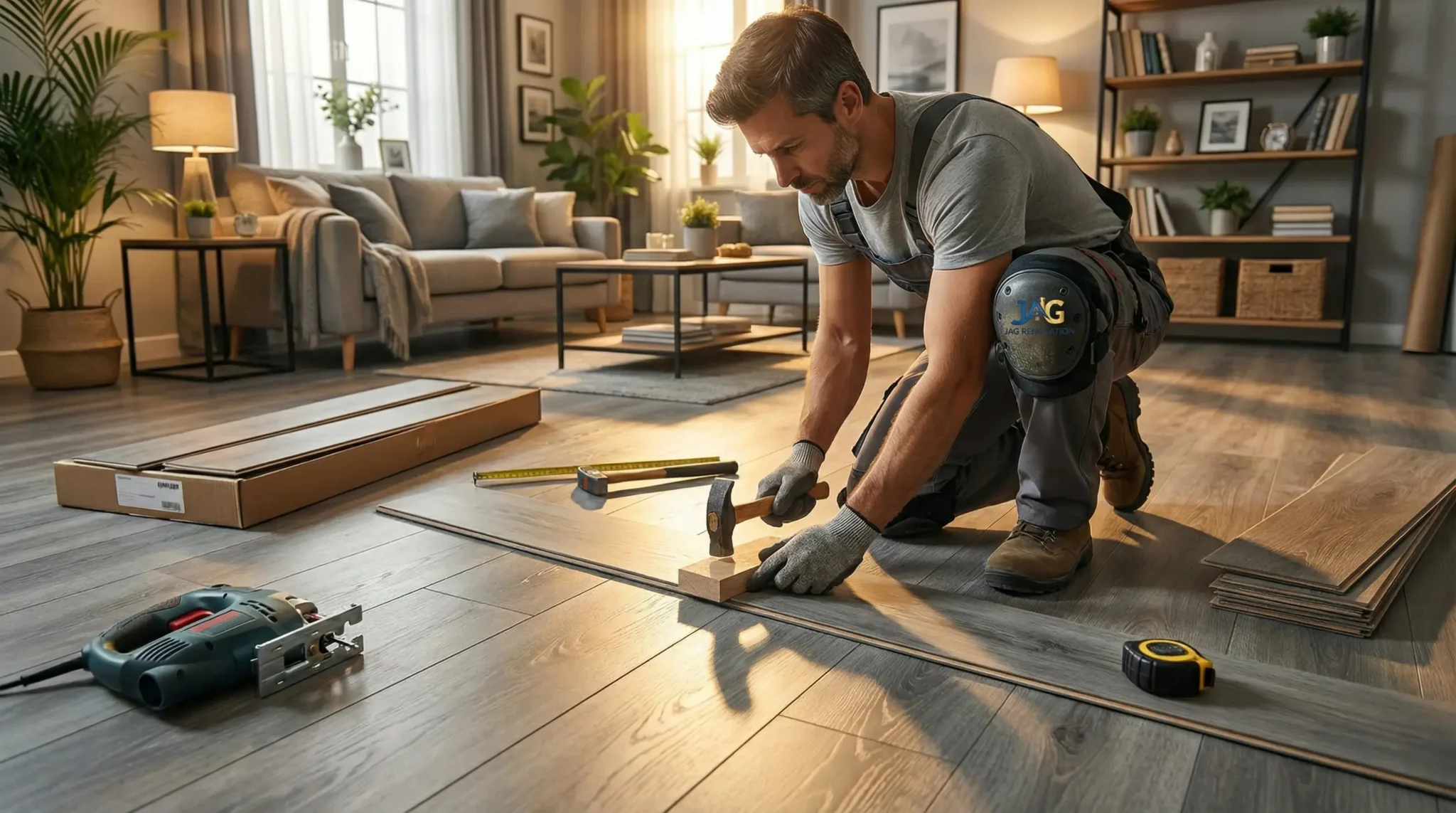
Ready to get started?
Every flooring project includes subfloor inspection and repair. Baywood homes are old enough that subfloor issues are common, and ignoring them guarantees problems later. We level uneven subfloors, replace damaged sections, and install moisture barriers where your home needs them.
We handle all flooring types: hardwood installation and refinishing, tile flooring contractor services including ceramic tile floor installation, laminate flooring installation, and vinyl flooring for high-moisture areas. If you’re replacing flooring in your house, we coordinate the entire project so you’re not managing multiple contractors.
For commercial flooring contractor needs, we work on rental properties, small offices, and retail spaces throughout Suffolk County. The process is the same—assess, prep properly, install correctly—but we coordinate around your business hours to minimize disruption.
Baywood’s tight housing market means homeowners are investing in their properties rather than moving. Flooring upgrades are one of the most cost-effective ways to increase value and improve daily comfort. With 54% of homeowners completing remodeling projects in 2024, the homes getting updated are the ones maintaining value in this neighborhood.

For a standard three-bedroom Baywood home, flooring installation typically takes three to five days depending on the material and subfloor condition. That includes removal of old flooring, any necessary subfloor repair, and installation of new floors.
Tile flooring contractor work takes longer because of mortar and grout curing times. Laminate flooring installation and vinyl flooring are faster since there’s no cure time, but proper acclimation before installation still matters. Hardwood needs 48-72 hours to acclimate to your home’s humidity levels before we even start.
The subfloor condition is the biggest variable. Homes built in the 1940s through 1960s—which covers most of Baywood—often need subfloor leveling or repair. We don’t know the full scope until we pull up the old flooring, but we’ll tell you exactly what’s needed before proceeding. Rushing this part is how contractors create problems that show up six months later.
It depends on the room and your home’s specific conditions, but engineered hardwood and luxury vinyl are usually the most practical choices for older Baywood homes. Both handle the moisture and temperature fluctuations that come with Suffolk County’s coastal climate better than solid hardwood.
Tile flooring installation works well in bathrooms, kitchens, and entryways where moisture and sand are constant issues. Ceramic tile floor installation is durable and low-maintenance, which matters when you’re dealing with the wear patterns typical in family homes.
Laminate flooring installation is a cost-effective option that holds up well in bedrooms and living areas, though it’s less moisture-resistant than vinyl. If your home has any history of humidity issues or you’re close to the water, vinyl flooring is the safer choice. It looks like hardwood but won’t buckle or warp when moisture levels fluctuate.
The subfloor condition also affects material choice. Some flooring types require a perfectly level subfloor, while others are more forgiving. We’ll walk you through what makes sense for your specific home after we assess the existing conditions.
No, but you’ll need to plan around the work. We can typically work room by room, which means you’re not displaced from your entire home. You’ll need to clear furniture from the rooms we’re working in, and there will be dust and noise during the removal and installation process.
The biggest disruption is usually the first day when we’re removing old flooring. That’s the dustiest, loudest part. After that, installation is relatively quiet depending on the material. Tile work involves cutting and mortar mixing. Hardwood and laminate installation is mostly cutting and nailing or clicking planks into place.
If you have pets or young kids, you might want to plan for them to be elsewhere during the noisiest phases. And you won’t be able to walk on newly installed floors immediately—tile needs 24-48 hours for mortar to cure, and some finishes on hardwood need time to dry. We’ll give you a clear timeline for when each room will be usable again so you can plan accordingly.
For a typical Baywood home, flooring installation costs range from $8,000 to $18,000 depending on square footage, material choice, and subfloor condition. That’s for whole-home installation. Single rooms obviously cost less.
Vinyl flooring is usually the most budget-friendly option at $3-7 per square foot installed. Laminate flooring installation runs $5-10 per square foot. Tile flooring contractor services for ceramic tile floor installation typically cost $8-15 per square foot. Hardwood installation is the premium option at $10-20+ per square foot depending on the wood species and finish.
The subfloor is where costs can vary significantly. If we find rot, water damage, or severe unlevel areas, that needs to be fixed before new flooring goes down. Ignoring it means your new floors will fail prematurely. We give you transparent pricing after the initial assessment so there are no surprises.
Baywood homes often need more subfloor work than newer construction, which is why we don’t quote final prices over the phone. We need to see what we’re working with first. But we’ll explain exactly what needs to happen and why before you commit to anything.
We install flooring in single rooms all the time. Kitchens, bathrooms, and entryways are the most common individual room projects since those areas take the most abuse and wear out faster than the rest of the house.
The main consideration is transitions between rooms. If you’re replacing flooring in one room but keeping existing floors in adjacent spaces, we need to create clean transitions that don’t look awkward or create tripping hazards. Sometimes that means transitioning between different flooring types—like tile in the kitchen and hardwood in the dining room.
Material matching can be tricky if you’re trying to match existing floors in other parts of the house. Hardwood species, stains, and finishes change over time, and manufacturers discontinue products. We’ll do our best to match, but sometimes a complementary contrast looks better than an almost-but-not-quite match.
Room-by-room installation also works well if you’re budgeting the project in phases. We can start with the highest-priority areas and come back for additional rooms later. Just keep in mind that flooring prices and availability can fluctuate, so locking in materials for the whole project upfront sometimes makes more sense even if installation happens in stages.
Soft spots, squeaks, visible sagging, or a musty smell are all signs your subfloor has issues. In Baywood homes built in the 1940s-1960s, subfloor problems are common simply due to age and the decades of moisture exposure typical in Suffolk County.
We check subfloor condition during the initial assessment by pulling back sections of existing flooring and testing for moisture, rot, and structural integrity. A subfloor needs to be dry, level, and structurally sound before new flooring goes down. If it’s not, your new floors will develop problems quickly—buckling, gaps, squeaks, or premature wear.
Subfloor repair usually involves replacing damaged sections, leveling compound for uneven areas, and moisture barriers if we find evidence of water intrusion. This isn’t optional work that contractors upsell to inflate the price. It’s the foundation that determines whether your flooring investment lasts two years or twenty.
Most homeowners can’t assess subfloor condition themselves because it requires removing existing flooring to inspect what’s underneath. That’s why we include subfloor inspection as part of every flooring project estimate. We’ll show you exactly what we find and explain what needs to happen before installation begins.