
Hear from Our Customers
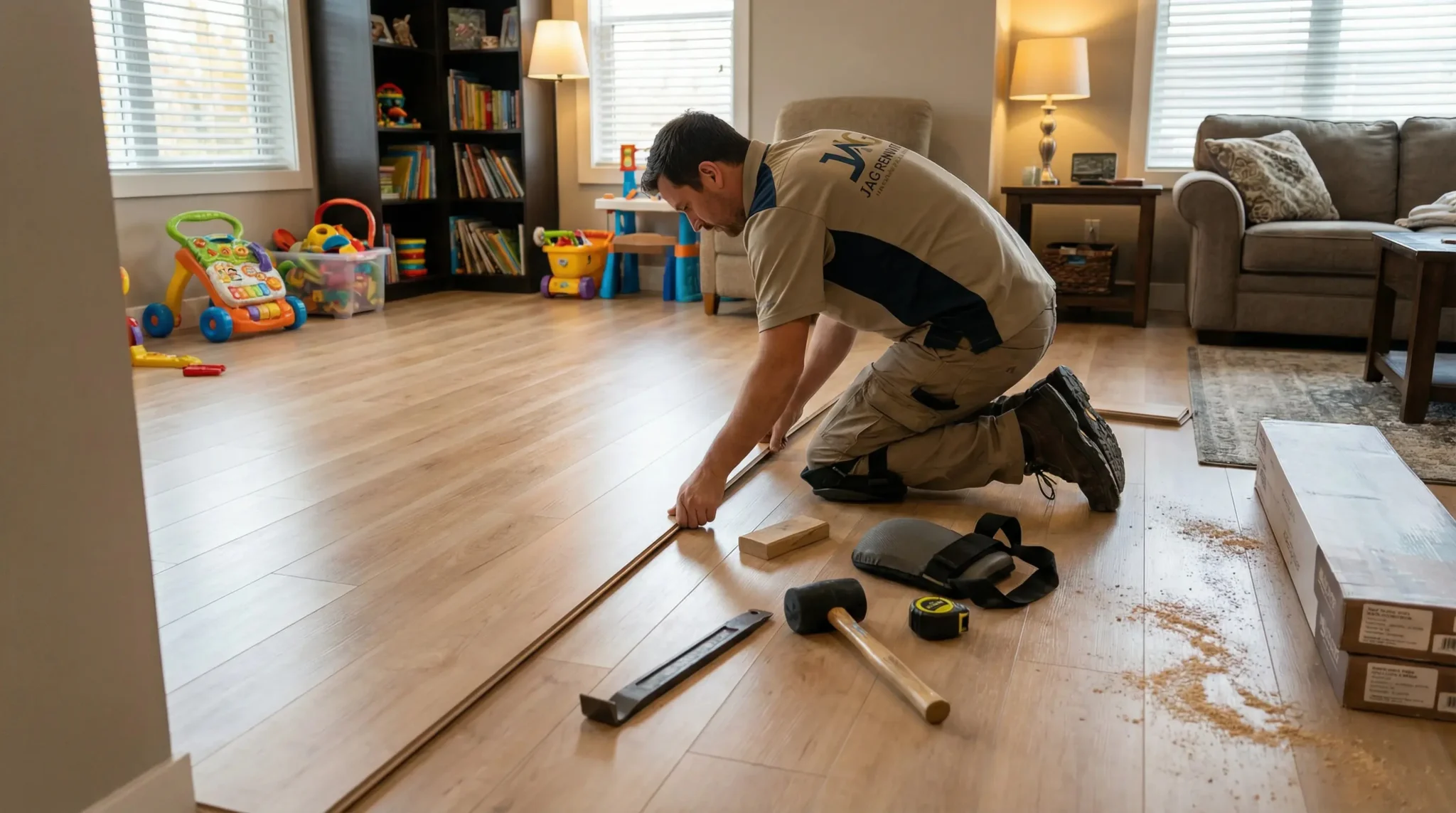
Your floors take more abuse than almost anything else in your home. Kids, pets, spills, furniture moves, daily foot traffic—it all adds up. When you replace flooring in your house, you’re not just updating the look. You’re investing in durability that holds up to real life, easier cleaning that saves you time every week, and a noticeable boost in home value that pays off whether you’re staying or selling.
Good flooring installation means you’re not dealing with gaps, squeaks, or premature wear a year down the road. It means the subfloor was prepped correctly, transitions between rooms look clean, and the materials were chosen based on how you actually use the space. That’s the difference between a floor that looks great in photos and one that still looks great after five years of living on it.
In Huntington Station, where the median home sells for $559K and moves fast, your floors matter. Buyers notice. Appraisers notice. And you’ll notice every single day until you decide what’s next for your home.
We’ve been handling residential flooring projects across Suffolk County for close to ten years. We’ve worked in homes throughout Huntington Station—older colonials with uneven subfloors, newer builds needing luxury vinyl, kitchens getting ceramic tile, basements being finished with laminate. Every project teaches you something, and we’ve seen enough to know what works and what doesn’t.
We don’t operate on high-pressure sales tactics or surprise you with costs halfway through the job. You get a clear estimate, a realistic timeline, and updates when things change. Our work is built on repeat clients and referrals, which only happens when people trust how you operate and the quality you deliver.
Huntington Station homeowners have plenty of options when it comes to flooring contractors. What keeps clients coming back to us is straightforward communication, skilled installation, and the understanding that your home isn’t a showroom—it’s where you live.

First, we come to your home and assess the space. We’re looking at subfloor condition, moisture levels, room layout, transitions, and how you use the area. This isn’t a sales pitch—it’s a real evaluation that determines what materials make sense and what prep work is required. You’ll get honest input on whether tile floor installation, hardwood, vinyl flooring, or laminate fits your situation and budget.
Once you approve the estimate, we schedule the work around your life, not ours. Demo and subfloor prep happen first—this step matters more than most people realize. An uneven or damaged subfloor will ruin even the best materials. We handle moisture barriers, leveling compounds, and underlayment based on what the floor needs, not what’s fastest.
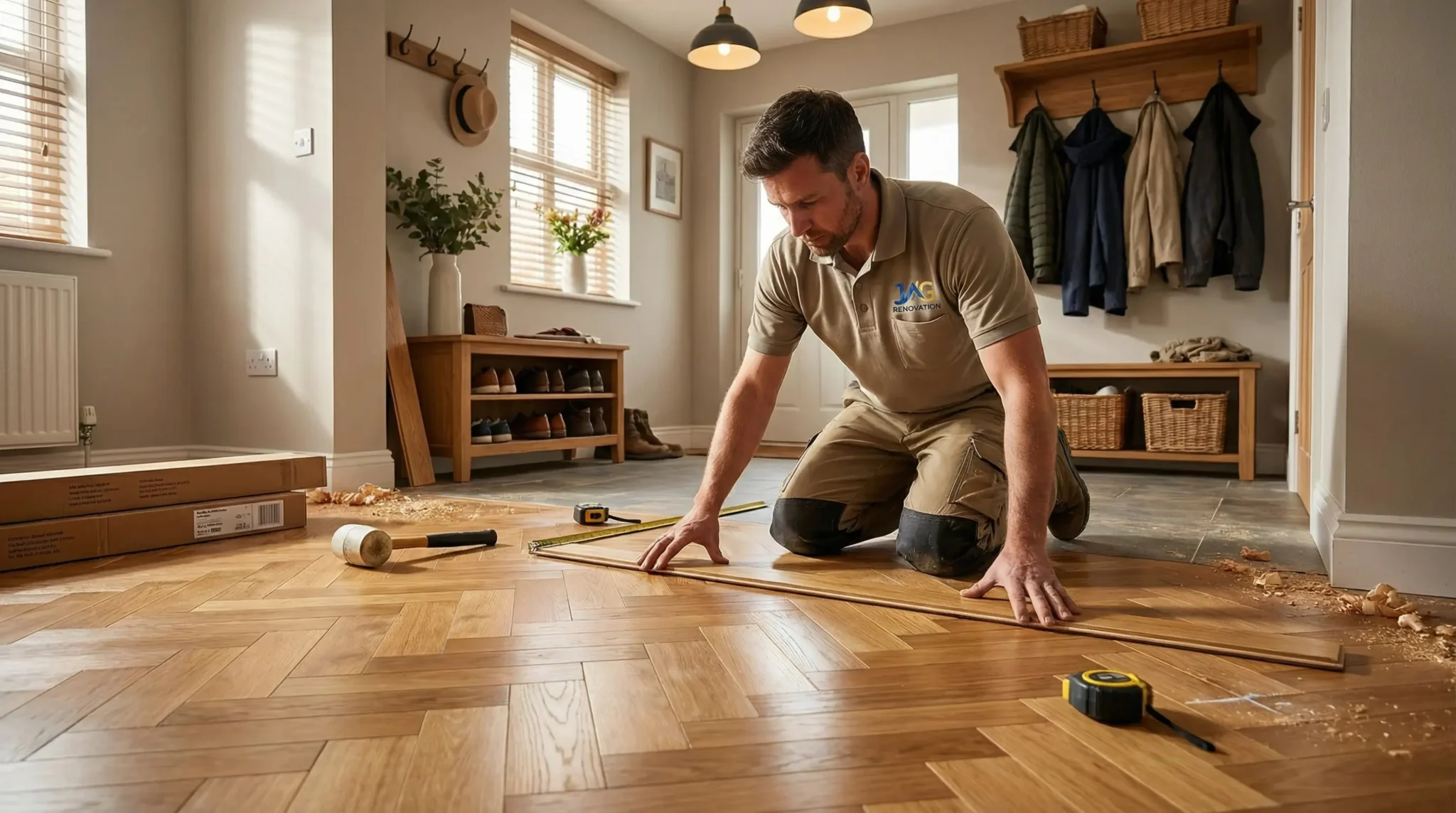
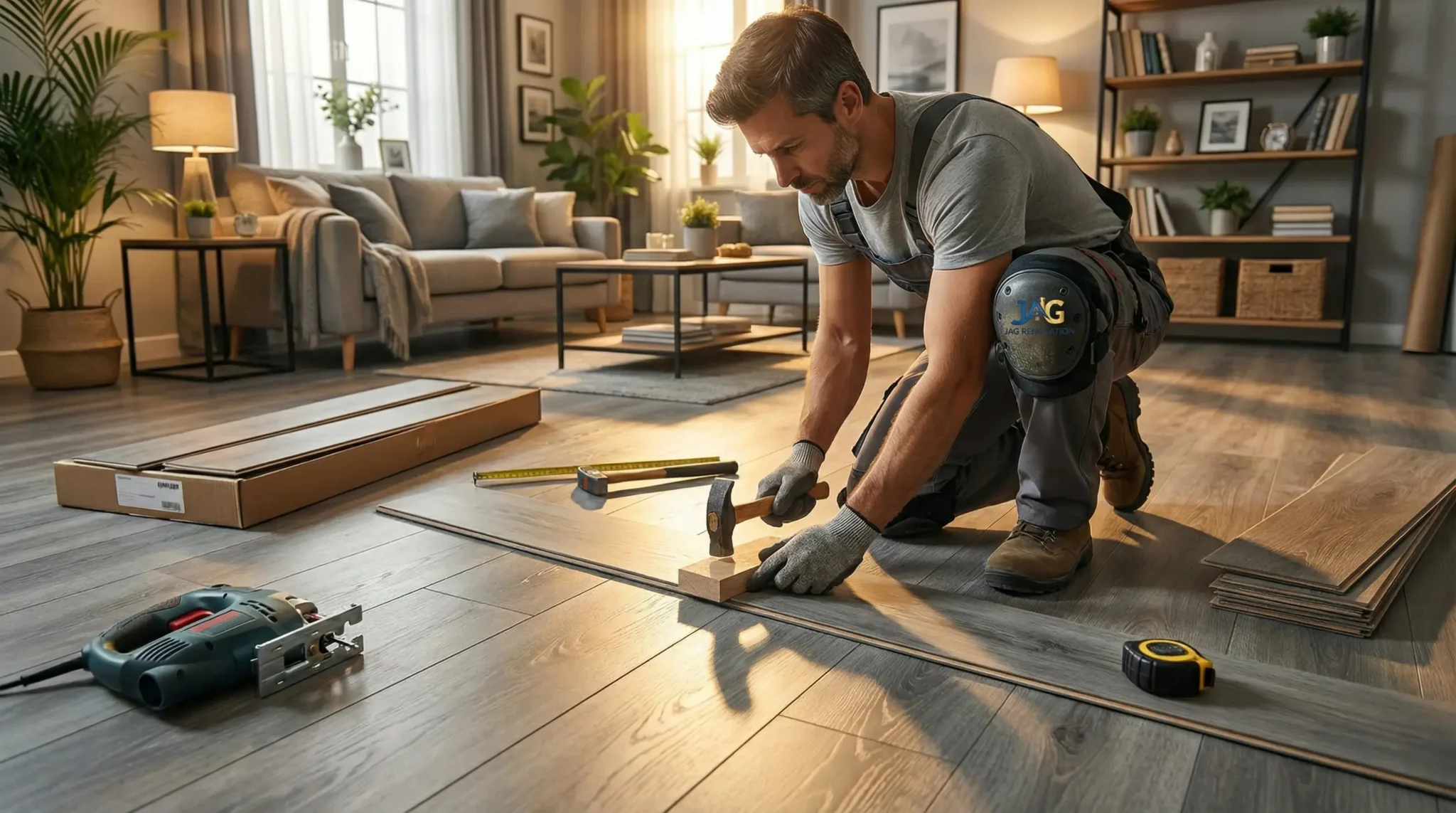
Then comes installation. Whether it’s ceramic tile, engineered hardwood, luxury vinyl plank, or laminate, the material goes down with attention to expansion gaps, proper adhesive, stagger patterns, and clean transitions. We’re not rushing to the next job. We’re making sure your floor performs the way it should for years. Cleanup, final inspection, and a walkthrough wrap things up—no lingering mess, no surprises.
Ready to get started?
Hardwood flooring remains the top choice for Huntington Station homeowners who want timeless appeal and strong resale value. Solid or engineered hardwood works in living rooms, dining rooms, hallways, and bedrooms—anywhere you want warmth and character. It refinishes well, lasts decades, and fits almost any decor style.
Tile flooring works best in kitchens, bathrooms, mudrooms, and entryways where moisture and heavy cleaning are routine. Ceramic tile and porcelain tile both offer durability, but porcelain handles temperature swings and moisture better. Proper tile floor installation includes waterproofing, correct thinset application, and grout sealing—steps that prevent cracking and water damage down the line.
Vinyl flooring has come a long way. Luxury vinyl plank mimics hardwood or stone at a fraction of the cost, installs faster, and handles moisture better than most materials. It’s a smart pick for basements, laundry rooms, and high-traffic areas where you want the look without the maintenance. Laminate flooring installation offers a similar benefit—realistic wood appearance, scratch resistance, and easier upkeep than traditional hardwood.
We handle commercial flooring projects with the same attention. We work on office spaces, retail floors, and light industrial applications where durability and fast turnaround matter. Whether you’re a residential or commercial client in Huntington Station, the approach stays the same: quality materials, skilled installation, transparent pricing.

For most residential flooring projects in Huntington Station, plan on three to five days depending on square footage, material type, and subfloor condition. A straightforward laminate or vinyl flooring installation in a single room might wrap up in one to two days. Tile floor installation takes longer because of mortar curing time and grout sealing—usually three to four days for a kitchen or bathroom.
Hardwood installation falls somewhere in between, but if the subfloor needs significant prep or leveling, add extra time. We don’t cut corners to hit arbitrary deadlines. If your subfloor isn’t right, the entire floor will fail prematurely, and that’s not a risk worth taking.
The timeline also depends on whether you’re replacing flooring throughout the house or tackling one area. Whole-home projects obviously take longer, but we stage the work to minimize disruption. You’ll know the schedule upfront, and if anything changes, we communicate immediately.
Luxury vinyl plank and porcelain tile are your best bets for durability in high-traffic areas. Vinyl flooring handles scratches, moisture, and impacts better than hardwood or laminate, and it’s softer underfoot. If a plank gets damaged, you can often replace individual pieces without redoing the whole floor.
Porcelain tile is nearly indestructible and works well in entryways, kitchens, and mudrooms where spills and dirt are constant. The grout lines require occasional resealing, but the tile itself won’t scratch, dent, or stain. Ceramic tile is slightly less durable but still a solid option if budget is tight.
Hardwood can work in living areas if you choose harder species like oak or maple and accept that some wear is inevitable. Engineered hardwood holds up better to humidity and temperature changes than solid hardwood, which matters in basements or homes without consistent climate control. If you want the look of wood without the maintenance, laminate flooring offers decent scratch resistance, though it won’t handle moisture as well as vinyl.
Costs vary widely based on material, square footage, subfloor condition, and complexity. Vinyl flooring installation typically runs $3 to $7 per square foot including materials and labor. Laminate falls in a similar range. Tile floor installation costs more—expect $8 to $15 per square foot depending on tile type, layout pattern, and prep work.
Hardwood flooring sits at the higher end, usually $8 to $18 per square foot installed. Solid hardwood costs more than engineered, and exotic species drive the price up further. If your subfloor needs leveling, moisture barriers, or structural repairs, add those costs separately.
We provide transparent estimates after evaluating your space. No hidden fees, no surprise charges halfway through the project. You’ll know what you’re paying and why before any work starts. In a market where homes in Huntington Station are selling for a median of $559K, investing in quality flooring installation pays off in both daily comfort and resale value.
Sometimes, but it depends on what’s currently down and what you’re installing. Vinyl flooring and laminate can often go over existing vinyl, tile, or hardwood if the surface is smooth, level, and structurally sound. Any loose tiles, deep scratches, or uneven areas need fixing first, or they’ll telegraph through the new floor.
Tile floor installation almost always requires removing old flooring. Installing tile over tile is possible in limited cases, but it raises the floor height, creates transition issues, and risks poor adhesion. Hardwood installation also requires removing old flooring in most situations to ensure proper subfloor prep and nailing.
Carpet always comes out—no exceptions. The padding underneath breaks down over time, traps moisture, and creates an unstable base. We evaluate your existing floor during the estimate and recommend the best approach. Cutting corners on demo and prep might save a few bucks upfront, but it leads to problems you’ll pay more to fix later.
Yes, rooms need to be cleared before we start work. Moving furniture is typically the homeowner’s responsibility unless we’ve specifically agreed otherwise. This includes clearing out closets if we’re installing flooring inside them.
For larger items like bedroom sets, entertainment centers, or heavy appliances, let us know during the estimate. We can often help move those pieces or work around them in stages, but it requires planning. The goal is protecting your belongings and giving us clear access to complete the installation correctly.
If you’re replacing flooring throughout the house, you don’t need to move everything at once. We work room by room, so you can shift furniture as we go. Kitchens require disconnecting appliances, and bathrooms mean temporarily losing access to sinks and toilets. We coordinate timing to minimize disruption, but some inconvenience is unavoidable during a flooring project.
Start with how you use the space. Bathrooms, kitchens, laundry rooms, and entryways need moisture-resistant materials—tile or vinyl flooring make the most sense. Basements benefit from vinyl or laminate since concrete subfloors and potential moisture rule out solid hardwood.
Living rooms, dining rooms, hallways, and bedrooms give you more flexibility. Hardwood offers the best resale value and timeless look, but it requires maintenance and doesn’t handle water well. Laminate and luxury vinyl plank mimic the wood appearance at lower cost with better scratch and moisture resistance.
Budget plays a role, but so does longevity. Cheap laminate might save money now, but if it wears out in five years, you’re paying for flooring twice. Quality vinyl or mid-grade hardwood often delivers better value over time. We walk through your options during the consultation, explain the tradeoffs honestly, and help you make a decision that fits your home, lifestyle, and budget. No upselling, no pressure—just clear information so you can choose confidently.
Other Services we provide in Huntington Station