
Hear from Our Customers
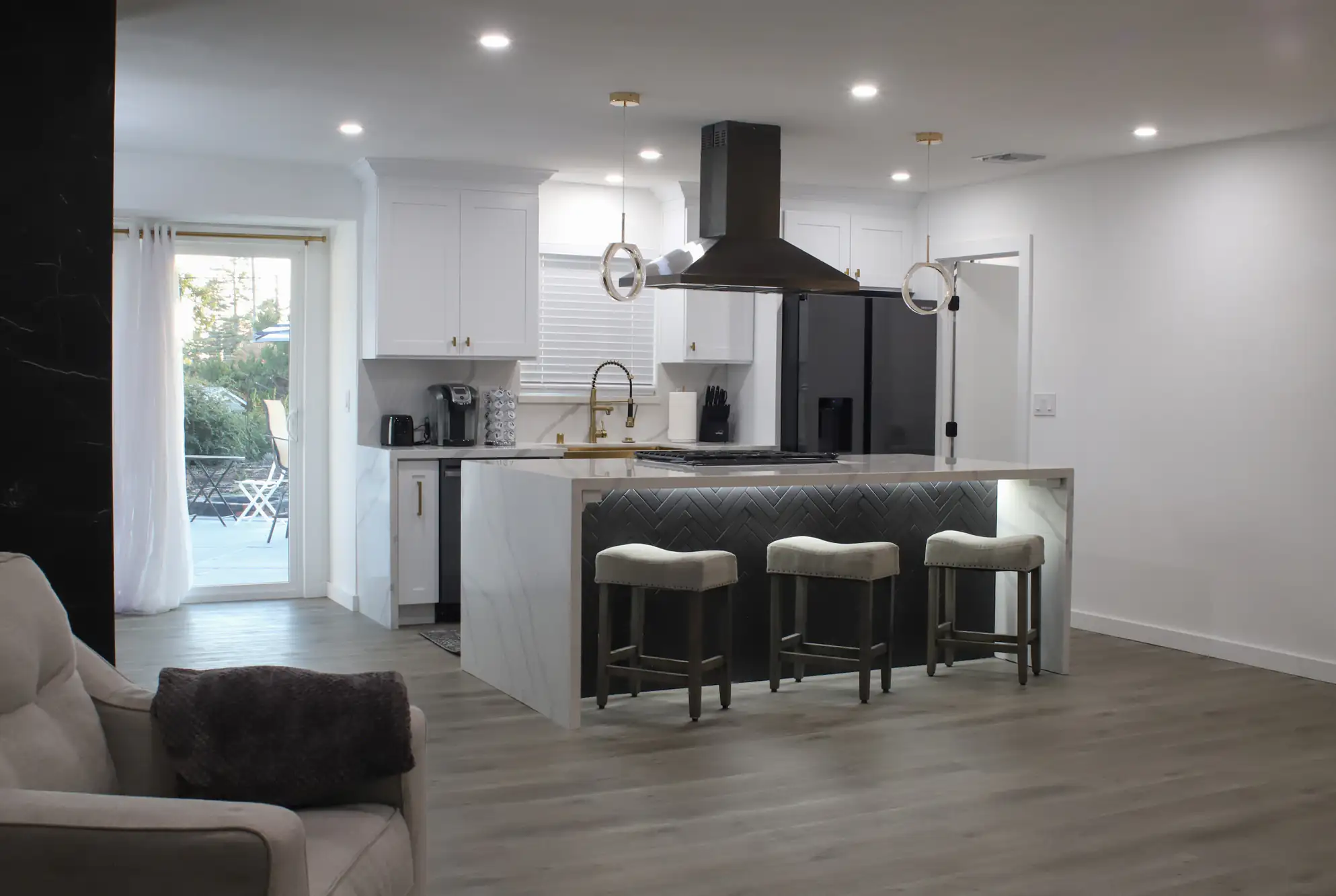
Your kitchen should make cooking easier, not harder. Right now, you’re probably dealing with cabinets that don’t hold what you need, countertops cluttered because there’s nowhere else to put things, and a layout that forces you to zigzag between the sink, stove, and fridge.
That’s not a small inconvenience. It’s every single day.
A proper kitchen remodel fixes the layout first. It adds storage where you actually need it—pull-out shelves, deep drawers for pots, built-in pantry space that doesn’t eat up your floor plan. It puts your prep area, cooking zone, and cleanup station in a flow that makes sense. And it does all of this without the guesswork, the change orders, or the “we’ll figure it out later” approach that turns projects into nightmares.
You end up with a kitchen that feels bigger, works better, and doesn’t require an explanation when guests walk in. Just a space that finally fits how your family lives.
We’ve spent close to ten years working inside the capes, ranches, and colonials that define Huntington Station and the surrounding Suffolk County area. These homes have charm, but their kitchens weren’t designed for how families cook, eat, and gather today.
We handle the full scope—from custom carpentry and cabinet installation to flooring, electrical, plumbing, and finish work. We pull permits, coordinate inspections, and keep you in the loop without making you chase us down for updates.
You’re not hiring a salesperson. You’re hiring a kitchen renovation contractor who shows up, does the work right, and doesn’t disappear when the job gets complicated. That’s the standard here, and it’s why homeowners keep calling us back for the next project.
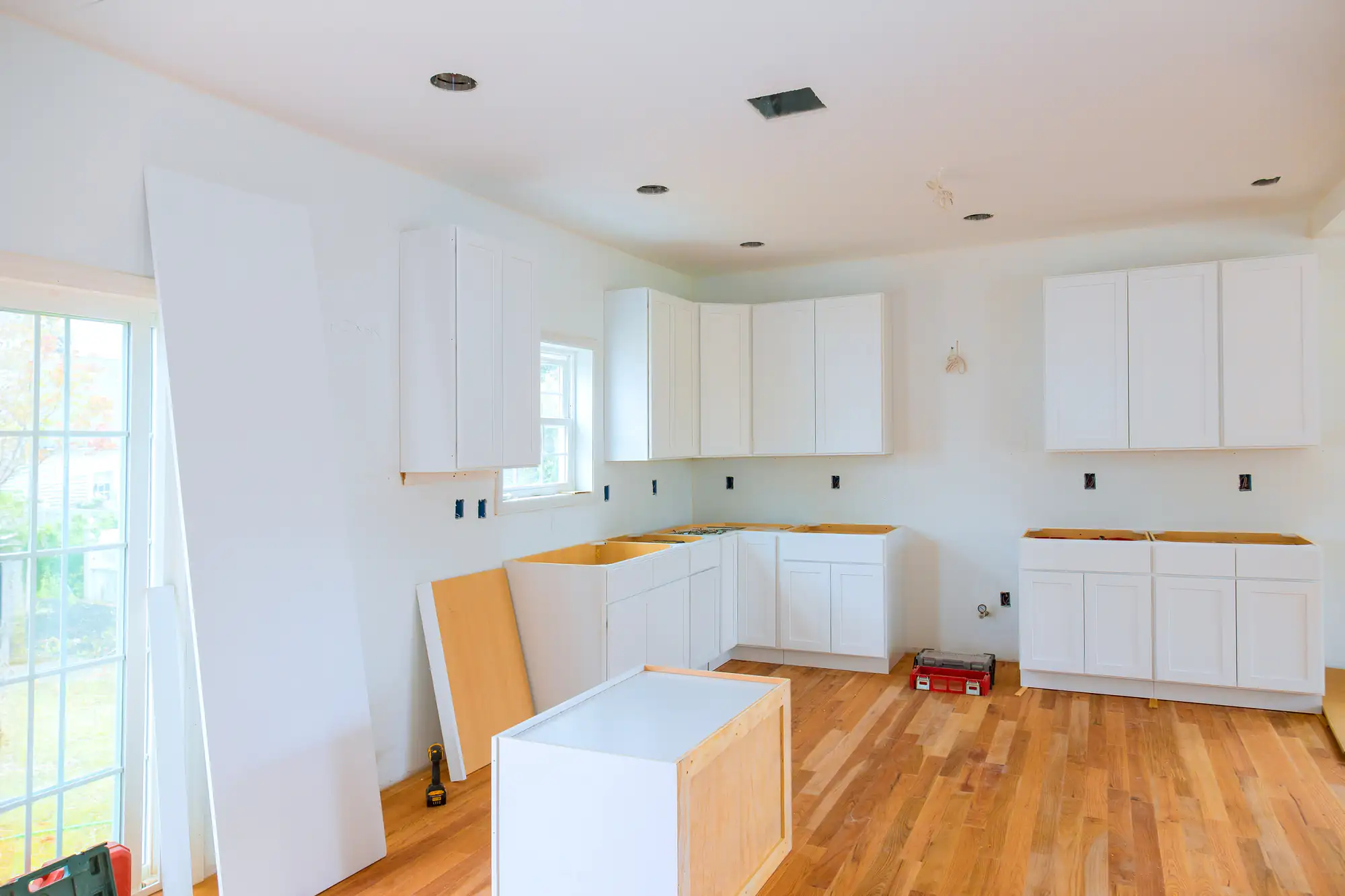
First, we walk through your current kitchen and talk about what’s not working. Not what looks bad—what actually gets in your way. From there, we measure, photograph, and start mapping out a layout that solves those problems without creating new ones.
Once the design is locked in, we handle the permit process. In Suffolk County, that typically runs $300 to $1,000 depending on scope, and we manage the paperwork so you don’t have to interpret code requirements or stand in line at the building department.
Demo comes next. We protect your floors, contain the dust as much as possible, and remove the old cabinets, countertops, and appliances. Then we start the rebuild—framing adjustments if needed, electrical and plumbing rough-ins, drywall, and paint. After that, we install your new cabinets, countertops, backsplash, flooring, and lighting.
The final walkthrough happens when everything’s done, cleaned, and ready to use. We don’t ask for final payment until you’ve seen the finished kitchen and confirmed it’s what we agreed on. Most medium-sized projects take six to eight weeks once construction starts, though planning and material lead times can add a few months to the overall timeline.
Ready to get started?
A complete kitchen remodel covers more than swapping out cabinets. You’re looking at new cabinetry with soft-close hinges and full-extension drawers, countertops in quartz or granite that can handle daily use, and a backsplash that ties the room together without feeling dated in three years.
We also upgrade lighting—recessed cans for general illumination, under-cabinet strips so you can actually see what you’re chopping, and pendant fixtures over islands if that’s part of the plan. Flooring goes in after the cabinets, and we typically recommend luxury vinyl plank or tile that holds up to moisture and foot traffic.
If your layout’s changing, we reroute plumbing and electrical to match. That means moving outlets to code-compliant heights, adding circuits for new appliances, and relocating sinks or dishwashers without leaving you with a mess of exposed pipes.
Huntington Station homes—especially the older ones—often need ventilation upgrades too. A proper range hood vented to the outside makes a noticeable difference in air quality and keeps cooking smells from settling into your furniture. We size and install those correctly, which matters more than most people realize until they don’t have one.
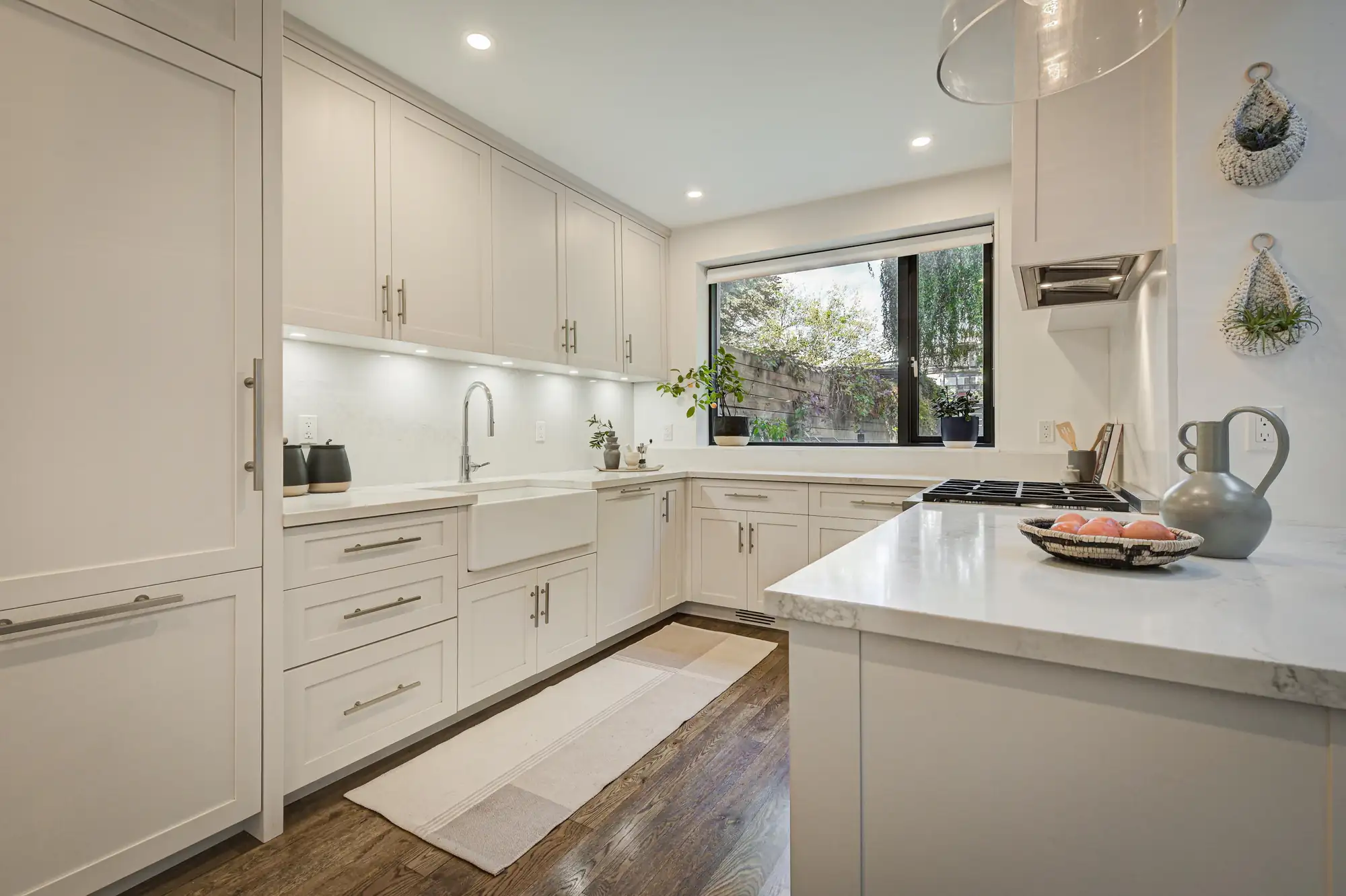
Most kitchen remodeling projects in Huntington Station fall between $20,000 and $60,000, depending on the size of your kitchen and what you’re changing. A smaller update—new cabinets, countertops, backsplash, and paint—usually starts around $10,000 to $15,000. A full remodel that includes layout changes, new flooring, upgraded lighting, and appliance relocation will land in the higher range.
Permits add another $300 to $1,000 in Suffolk County, and that’s non-negotiable if you’re doing anything structural or moving plumbing and electrical. Labor costs on Long Island run higher than most other parts of the country, so if you’re comparing estimates to national averages, expect the numbers to be different here.
The best way to get an accurate number is to have someone walk the space, talk through what you want, and price it based on your actual kitchen—not a generic square footage calculator.
Construction typically takes six to eight weeks for a medium-sized kitchen remodel. That’s from the day we start demo to the day you’re cooking in the finished space. Smaller projects—like a cabinet swap with no layout changes—can be done in three to four weeks. Larger renovations that involve moving walls, rerouting plumbing, or custom millwork can stretch to ten or twelve weeks.
But construction time is only part of the timeline. Planning, design, material ordering, and permit approval usually add another two to three months on the front end. If you’re ordering custom cabinets, lead times right now are running eight to twelve weeks from most suppliers.
The short version: if you’re starting the conversation today, expect to be using your new kitchen in about six months. We’ll give you a more specific timeline once we know what you’re building and what materials you’re selecting.
In most cases, yes. If you’re changing the layout, moving or adding electrical outlets, relocating plumbing, or doing anything structural, Suffolk County requires a permit. Even if you’re just replacing cabinets and countertops without touching walls or utilities, some towns still want you to pull a permit depending on the scope.
Permits aren’t there to slow you down—they’re there to make sure the work meets code and gets inspected. That protects you if something goes wrong and protects the next owner if you ever sell. It also keeps your homeowner’s insurance valid, which matters more than people think.
We handle the permit process as part of the project. We submit the drawings, coordinate inspections, and make sure everything passes before we move to the next phase. The cost in Suffolk County typically runs $300 to $1,000 depending on what’s involved, and that gets added to your project total upfront so there are no surprises.
Yes, and most of our clients do stay in the house during a kitchen remodel. It’s not always comfortable, but it’s manageable if you set up a temporary kitchen in another room—microwave, coffee maker, cooler for drinks, and paper plates go a long way.
We’ll talk through the timeline before we start so you know when the water will be shut off, when the stove will be disconnected, and when you’ll be able to use the sink again. We try to schedule those disruptions in short windows and get utilities back online as quickly as possible.
Demo and drywall are the messiest phases. We use plastic sheeting and zip walls to contain dust, but some will still get through. If you have the option to stay somewhere else for a few days during those stages, it makes life easier. If not, we work around you and clean up at the end of each day so the house is livable.
The best storage solutions depend on your layout and what you’re actually trying to store. Most Huntington Station kitchens we work in are short on pantry space, so adding a floor-to-ceiling cabinet with pull-out shelves is usually the first move. That gives you a place for dry goods, small appliances, and anything else that’s currently sitting on your counters.
Deep drawers work better than lower cabinets with shelves. You can fit pots, pans, and mixing bowls in drawers and still see everything without crouching down and digging through a dark cabinet. We also add pull-out trash and recycling bins, which frees up floor space and keeps things cleaner.
If you’re adding an island, build storage into it. That can be drawers on one side, open shelving for cookbooks, or even a wine fridge if that’s something you’ll use. Corner cabinets are tricky, but a lazy Susan or a pull-out corner unit makes that space functional instead of just a black hole where things disappear.
If you’re constantly walking back and forth between the sink, stove, and fridge, your layout probably needs work. The goal is to create a triangle where those three zones are close enough to make cooking efficient but not so cramped that two people can’t move around each other.
Another sign: if your countertops are always cluttered because there’s no landing space next to the fridge or no prep area near the stove, that’s a layout problem, not a storage problem. Adding cabinets won’t fix it. You need to rethink where things are positioned so the flow makes sense.
We also look at doorways and traffic patterns. If people have to walk through your work zone to get to the dining room or back door, that creates bottlenecks. Sometimes a small layout shift—moving an island two feet or flipping the direction your cabinets face—makes a huge difference in how the kitchen functions. We’ll walk through that with you during the consultation and show you what’s possible within your existing footprint.
Other Services we provide in Huntington Station