
Hear from Our Customers

Your floors should look good and hold up. That means proper subfloor prep, moisture barriers where they’re needed, and materials that match how you actually live.
When you’re dealing with coastal conditions in Northwest Harbor, shortcuts show up fast. Cupping hardwood. Loose tiles. Carpet that smells like mildew after one humid summer. We’ve seen it all, and we handle the details that prevent those problems before they start.
The result is flooring that doesn’t need replacing in five years. You get durability, comfort, and the look you wanted without the callback visits or surprise repair bills. Whether it’s hardwood in your living room or luxury vinyl plank in the kitchen, the installation matters more than most contractors will admit.
We’ve been installing floors in Suffolk County for almost ten years. That’s long enough to know what works in homes near the water and what fails six months later.
You won’t get a sales pitch from us. You’ll get transparent pricing, realistic timelines, and someone who shows up when they say they will. We handle everything from subfloor repair to baseboard finishing because half-done jobs aren’t jobs at all.
Northwest Harbor homeowners deal with unique challenges—salt air, sand, humidity swings. We account for that in every installation, whether you’re replacing old carpet or putting down ceramic tile throughout your home.

First, we assess your subfloor. If it’s not level or if there’s moisture damage, we fix it before any new flooring goes down. Skipping this step is how you end up with squeaks, gaps, and premature wear.
Next, we walk you through material options based on your space and how you use it. High-traffic kitchen? Luxury vinyl plank or tile makes sense. Bedroom where you want warmth underfoot? Carpet or hardwood. We’re not here to upsell you on the most expensive option—we’re here to recommend what actually fits.
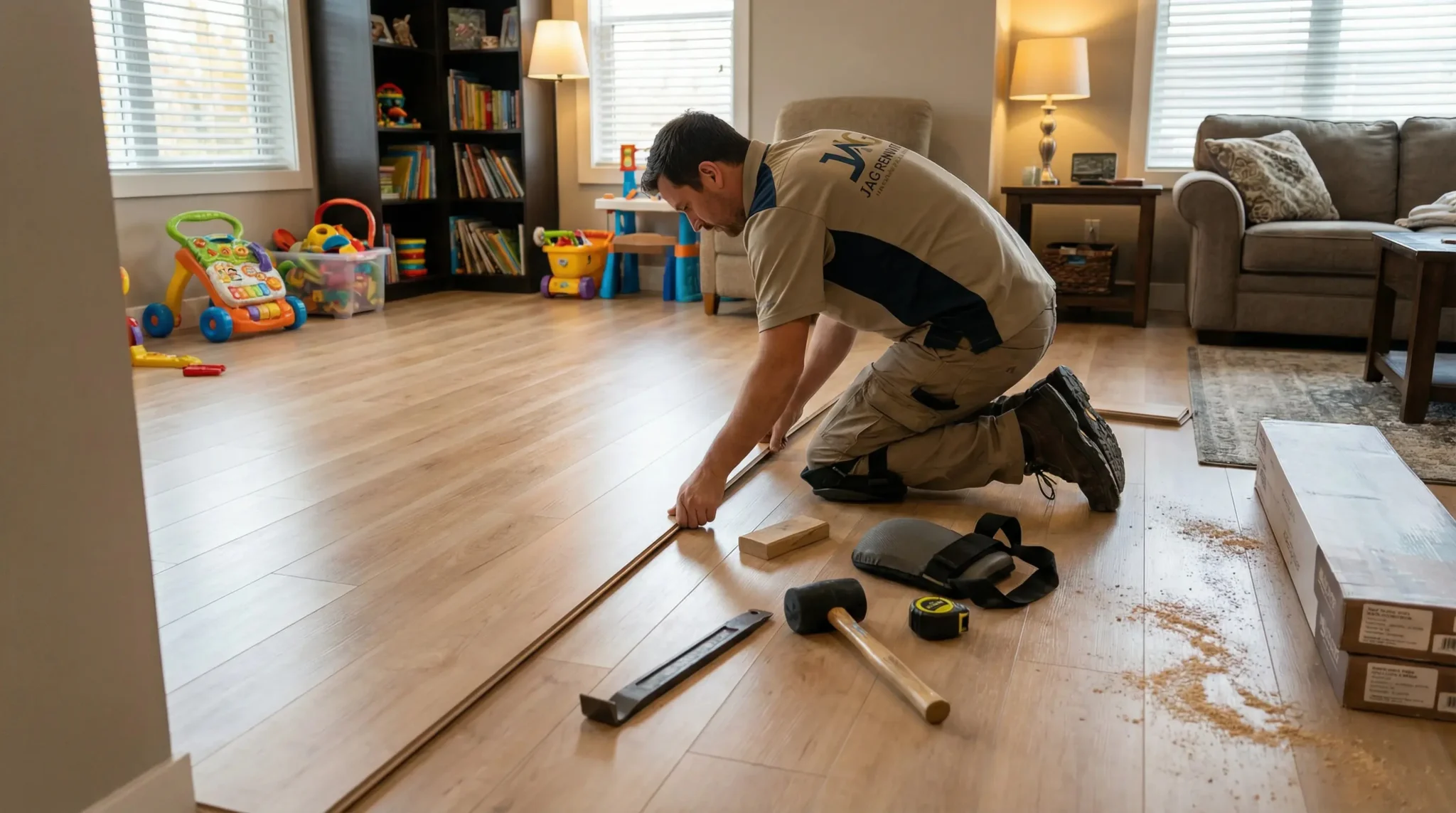
Installation day, we remove old flooring, prep the surface, and install your new floors with attention to expansion gaps, moisture barriers, and proper adhesive or fastening methods. We finish with baseboards, transitions, and a final walkthrough so you know exactly what was done.
Cleanup is part of the job. You shouldn’t have to deal with dust and debris after we leave.

Ready to get started?
Hardwood flooring is still the most requested material in Suffolk County, and for good reason. It lasts decades when installed correctly and adds real resale value. We handle site-finished and prefinished options, plus the sanding and refinishing work if your existing floors just need a refresh.
Luxury vinyl plank has become the go-to for homeowners who want the look of wood with better water resistance. It’s ideal for kitchens, mudrooms, and basements where moisture is a concern. The quality gap between cheap LVP and premium products is massive—we only install the latter.
Tile flooring works in bathrooms, entryways, and anywhere you need serious durability. Ceramic and porcelain both hold up to heavy use, but the installation quality determines whether your grout cracks in year two. We use proper underlayment and waterproofing, especially in wet areas.
Carpet installation still makes sense in bedrooms and living spaces where comfort matters. The key is choosing the right pad and making sure the subfloor is smooth and dry before anything gets laid down.
Laminate flooring offers a budget-friendly option that’s improved significantly in recent years. It’s not as durable as hardwood or LVP, but it’s a solid choice for low-moisture areas when installed with care.

For an average-sized room, plan on two to three days from start to finish. That includes removing old flooring, prepping the subfloor, installing new material, and finishing trim work.
Whole-house projects take longer—usually one to two weeks depending on square footage and the number of transitions between rooms. If we find subfloor damage during removal, that adds time. We’ll let you know immediately if repairs are needed and what the revised timeline looks like.
The type of flooring also affects the schedule. Hardwood installation with site finishing takes longer than click-lock vinyl plank. Tile work requires setting time for adhesive and grout. We give you realistic timelines upfront, not best-case scenarios that fall apart on day two.
Luxury vinyl plank and tile are your best bets for moisture resistance. Both handle humidity and the occasional wet footprint without warping or staining.
Hardwood can work in coastal homes, but it requires proper acclimation before installation and a moisture barrier between the subfloor and the planks. Engineered hardwood is more stable than solid wood in humid environments. If you’re set on the look of wood, engineered or LVP are smarter choices than solid hardwood in high-moisture areas.
Carpet is risky near entryways where sand and water get tracked in. If you want carpet in bedrooms, that’s fine, but keep it away from exterior doors and mudrooms. Laminate flooring doesn’t handle moisture well either—it swells and bubbles when water seeps into the seams.
Yes, if it’s damaged, uneven, or holding moisture. New flooring only performs as well as what’s underneath it.
We check for soft spots, squeaks, and level issues before any installation begins. If your subfloor has rot from old leaks or pet damage, we replace those sections. If it’s just uneven, we use leveling compound to create a flat surface. Tile and vinyl especially need a smooth base—any dips or bumps telegraph through and cause cracking or loose planks.
Moisture is the other big issue. We test subfloors in basements and first-floor rooms to make sure moisture levels are within acceptable range. Installing flooring over a damp subfloor is a guaranteed callback in six months. If moisture is present, we address the source and install a vapor barrier before moving forward.
Material and labor combined, you’re typically looking at $8 to $15 per square foot for most residential flooring projects. That range covers vinyl plank, laminate, and mid-grade carpet.
Hardwood installation runs higher—$12 to $25 per square foot depending on the species and finish. Tile work falls in a similar range, especially if you’re using larger format tiles or natural stone. These are ballpark numbers. Your actual cost depends on room size, subfloor condition, and material selection.
We don’t do estimates over the phone because we need to see the space first. Hidden issues like subfloor damage or tricky transitions affect the final price. What we quote is what you pay—no surprise charges for “unforeseen circumstances” that any experienced contractor should have spotted during the walkthrough.
We handle single-room projects all the time. Most homeowners start with high-impact areas like the kitchen or master bedroom and expand from there.
The main consideration is transitions between rooms. If you’re replacing flooring in one space, we need to create a clean transition to the adjacent room’s existing floor. That’s straightforward with tile-to-wood or carpet-to-vinyl transitions. It gets trickier if you’re trying to match existing hardwood that’s been discontinued or has aged significantly.
We’ll walk you through options during the estimate. Sometimes it makes sense to do connected spaces at once to avoid awkward transitions or multiple material changes in a small area. But if you want to tackle one room now and others later, we can absolutely make that work.
We stop, show you the issue, and explain what needs to happen before we can continue. You’ll get a clear explanation of the problem and a price for the repair before any additional work starts.
Subfloor damage is common in older homes and in areas where leaks went unnoticed. Rotted wood needs to be cut out and replaced. If floor joists are compromised, that’s a bigger repair, but it’s not something you can ignore. We handle these repairs as part of the flooring project—you don’t need to call in another contractor.
The goal is transparency. We’re not looking for reasons to inflate the bill, but we’re also not going to install new flooring over a problem that’ll cause failure down the road. You get photos of the damage, an explanation of the fix, and a revised timeline. Then you decide how to proceed.