
Hear from Our Customers
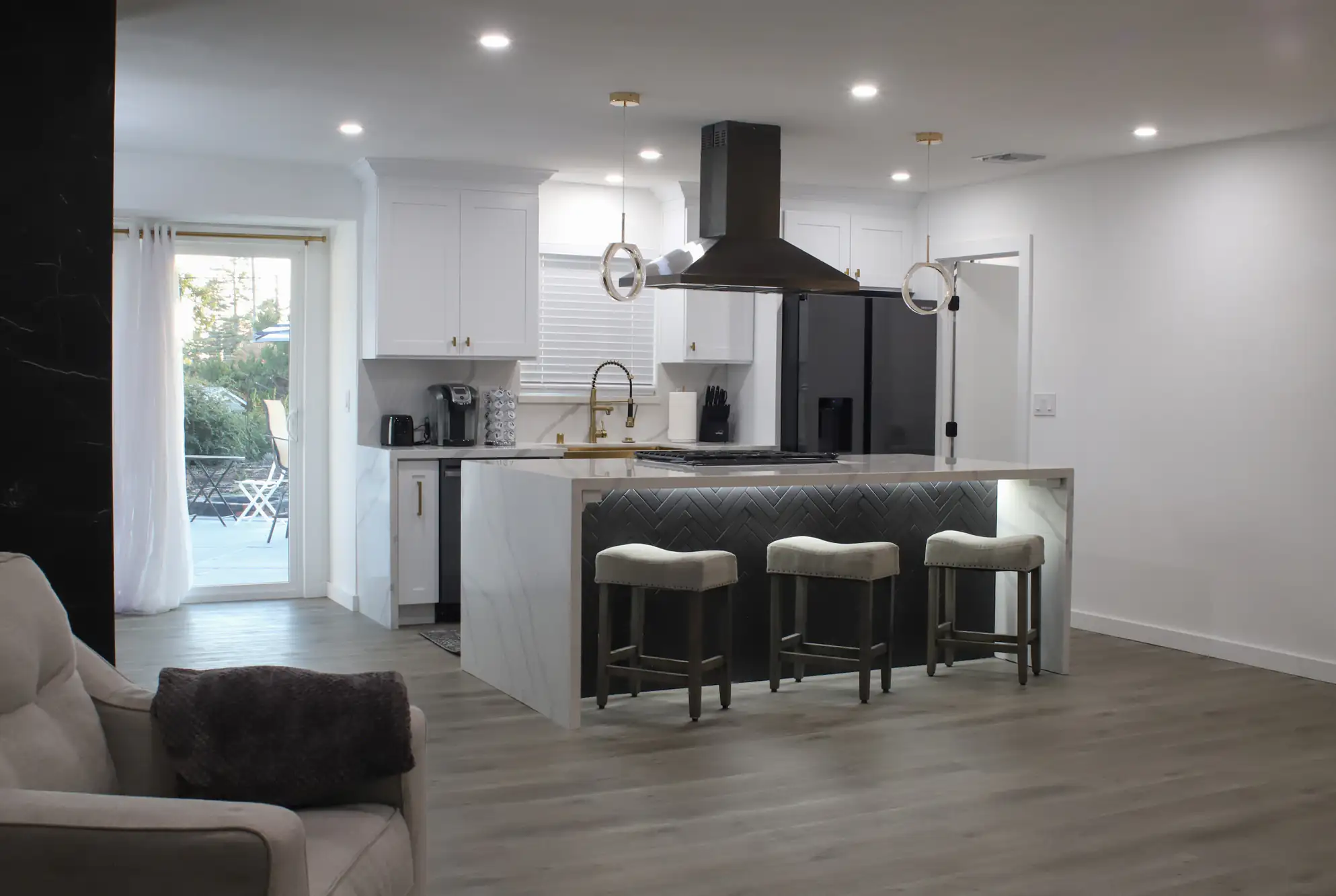
You stop working around a dysfunctional layout. Meal prep gets easier because everything’s where it should be. Cabinets close properly, countertops handle real use, and the space finally matches how you actually cook and live.
Your home value increases—minor kitchen remodels in this market deliver strong returns, and buyers in Bay Shore pay attention to updated kitchens. But more immediately, you get your time back. No more hunting for storage space or dealing with outdated appliances that slow you down.
The kitchen becomes the room you want to use, not the one you avoid. Family gathers there again. Cooking feels less like a chore. And when friends come over, you’re not apologizing for the space anymore.
We’ve spent almost ten years working inside Bay Shore homes—the split-levels off Montauk Highway, the colonials near the marina, the ranches that need smart updates to maximize space. We know the building codes here, the common layout challenges, and what actually holds value in this market.
We’re not a high-pressure sales operation. No inflated quotes, no bait-and-switch pricing, no pushy closer showing up at your door. Just honest estimates, clear timelines, and work that gets done right. We handle everything in-house—custom carpentry, cabinet installation, flooring, painting—so you’re not coordinating multiple crews or dealing with finger-pointing when something needs adjustment.
You’re hiring people who live and work in this community. Our reputation here matters more than any single project.
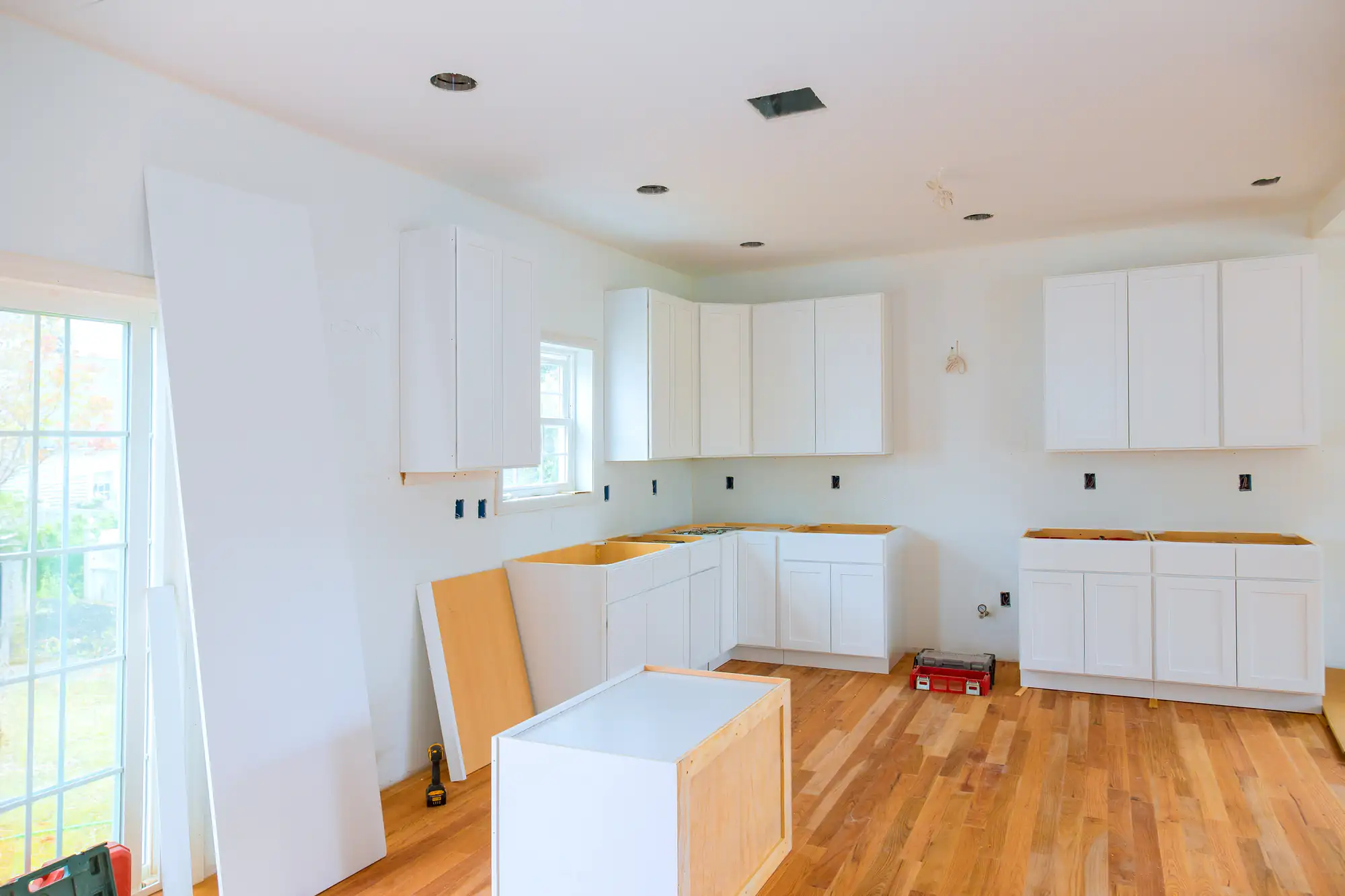
First, we walk through your current kitchen and listen. What’s not working? What’s driving you crazy? What do you actually need from this space? We measure, take notes, and discuss realistic options based on your layout and budget.
Then we provide a detailed estimate—line by line, no vague “allowances” that balloon later. You’ll know what you’re paying for cabinets, countertops, labor, and everything else before we start. If something’s going to cost extra, we tell you upfront.
Once you approve, we create a timeline that minimizes disruption. Most kitchen remodels take several weeks, and we’re clear about when you’ll have access and when you won’t. We protect your floors, contain dust, and clean up daily because we’re working in your home, not a construction site.
During the job, you get regular updates. Questions get answered the same day, not three days later. If we hit an unexpected issue—old plumbing, structural concerns—we stop, explain the situation, discuss options, and get your approval before proceeding.
Final walkthrough happens with you. We make sure every cabinet closes right, every corner’s finished, and you’re completely satisfied before we consider the job done.
Ready to get started?
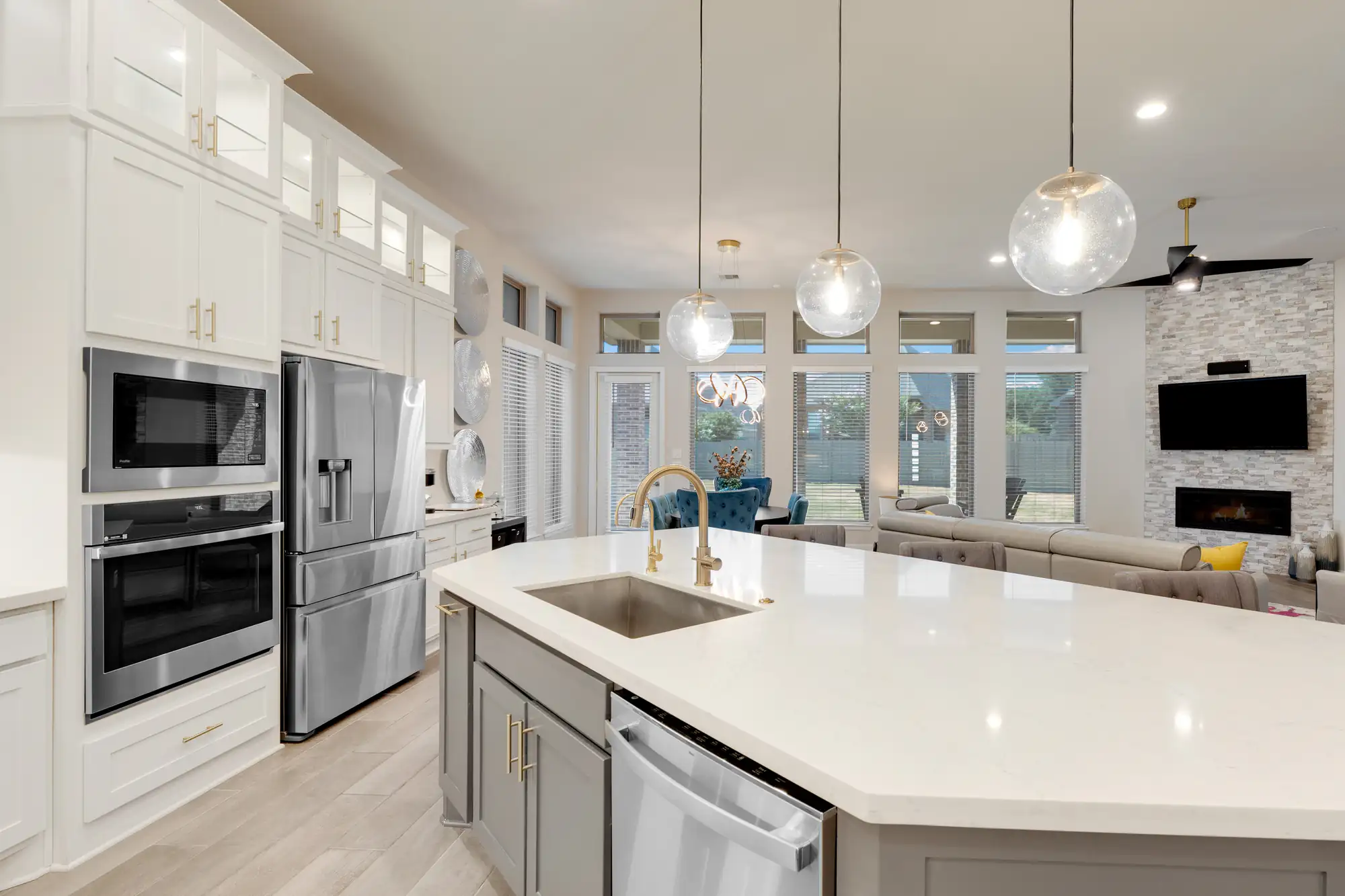
Custom cabinetry designed for your space—not stock boxes forced to fit. We build or install cabinets that maximize storage, accommodate your ceiling height, and actually use those awkward corners. Soft-close hinges, quality hardware, and finishes that match your style.
Countertops in materials that make sense for how you cook. Quartz is popular in Bay Shore right now—heat-resistant, low-maintenance, and it handles the wear of daily use better than most alternatives. We template precisely so seams are minimal and edges align perfectly.
Flooring that stands up to foot traffic, spills, and the reality of a working kitchen. Tile, luxury vinyl, hardwood—we install it level and properly sealed. Backsplashes that protect your walls and tie the design together.
Lighting that makes the space functional. Under-cabinet lighting so you can actually see what you’re cutting. Recessed fixtures positioned where you need them, not just centered in the ceiling. Pendant lights over islands that provide task lighting and look good doing it.
We handle electrical updates, plumbing relocation if needed, and painting that completes the transformation. You get one crew, one timeline, one point of contact. Everything coordinated so your kitchen comes together without the chaos of managing multiple contractors.
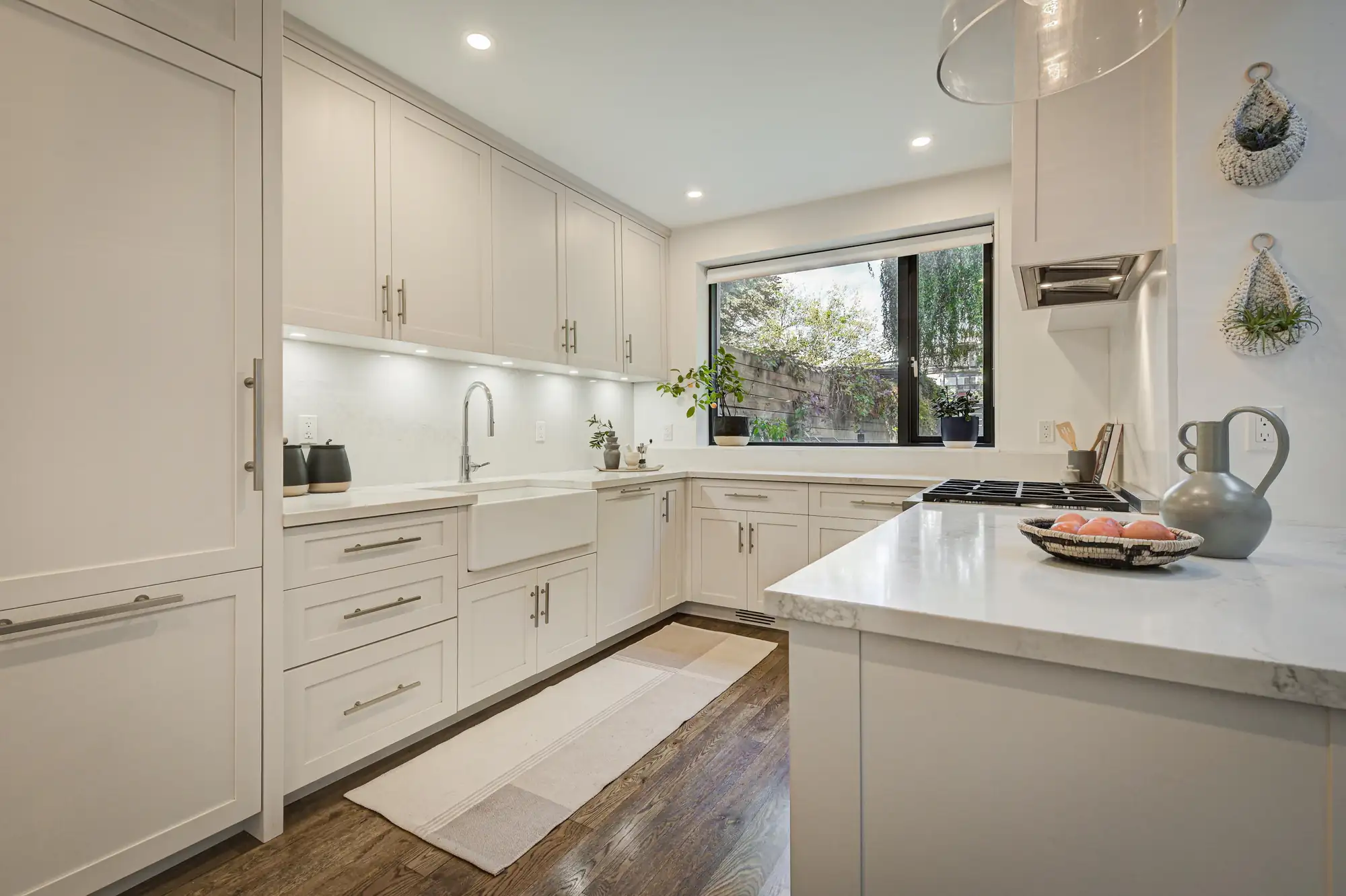
Most kitchen remodels in Bay Shore run between $35,000 and $75,000 depending on size and scope. Smaller kitchens under 200 square feet typically land around $35,000-45,000. Larger kitchens over 200 square feet with high-end materials and appliances can reach $55,000-75,000 or more.
The biggest cost drivers are cabinetry and countertops—they usually account for 40-50% of your total budget. Appliances add another 15-20% if you’re replacing everything. Labor, flooring, lighting, and finishing work make up the rest.
We provide itemized estimates so you see exactly where your money goes. No lumped-together numbers that hide costs. If you want to adjust the budget, you can see which elements to modify. Some homeowners prioritize custom cabinets and choose mid-range countertops. Others do the opposite. We work with what matters most to you and keep the numbers transparent from the start.
Plan on 4-8 weeks for most kitchen remodels, though the timeline depends on your project’s complexity. A straightforward cabinet and countertop replacement with minimal layout changes usually takes 4-5 weeks. Full gut renovations with plumbing relocation, electrical upgrades, and structural modifications can stretch to 7-8 weeks.
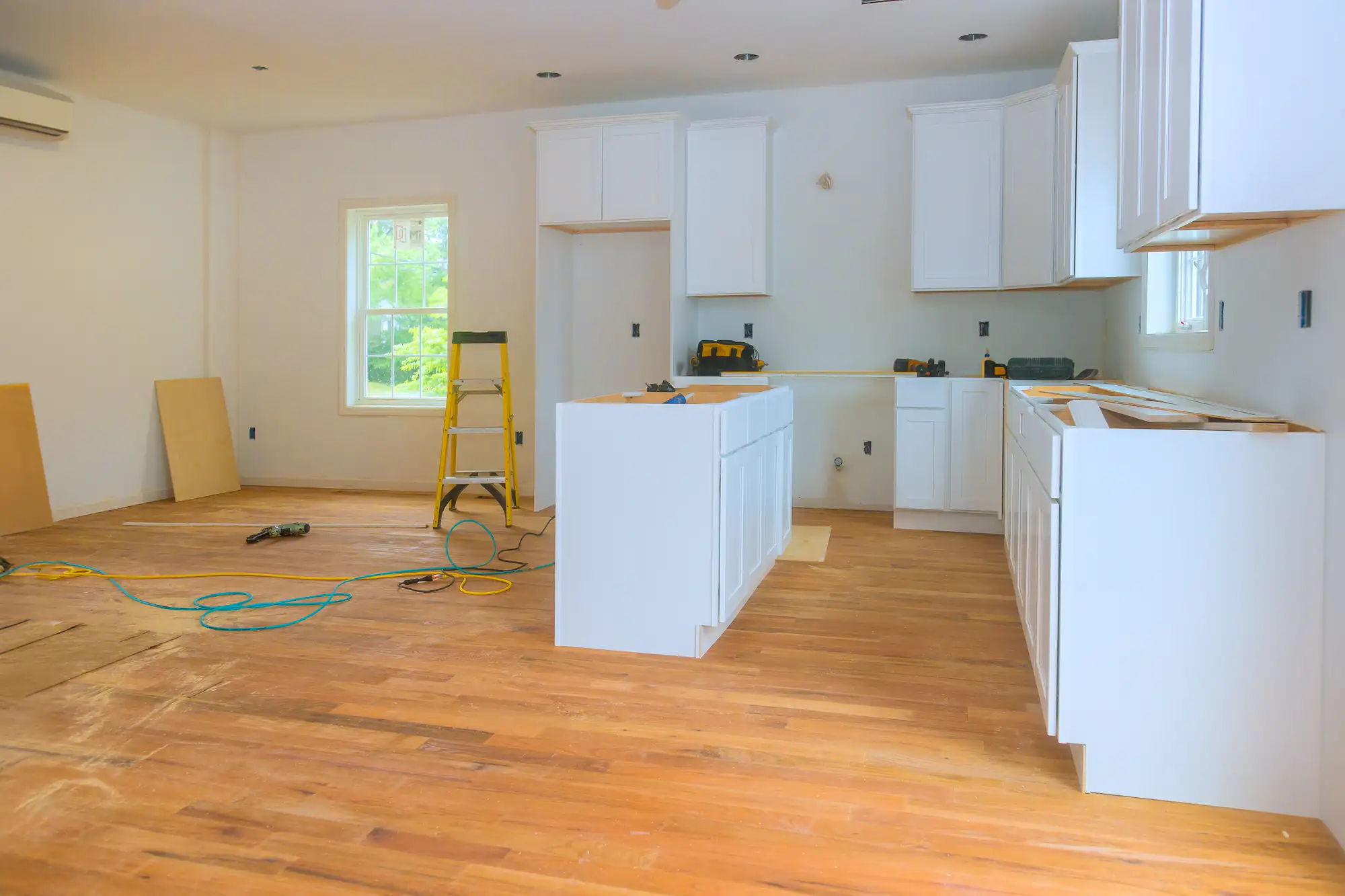
The first week involves demo and any necessary structural prep. Weeks two through four cover rough-in work—electrical, plumbing, HVAC adjustments—followed by drywall, flooring, and cabinet installation. The final weeks focus on countertop templating and installation, backsplash, painting, and finishing details.
Weather rarely impacts interior work, but material delays can happen. We order cabinets and countertops early to avoid pushing your timeline back. If something’s backordered, we tell you immediately and discuss alternatives. Most delays add days, not weeks, and we adjust our schedule to minimize the impact on your daily routine. You’ll know the realistic timeline before we start, and we update you if anything changes.
Yes, most homeowners stay in their homes during kitchen renovations. It requires some adjustment, but it’s manageable with planning. You’ll need to set up a temporary kitchen space—usually in a dining room or basement—with a microwave, coffee maker, and mini fridge for the weeks you’re without a functioning kitchen.
We contain work to the kitchen area as much as possible. Dust barriers go up, floors get protected, and we clean daily so the rest of your house stays livable. You’ll have limited or no kitchen access during active construction, but we can often schedule work so you have sink access in the evenings or coordinate around your schedule if you work from home.
The most disruptive phases are demo and the days when countertops get installed, since those require the most intensive work. We give you advance notice before these high-impact days so you can plan accordingly—maybe schedule dinners out or arrange to work elsewhere if noise is a concern. Many Bay Shore homeowners stay put during remodels. It’s not always convenient, but it’s doable, and it saves the cost and hassle of temporary housing.
It depends on the scope of work. If you’re replacing cabinets, countertops, and flooring without moving plumbing or electrical, you typically don’t need permits. But if you’re relocating a sink, adding new electrical circuits, moving walls, or changing your kitchen’s footprint, Bay Shore requires permits.
Permits exist to ensure work meets code—proper electrical load calculations, adequate venting, structural integrity if you’re removing walls. They also protect your home’s value. Unpermitted work can create problems when you sell, and buyers’ inspectors will flag modifications that don’t have proper documentation.
We handle permit applications when required. We know Bay Shore’s building department, what they look for during inspections, and how to keep your project moving without delays. The permit process typically adds 1-2 weeks to your timeline for approvals and inspections, and there are fees involved—usually a few hundred dollars depending on the work scope. It’s not the exciting part of a remodel, but it’s necessary, and we make it as painless as possible by managing the paperwork and coordinating inspector visits.
Spring and early summer are the most popular times for kitchen remodels in Bay Shore, but that also means contractors book up faster and material lead times can stretch. If you’re planning a spring start, reach out in late winter to secure your spot. Projects that begin in March or April typically wrap up before summer vacation season hits.
Fall is another solid window. Temperatures are comfortable for workers, and you’re done before the holidays when you actually want to use your kitchen. Late fall and winter see less demand, which sometimes means more flexibility in scheduling and potentially faster material delivery.
The real answer is: start when it works for your life. If you’re hosting Thanksgiving every year, don’t start a remodel in October. If your kids are home all summer, maybe spring or fall makes more sense. Kitchen renovations take several weeks regardless of season, so think about when you can handle the disruption and when you’ll want the finished space ready. We work year-round and can accommodate your timeline once we know what you’re planning.
Look for contractors with specific kitchen renovation experience, not just general handyman skills. Kitchens require precise cabinet installation, countertop templating, plumbing and electrical knowledge, and an understanding of how layouts affect functionality. Ask to see recent kitchen projects they’ve completed—actual photos, not stock images from a website.
Check that they’re properly licensed and insured. In New York, that means general liability coverage and workers’ comp. If someone gets hurt on your property and the contractor isn’t insured, you’re liable. Also verify they pull permits when required—contractors who skip permits are cutting corners that will cost you later.
Pay attention to communication during the estimate process. Do they listen to what you actually need, or are they pushing products and upgrades you didn’t ask about? Do they provide detailed, written estimates, or vague ballpark numbers? Are they responsive when you have questions, or do you wait days for replies? How they handle the sales process usually reflects how they’ll handle your project. Trust your gut. If something feels off during initial conversations, it probably won’t improve once construction starts.